
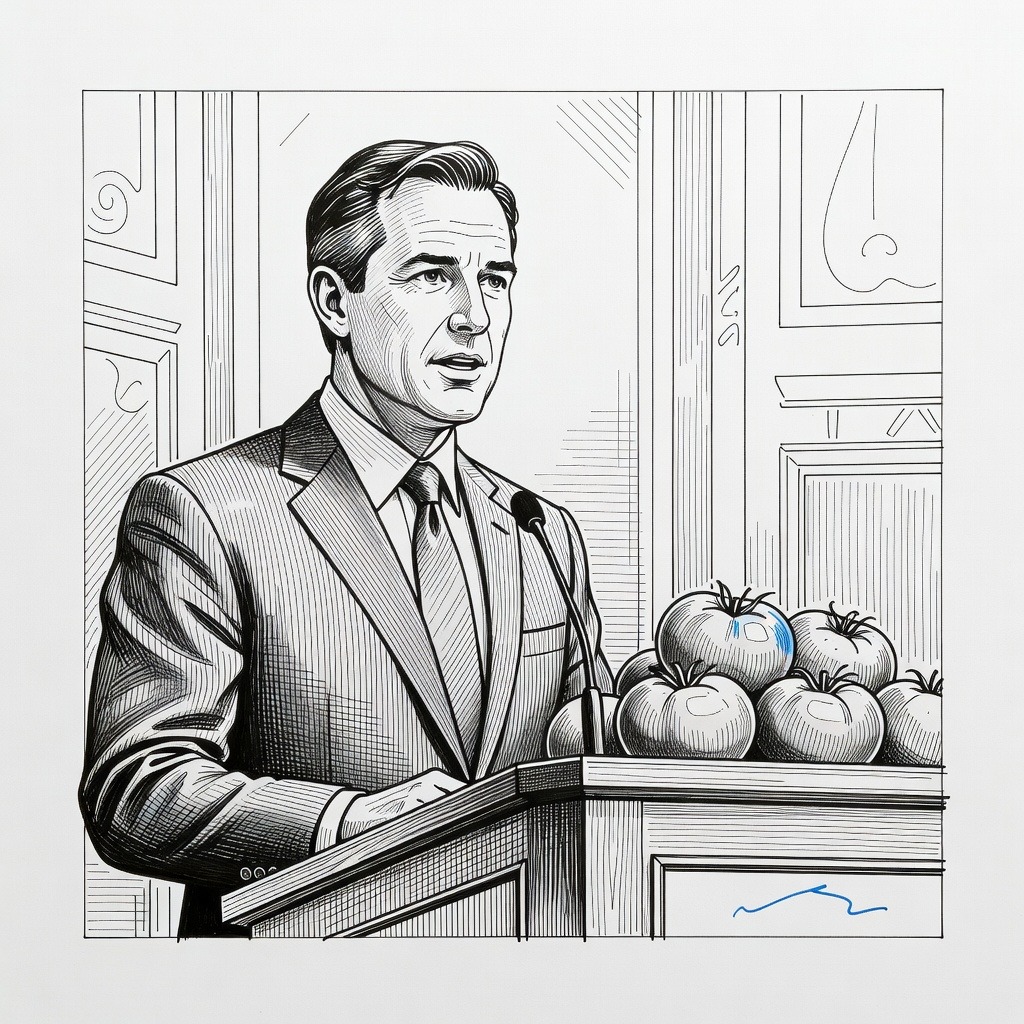
AI-generated illustration. Visual interpretation does not represent real individuals or scenes.
U.S. Beef and Tomato Prices Surge Amid Supply Shortages and Escalating Costs
2026-04-16
The BareStory
U.S. consumers are facing significant price increases for beef and produce, driven by supply constraints and escalating operational expenses. The retail price of fresh tomatoes spiked 15 percent in March to an eight-year high, while the Bureau of Labor Statistics reported that average ground beef prices rose 12 percent over the past year to approximately $6.70 per pound.
According to federal data and bank estimates, the U.S. cattle herd has shrunk to its smallest size since the 1950s, leading to decreased beef production. Concurrently, the domestic tomato supply has been constrained by winter freezes in Florida and lower crop yields in Mexico, according to agri-food sector manager David Branch.
Both agricultural sectors are experiencing severe financial strain due to rising fuel and fertilizer costs attributed to the United States-Iran war. A recent survey released by the American Farm Bureau Federation indicated that nearly 60 percent of U.S. farmers are facing worsening financial conditions as their operational expenses continue to escalate.
Trade policies have also placed upward pressure on grocery prices. Agricultural economists attribute part of the tomato price spike to tariffs of approximately 17 percent implemented by the Trump administration on fresh Mexican tomatoes. According to Commerce Secretary Howard Lutnick, these tariffs were necessary to protect domestic farmers from unfair trade practices.
Left Perspective
Shielding Basic Consumer Access
Rejecting Regressive Tariff Burdens
Internalizing Geopolitical Cost Spillovers
Right Perspective
Preserving Core Agricultural Infrastructure
Defending Domestic Market Integrity
Mitigating Exogenous Supply Shocks
Left Perspective
• Shielding Basic Consumer Access
Social equity demands affordable access to basic nutrition. The 12 percent rise in ground beef prices to $6.70 per pound and the 15 percent spike in fresh tomatoes act as highly regressive taxes on working-class households. From this perspective, food inflation is not merely a market fluctuation but a systemic failure that disproportionately extracts wealth from vulnerable populations who spend a higher percentage of their income on essential necessities.
• Rejecting Regressive Tariff Burdens
Protectionist trade policies often function as hidden consumer taxes rather than genuine worker safeguards. The 17 percent tariff on fresh Mexican tomatoes directly correlates to the eight-year high in retail prices, effectively transferring the cost of international trade disputes onto everyday grocery shoppers. This framework views Commerce Secretary Howard Lutnick’s defense of the Trump administration tariffs as a flawed institutional mechanism that sacrifices broad consumer prosperity for isolated industrial protection.
• Internalizing Geopolitical Cost Spillovers
Military engagements frequently carry severe, unacknowledged domestic economic penalties. The spike in fuel and fertilizer expenses driven by the United States-Iran war reveals how overseas conflicts directly degrade domestic living standards. Consumer advocates view these escalating operational costs as proof that aggressive foreign policy inevitably exacts a heavy toll on the domestic economy, manifesting in severe financial strain for 60 percent of U.S. farmers and higher checkout totals for families.
Right Perspective
• Preserving Core Agricultural Infrastructure
Systemic stability requires prioritizing the viability of domestic producers over artificially low consumer prices. With the U.S. cattle herd shrinking to 1950s levels and 60 percent of farmers facing worsening financial conditions, the immediate priority must be halting the collapse of the agricultural sector. Market realists view the escalating retail prices as a painful but necessary market correction to keep American farmers solvent amid crushing operational expenses.
• Defending Domestic Market Integrity
Long-term economic independence relies on shielding domestic industries from predatory foreign practices. The 17 percent tariff on Mexican tomatoes is justified as a strategic, structural defense mechanism to ensure American growers are not undercut by unfair trade dynamics. In this framework, Commerce Secretary Howard Lutnick's policy is a vital tool to incentivize domestic production and prevent the hollowing out of the U.S. agricultural base by cheaper, potentially subsidized foreign alternatives.
• Mitigating Exogenous Supply Shocks
True market efficiency requires insulating critical supply chains from unpredictable external vulnerabilities. The compound effect of Florida freezes, lower Mexican crop yields, and the United States-Iran war's impact on fuel and fertilizer illustrates the danger of relying on fragile, interconnected global networks. This perspective emphasizes the urgent need for domestic self-reliance, arguing that broad prosperity and stable prices can only be achieved by securing independent domestic energy and food systems against global volatility.
How it may affect me
As a U.S. reader:
• You will experience immediate price increases at the grocery store, specifically paying around 12 percent more for ground beef and 15 percent more for fresh tomatoes.
• Working-class households will feel a heavier short-term financial burden, as these price spikes consume a disproportionately larger portion of their income for basic nutritional necessities.
• Your everyday living expenses will be indirectly affected by the U.S.-Iran war, as the conflict drives up fuel and fertilizer expenses for farmers who must pass those costs onto retail consumers.
• The 17 percent tariff on Mexican tomatoes means you will absorb the checkout costs of international trade disputes, which currently limit access to cheaper imports in an effort to protect domestic farmers from unfair pricing.
• In the long term, you may face sustained higher food costs and tighter domestic food supplies due to systemic industry changes, including the U.S. cattle herd shrinking to 1950s levels and worsening financial distress affecting 60 percent of American farmers.