
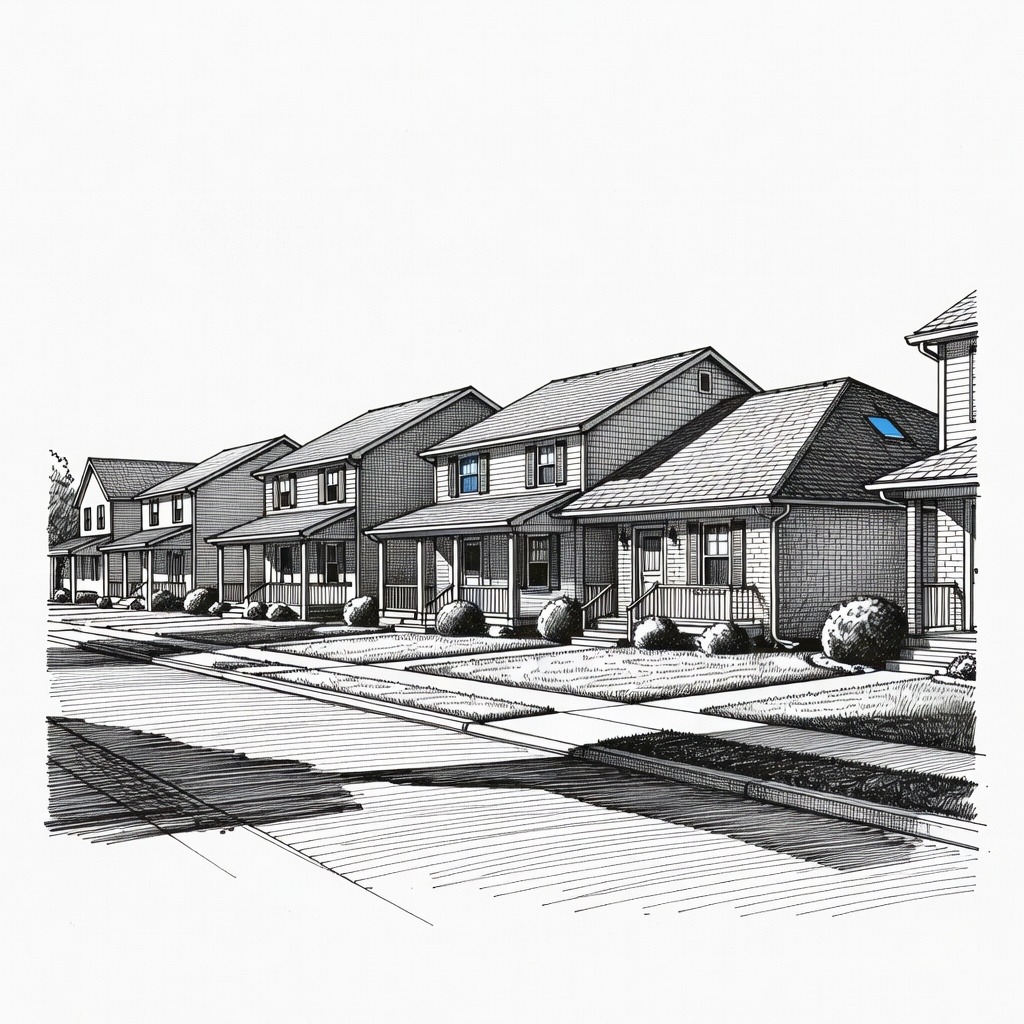
AI-generated illustration. Visual interpretation does not represent real individuals or scenes.
U.S. Mortgage Applications Rise Amid Interest Rate Fluctuations and Geopolitical Tensions
2026-04-16
The BareStory
Total U.S. mortgage application volume recently increased by 1.8 percent over a one-week period as interest rates experienced a slight decline, according to data from the Mortgage Bankers Association. The drop in rates spurred a 5 percent weekly rise in loan refinancings, which offset a decline in new home purchase applications. Association economists noted that potential homebuyers remain largely on the sidelines due to ongoing economic uncertainty.
Average interest rates for 30-year fixed mortgages recently stabilized in the 6.25 to 6.42 percent range, following a period of heightened market volatility throughout March. Borrowing costs are expected to remain elevated in the near term, as current market projections indicate a less than 2 percent chance that the Federal Reserve will reduce interest rates at its scheduled April 28 and 29 policy meeting.
Financial analysts attribute much of the recent movement in bond yields and interest rates to overseas geopolitical tensions, primarily an ongoing conflict involving Iran. The conflict has heavily influenced energy markets, contributing to higher national gas prices and fluctuating crude oil costs.
While a recent ceasefire has paused some inflationary pressures, economists and advisory firms warned that elevated energy costs and delayed interest rate cuts could continue to impact broader U.S. economic growth. Despite a record low in consumer sentiment and a recent nine-month low in existing home sales, some financial institutions project that real consumer spending will still see slight growth this year.
Left Perspective
Locking Out New Buyers
Extracting Working Class Wealth
Illusion of Spending Growth
Right Perspective
Anchoring the Inflation Fight
Pricing in Geopolitical Risk
Testament to Market Resilience
Left Perspective
• Locking Out New Buyers
True economic equity requires accessible paths to homeownership, which are currently being barricaded by interest rates hovering between 6.25 and 6.42 percent. While the 5 percent bump in loan refinancing benefits those who already hold capital and property, the simultaneous drop in new home purchase applications highlights a widening wealth gap. Potential homebuyers are stuck on the sidelines, systematically excluded from the nation's most reliable method of domestic wealth building.
• Extracting Working Class Wealth
Geopolitical conflicts should not result in disproportionate financial punishment for the domestic working class. Surging national gas prices driven by the overseas conflict involving Iran act as an unavoidable, regressive tax on everyday citizens who must commute and consume basic goods. The Federal Reserve's projected refusal to cut rates at the April 28 and 29 meeting prioritizes rigid institutional inflation targets over providing much-needed relief to households suffocating under these elevated costs.
• Illusion of Spending Growth
Financial institutions projecting a slight growth in consumer spending are masking the reality of widespread financial distress. A record low in consumer sentiment, paired with a nine-month low in existing home sales, strongly suggests that any increased spending is driven by the inflated cost of survival necessities rather than actual prosperity. This systemic extraction forces vulnerable populations to drain their financial reserves merely to stay afloat amidst ongoing economic uncertainty.
Right Perspective
• Anchoring the Inflation Fight
Maintaining systemic stability requires unwavering fiscal discipline, even at the cost of short-term market friction. The near-zero probability that the Federal Reserve will cut interest rates at its April 28 and 29 meeting signals a necessary, firm commitment to curbing inflation. By keeping borrowing costs elevated in the 6.25 to 6.42 percent range, the Fed prevents temporary overseas shocks from embedding permanent inflationary spirals into the broader domestic economy.
• Pricing in Geopolitical Risk
Capital markets rely on rational, dynamic recalibration to digest global instability without collapsing domestic systems. The current volatility in bond yields and fluctuating crude oil costs are efficient market responses to the conflict involving Iran. The 1.8 percent rise in total mortgage applications, driven by a 5 percent increase in refinancing during a slight rate dip, demonstrates how effectively capital markets adjust and offer liquidity when pressures temporarily ease due to events like the recent ceasefire.
• Testament to Market Resilience
Sustainable economic health is built on structural durability rather than temporary fluctuations in public mood. Despite facing a nine-month low in home sales and record-low consumer sentiment, projections indicating slight growth in real consumer spending this year validate the economy’s underlying strength. This resilience proves that absorbing elevated energy costs and maintaining strict monetary policy will successfully cool an overheated economy without triggering a severe recession.
How it may affect me
As a U.S. reader:
• You will likely face continued high costs for daily commuting and basic goods in the near term due to elevated national gas prices tied to overseas geopolitical conflicts.
• Purchasing a new home will remain expensive, as 30-year fixed mortgage rates stabilizing between 6.25 and 6.42 percent continue to limit accessibility for prospective buyers.
• If you already own property, you may find brief, short-term opportunities to lower your existing payments through refinancing when market interest rates experience slight dips.
• General borrowing costs for credit and personal loans will stay elevated for the foreseeable future, as the Federal Reserve is highly unlikely to cut interest rates at its upcoming April policy meeting.
• You may experience increased strain on your personal savings over the coming year, as projected national growth in consumer spending may largely reflect the rising cost of everyday necessities rather than an actual increase in purchasing power.