
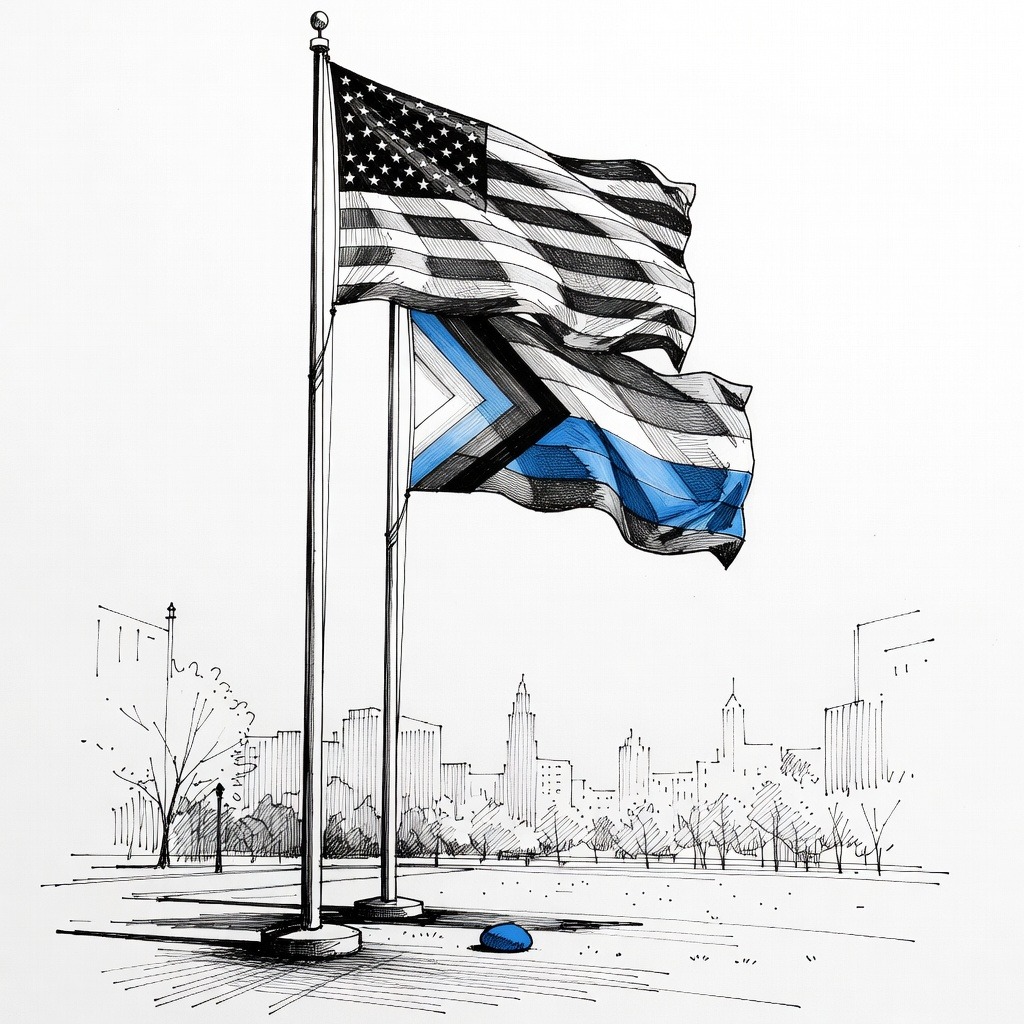
• Shield Against Historical Erasure Recognizing the specific struggle of minority groups requires visible, unapologetic affirmation in public spaces. The settlement to restore the Pride flag at the Stonewall National Monument directly validates the 1969 police raid as a foundational civil rights milestone. To this camp, the flag acts as an essential historical marker that counters attempts by local or federal officials to sanitize the LGBTQ community's foundational struggles.
• Dismantling Bureaucratic Exclusion Neutral administrative policies are frequently recognized as quiet tools used to enforce an exclusionary status quo. The initial removal of the flag under the guise of "federal guidance" and "consistency" is interpreted as a bureaucratic mechanism to strip the monument of its specific cultural identity. Litigation by nonprofit advocacy groups served as a necessary lever to force institutional accountability and challenge the bias embedded within standard National Park Service procedures.
• Anchor for Permanent Visibility Social progress relies on binding legal guarantees to protect hard-won representation against shifting political winds. By ensuring the settlement mandates the flag can only be removed for standard maintenance, this perspective celebrates a legally enforced safeguard. It permanently binds the monument's symbolic representation to the historic site, preventing future administrations from quietly removing the flag without violating a federal agreement.
How it may affect me
As a U.S. reader:
• Visitors to the Stonewall National Monument will see a permanent, legally protected display of the Pride flag alongside the American flag, ensuring the site reflects its specific cultural history regardless of future administrative shifts.
• Over the long term, the public may encounter a wider variety of flags or ideological displays at other federal government properties, as this settlement establishes a legal precedent that other advocacy groups might use to demand official flagpole access.
• Citizens may observe less visual consistency across spaces managed by the National Park Service, as this litigated exception alters previously uniform federal guidelines regarding which flags are authorized for display.