
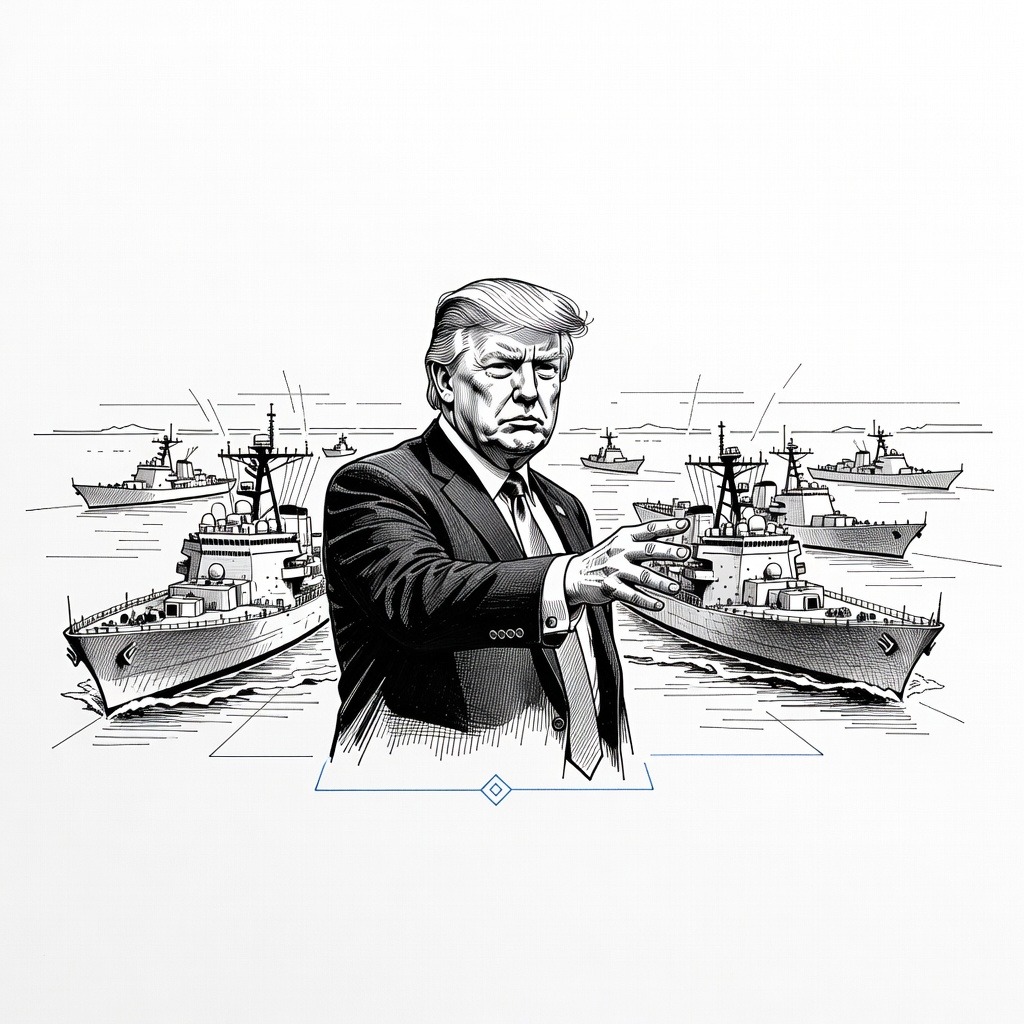
• Reclaiming Constitutional War Powers Prioritizing institutional checks and balances, the push to limit military authority reflects a structural rejection of unilateral executive war-making. The tentatively scheduled Thursday vote is viewed as an essential mechanism to mandate democratic oversight following the breakdown of Islamabad ceasefire negotiations. Appropriating the requested $80 billion to $100 billion for a Strait of Hormuz blockade is seen as a dangerous escalation that bypasses diplomacy and diverts domestic resources toward potentially limitless foreign conflict.
• Purging Institutional Moral Failures Emphasizing the protection of vulnerable individuals from power abuses, the push to expel sitting members relies on establishing strict behavioral baselines. Navigating Representative Luna's expulsion resolution against Eric Swalwell requires prioritizing transparent investigations over partisan shielding to ensure the institution does not harbor predatory behavior. Concurrently, driving the expulsion of Tony Gonzales after his staffer's suicide enforces necessary accountability for exploitative power dynamics and ethical breaches in the workplace.
• Rejecting Procedural Hostage Tactics Valuing the stable functioning of civil services, the ongoing February 14 DHS shutdown is interpreted as a reckless weaponization of the appropriations process. The tentative Johnson-Thune agreement to restore funding is viewed as a necessary retreat from partisan extremism, decoupling essential government operations from ideological demands. Acquiescing to the conservative faction's demand to mandate immigration measures entirely through reconciliation risks normalizing government shutdowns as routine political leverage.
How it may affect me
As a U.S. reader:
• You may experience short-term disruptions to civil services and essential government operations due to the ongoing Department of Homeland Security shutdown.
• Long-term national border enforcement policies could shift depending on whether Congress passes immigration measures exclusively through budget reconciliation or a compromise agreement.
• The proposed military blockade of the Strait of Hormuz may secure vital global transit routes in the short term to prevent adversaries from cutting off access.
• Funding the military blockade will require an estimated 80 billion to 100 billion dollars, which could lead to a long-term diversion of financial resources away from domestic needs.
• Congress may experience short-term delays in passing funding and national security legislation as the schedule fluctuates to accommodate expulsion votes for two sitting representatives.