
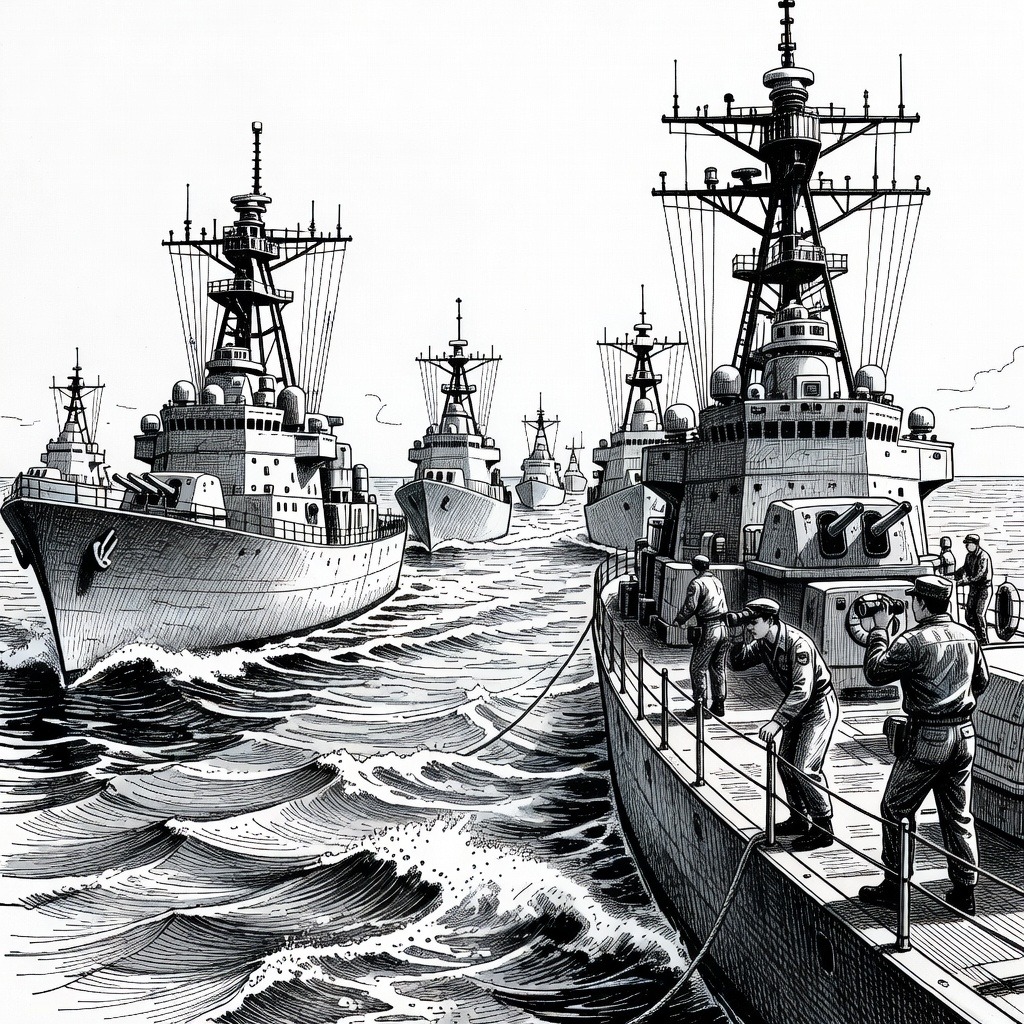
• Catalyst for Unchecked Escalation Prioritizing diplomatic de-escalation, this framework interprets the rapid shift to a naval blockade as a dangerous failure of statecraft. The collapse of the talks in Pakistan and the immediate deployment of hard power reflects an abandonment of international dialogue in favor of militarization. By explicitly threatening lethal force against approaching Iranian vessels, the administration transforms a fragile, newly broken truce into a volatile flashpoint where a single miscalculation could trigger a catastrophic regional war.
• Isolation from Multilateral Consensus Valuing international law and cooperative security, the refusal of traditional allies like Britain and France to participate signals a deeply flawed, unilateral strategy. Acting without a broad coalition strips the interdiction operation of international legitimacy, despite President Trump's assurances of future global participation. This isolated posture distances the United States from its European partners and undermines the multilateral frameworks necessary to achieve lasting, verifiable non-proliferation agreements.
• Gamble with Global Stability Highlighting the broader collateral costs of conflict, the resulting economic shockwaves are viewed as an unacceptable risk to global populations. Ghalibaf's warning regarding surging global energy prices underscores the inherent danger of blockading a vital geopolitical chokepoint like the Strait of Hormuz. The blockade functions as a blunt economic weapon that threatens to inflict widespread hardship and civilian instability, without guaranteeing Iran's compliance on either nuclear development or regional oil routes.
How it may affect me
As a U.S. reader:
• Short-term household expenses could rise, as the naval blockade in the Strait of Hormuz is anticipated to cause economic shockwaves and significantly drive up global energy prices.
• Long-term consumer access to goods may be impacted by changes to global supply chains, depending on whether the military pressure successfully forces the reopening of regional oil routes or causes further maritime instability.
• The public faces an increased long-term risk of broader U.S. military involvement, as unilateral operations and threats of lethal force against approaching vessels could escalate the collapsed peace talks into a catastrophic regional war.