
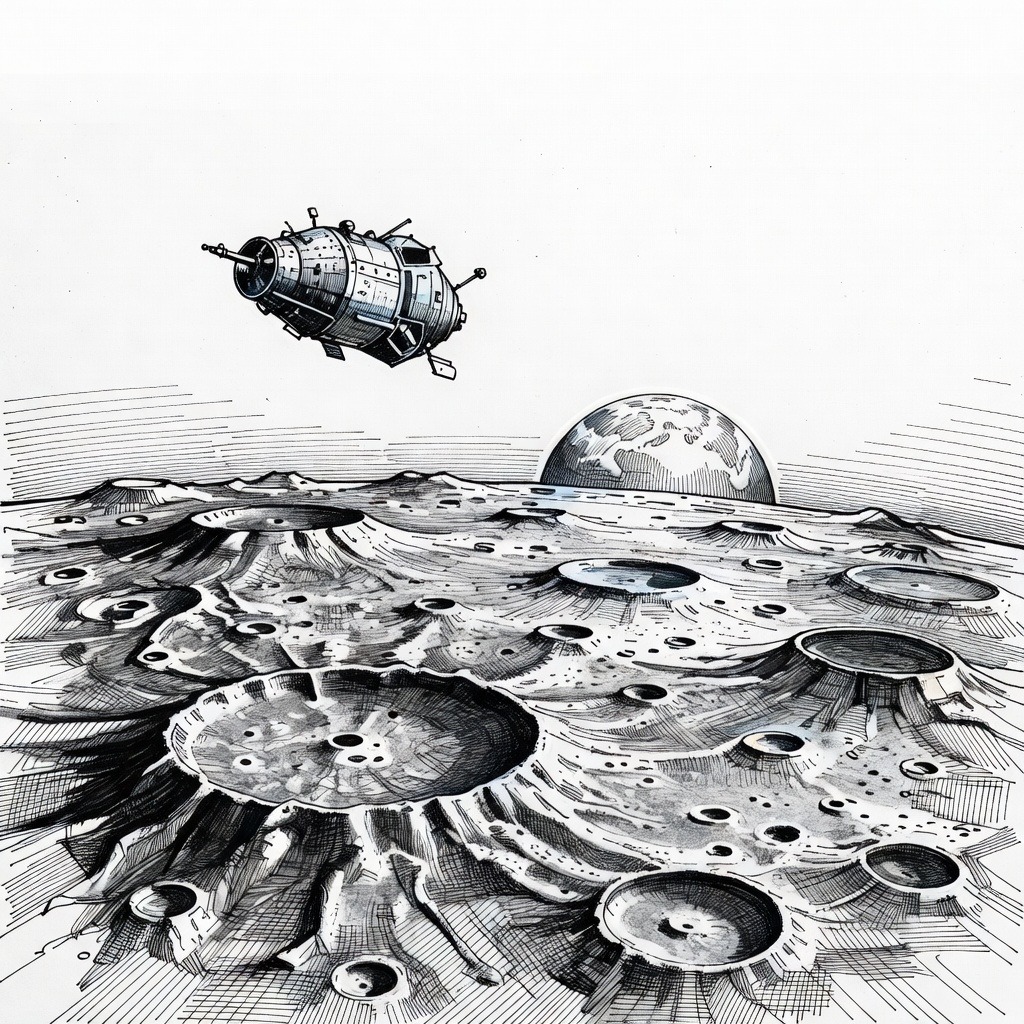
• Engine of Global Cooperation The inclusion of Canadian astronaut Jeremy Hansen alongside American peers validates space exploration as a unified, transnational endeavor rather than a solitary nationalist pursuit. For reformers, successfully testing life support and navigation systems through shared scientific labor represents an ideal technocratic model. This milestone proves that human progress is best driven by cross-border alliances and collective investments rather than isolationism.
• Pursuit of Pure Knowledge Reaching a record 252,756 miles to photograph ancient lava flows and lunar craters satisfies the fundamental progressive priority of expanding human understanding through empirical research. This camp values the intrinsic worth of these geological observations, viewing the mission's primary success as advancing the collective scientific frontier. Expanding our knowledge of the universe is treated as a universal public good that transcends the temporary goals of any political administration.
• Resisting Cold War Paranoia Reframing a scientific milestone as a geopolitical weapon against China—as articulated by Peter Navarro—risks militarizing a previously collaborative civilian sphere. Reformers worry that tying the 2027 and 2028 Artemis timelines strictly to beating Beijing’s 2030 lunar goal replaces humanitarian space exploration with zero-sum Realpolitik. They fear this nationalistic posturing betrays the unifying perspective symbolized by capturing the Earthset, pivoting instead toward unnecessary global escalation.
How it may affect me
As a U.S. reader:
• In the short term, you will see ongoing government focus and resource allocation directed toward the planned 2027 and 2028 Artemis missions based on the operational data gathered from this flight.
• Over the long term, you may experience the broader economic and security impacts of a renewed geopolitical competition, as the U.S. attempts to secure technological dominance and outpace China's projected 2030 lunar landing.
• The successful testing of deep-space life support and navigation systems at record distances could lead to practical engineering and technological advancements that eventually filter into the civilian sector.
• You may observe shifts in future U.S. foreign policy as space exploration balances collaborative international science, such as the inclusion of Canadian personnel, with strategies aimed at military deterrence and sovereign expansion.