
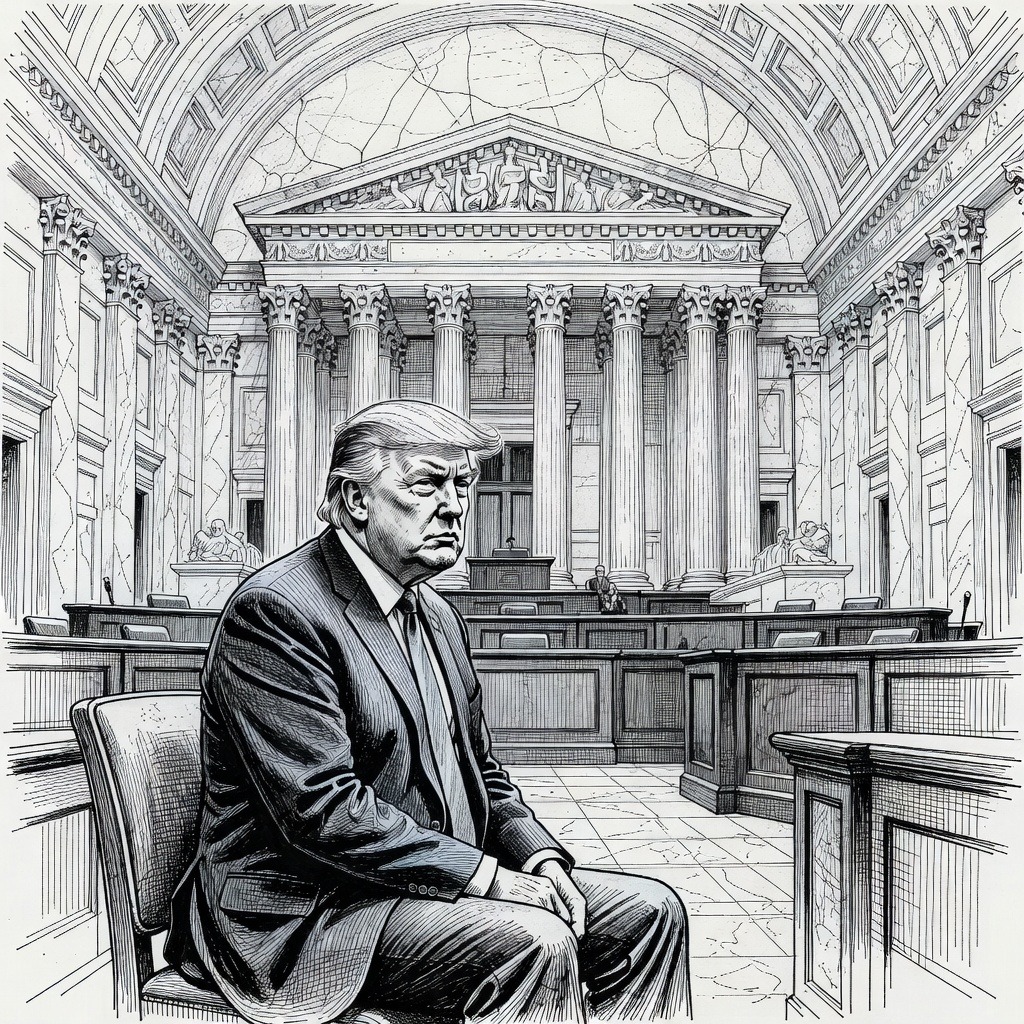
• Shield Against Executive Overreach Prioritizes the strict defense of civil liberties and constitutional permanence against unilateral presidential decrees. ACLU attorney Cecillia Wang’s argument highlights the fundamental belief that the executive branch fundamentally lacks the authority to strip constitutional protections from individuals born on U.S. soil. Permitting a January 2025 executive order to redefine the 14th Amendment bypasses the rigorous democratic process of constitutional amendment, establishing a dangerous precedent for the erosion of government accountability.
• Defense of Absolute Egalitarianism Values the principle that fundamental rights must never be conditional on a parent's immigration status or national origin. Interpreting the Constitution as a blanket guarantee for anyone born within the nation prevents the state from creating an institutionalized, stateless underclass. Redefining "jurisdiction" to exclude unauthorized immigrants directly contradicts the 14th Amendment's historical purpose of ensuring equal protection and universal civil rights for all residents.
• Rejection of Pretextual Exclusions Views the administration's focus on "birth tourism" as a strategic justification designed to erode broader civil liberties and target vulnerable unauthorized populations. Because the federal government does not officially track these births, relying on external estimates—like Peter Schweizer's claim of 1.5 million Chinese nationals or the CIS figure of 26,000 annually—serves to manufacture a crisis. This camp fears the narrative weaponizes outlier cases of wealthy elites exploiting the system to justify stripping foundational rights from thousands of innocent children.
How it may affect me
As a U.S. reader:
• Depending on the Supreme Court's ruling, the fundamental criteria for American citizenship could change, potentially requiring parents to hold permanent legal status for their children born on U.S. soil to automatically become citizens.
• If the executive order is upheld, communities could experience long-term demographic and social shifts, including the emergence of a non-citizen or stateless population of children born to unauthorized residents.
• The decision could immediately alter how temporary visitor visas are managed and scrutinized by the federal government in an effort to eradicate the transnational birth tourism industry.
• A ruling in favor of the administration would establish a long-term legal precedent expanding presidential authority, allowing executive orders to redefine constitutional protections without undergoing the formal amendment process through Congress.