
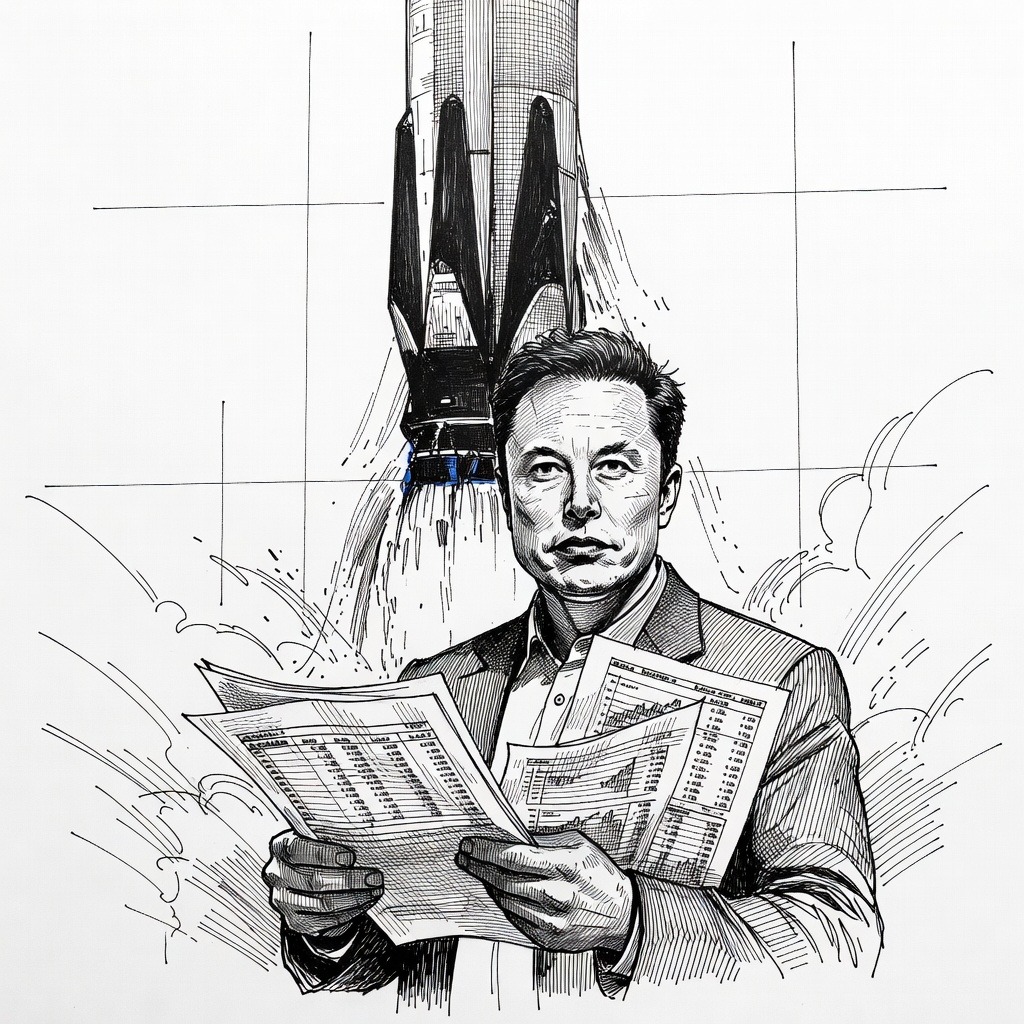
• Privatizing Publicly Funded Gains The massive $1.75 trillion valuation represents a highly unequal wealth transfer from public subsidies to private equity. Securing over $24.4 billion in federal contracts since 2008 means taxpayer dollars largely underwrote the existential risk of this enterprise. Taking the company public now allows institutional insiders to extract historic profits from aerospace infrastructure that was heavily subsidized by the government. This dynamic reinforces structural inequality by socializing the initial financial risks of space exploration while privatizing the eventual financial rewards.
• Consolidating Untouchable Corporate Power The sheer scale of this $75 billion raise and the recent integration with xAI signal dangerous market concentration. Merging cutting-edge artificial intelligence with dominant aerospace and satellite infrastructure into a unified $1.25 trillion entity aggressively stifles fair market competition. Consumer advocates view this unprecedented consolidation not as innovation, but as the unchecked construction of a monopolistic gatekeeper controlling critical future public utilities like the Starlink communications network.
• Baiting Retail Capital Gambles Launching the largest stock market debut in history during a period of documented economic volatility poses a severe risk to everyday investors. The confidential SEC filing process actively shields actual financial health from public scrutiny while leveraging the founder's celebrity to artificially inflate retail demand. Exposing consumer wealth to a highly speculative $1.75 trillion valuation risks leaving vulnerable retail traders holding the financial bag if broader market conditions trigger a sudden correction.
How it may affect me
As a U.S. reader:
• In the short term, everyday retail investors will have the opportunity to buy shares in the combined SpaceX and xAI entity, though market volatility, a speculative valuation, and limited initial financial transparency pose financial risks to participants.
• The expected influx of up to $75 billion in capital could lead to long-term expansions of technological infrastructure, directly impacting the public by scaling the availability of the Starlink satellite communications network.
• As a company sustained by over $24.4 billion in federal contracts goes public, citizens face a long-term dynamic where they can directly invest in a taxpayer-supported asset, though its massive scale may limit broader market competition in the aerospace and artificial intelligence sectors.