
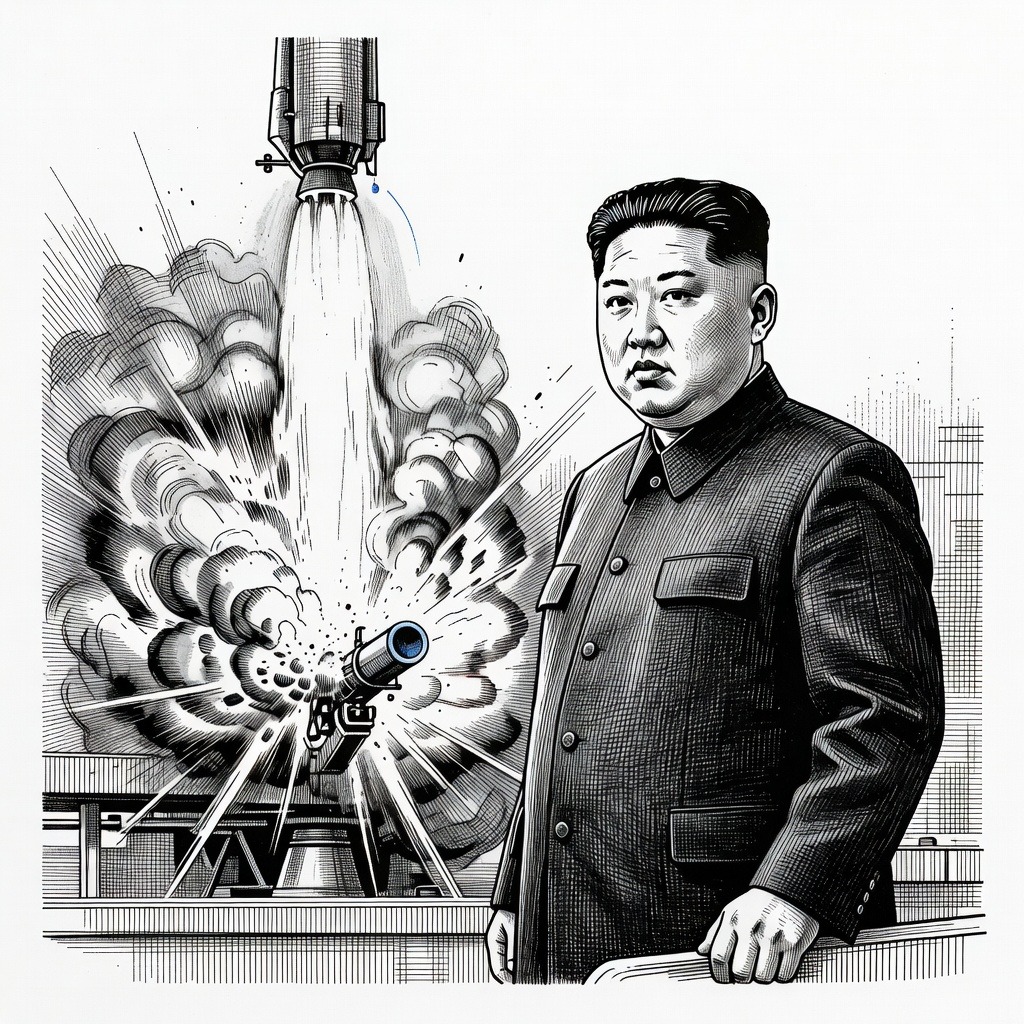
• Cost of Abandoned Diplomacy Prioritizing international stability necessitates sustained engagement rather than isolation. The accelerated military activity by North Korea since negotiations with the United States collapsed in 2019 highlights the direct consequence of abandoning diplomatic frameworks. Without active dialogue, isolation inherently incentivizes an arms race, pushing Pyongyang to double down on its five-year defense plan instead of pursuing economic or global integration.
• Shield Against Strategic Panic Preventing reactionary militarization requires viewing adversarial propaganda with critical, objective scrutiny. Expert skepticism regarding the carbon-fiber engine—specifically the omitted combustion time and unresolved atmospheric reentry hurdles—suggests the immediate threat is politically inflated by Pyongyang. Overreacting to these unverified 2,500-kilonewton thrust claims risks justifying a reciprocal military buildup by the U.S. and South Korea that only further destabilizes the region.
• Trigger for Unpredictable Escalation Maintaining regional peace requires predictable operational timelines to avoid catastrophic miscalculations. The shift toward solid-fuel engines, which require less preparation time and launch rapidly from mobile platforms, drastically compresses the critical window for emergency diplomatic intervention. This shortened detection cycle inherently raises the likelihood of accidental escalation, misread signals, or preemptive strikes, threatening massive humanitarian fallout.
How it may affect me
As a U.S. reader:
• In the long term, the public faces a developing security risk because this engine test is explicitly part of a five-year defense plan to build ballistic missiles capable of reaching the U.S. mainland.
• In the short term, citizens may observe changes in national defense strategies, as the U.S. and its allies might pursue a reciprocal military buildup or a hardened posture to counter these rapid-launch weapons.
• The public could be impacted by a higher risk of sudden international conflict, since solid-fuel missiles require less launch preparation, drastically compressing the early-warning window for U.S. defense networks and emergency diplomacy.
• The immediate physical threat to the homeland remains delayed, as experts confirm North Korea must still overcome major engineering hurdles, such as warhead atmospheric reentry, before deploying a fully reliable intercontinental missile.