
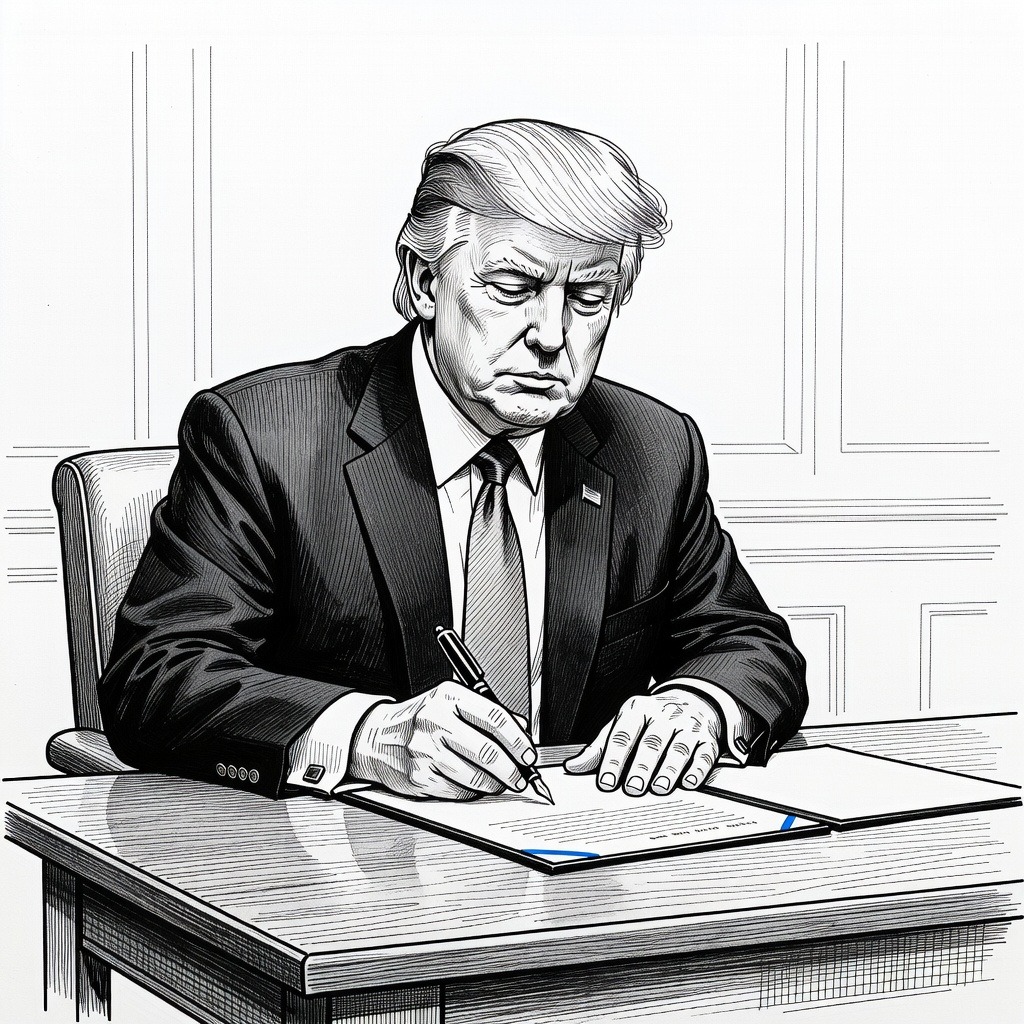
AI-generated illustration. Visual interpretation does not represent real individuals or scenes.
Senate Advances DHS Funding Bill as Trump Orders Pay for Unpaid TSA Agents
2026-03-27
The BareStory
The Senate passed a bill by voice vote early Friday to fund the majority of the Department of Homeland Security, excluding Immigration and Customs Enforcement and portions of Customs and Border Protection. The legislation now moves to the House of Representatives for approval. If passed, the measure would end a partial shutdown of the department that began in February.
The Senate vote followed an announcement by President Donald Trump on Thursday that he will sign an executive order directing Homeland Security Secretary Markwayne Mullin to immediately restart pay for Transportation Security Administration officers. Tens of thousands of TSA agents have worked without compensation for more than a month. The lack of pay led to significant staffing shortages, extended wait times, and disrupted air travel at airports across the United States.
The funding lapse originated after federal agents shot and killed two people in Minnesota, prompting Democrats to withhold funding for immigration agencies unless broader operational reforms were implemented. Although the Senate-passed bill leaves the two immigration and border agencies without new funding, both can continue operations indefinitely using remaining funds previously allocated from a past legislative package.
Republican lawmakers stated they plan to pursue additional funding for the unfunded homeland security and immigration enforcement functions in future legislation, utilizing the budget reconciliation process to bypass the standard threshold for passing a bill.
Left Perspective
Leverage Purse for Accountability
Shield Vulnerable Federal Labor
Guard Against Procedural Evasion
Right Perspective
Restore Critical Infrastructure Order
Insulate Sovereign Enforcement Agencies
Bypass Obstruction for Security
Left Perspective
• Leverage Purse for Accountability
Demanding government accountability requires exercising the constitutional power of the purse against opaque institutions. By successfully stripping Immigration and Customs Enforcement and Customs and Border Protection from the Senate's DHS funding bill, legislators are enforcing a direct consequence for the fatal shootings by federal agents in Minnesota. This targeted defunding serves as a necessary mechanism to force operational reforms and protect civil liberties from unchecked state violence.
• Shield Vulnerable Federal Labor
Protecting the livelihoods of civil servants must supersede political brinkmanship. The month-long disruption that left tens of thousands of TSA officers unpaid demonstrates the collateral damage inflicted on essential workers during institutional funding disputes. While President Trump’s executive order directing Secretary Markwayne Mullin to restart pay provides vital immediate relief, it highlights the systemic failure of treating worker compensation and safe air travel as leverage in broader ideological battles.
• Guard Against Procedural Evasion
Preserving democratic oversight means preventing factions from unilaterally shielding controversial agencies from reform. The stated Republican strategy to use the budget reconciliation process to fund ICE and CBP is perceived as a dangerous circumvention of standard legislative thresholds. This maneuver threatens to bypass the operational reforms demanded in the wake of the Minnesota shootings, effectively allowing agencies with a history of unchecked force to operate without mandatory legislative guardrails.
Right Perspective
• Restore Critical Infrastructure Order
Maintaining institutional continuity and public order requires decisive executive intervention when the legislature stalls. President Trump’s executive order restoring pay to TSA agents immediately resolves the severe staffing shortages and wait times that have crippled the nation's air travel network over the past month. This executive action successfully bypasses legislative gridlock to ensure that vital domestic security mechanisms continue to function without disruption.
• Insulate Sovereign Enforcement Agencies
National sovereignty and border integrity cannot be compromised by reactionary political boycotts. Although the current Senate voice vote excludes new funding for ICE and CBP following the Minnesota incident, the ability of both agencies to operate indefinitely on previously allocated funds is a crucial systemic safeguard. This continuity ensures the rule of law is maintained despite attempts to weaponize broader homeland security budgets over localized law enforcement controversies.
• Bypass Obstruction for Security
Securing the nation's borders necessitates utilizing all available structural mechanisms to overcome partisan blockades. The Republican commitment to pursuing future funding for immigration enforcement functions through the budget reconciliation process is a pragmatic exercise in legislative realism. By bypassing standard voting thresholds, this strategy ensures that indispensable law enforcement operations are fully resourced and permanently shielded from ideologically driven reform ultimatums.
How it may affect me
As a U.S. reader:
• In the short term, air travelers can expect shorter wait times and fewer airport disruptions as the executive order restores pay for TSA officers and resolves recent staffing shortages.
• General homeland security services will likely resume normal operations and end a partial shutdown that began in February, pending final approval of the Senate funding bill by the House of Representatives.
• Border and immigration enforcement activities will not experience immediate interruptions, because Customs and Border Protection and Immigration and Customs Enforcement can operate indefinitely using previously allocated funds.
• In the long term, the public may see continued legislative conflict over law enforcement accountability, as lawmakers plan to use the budget reconciliation process to bypass standard voting thresholds and secure future funding for immigration agencies without implementing demanded operational reforms.