
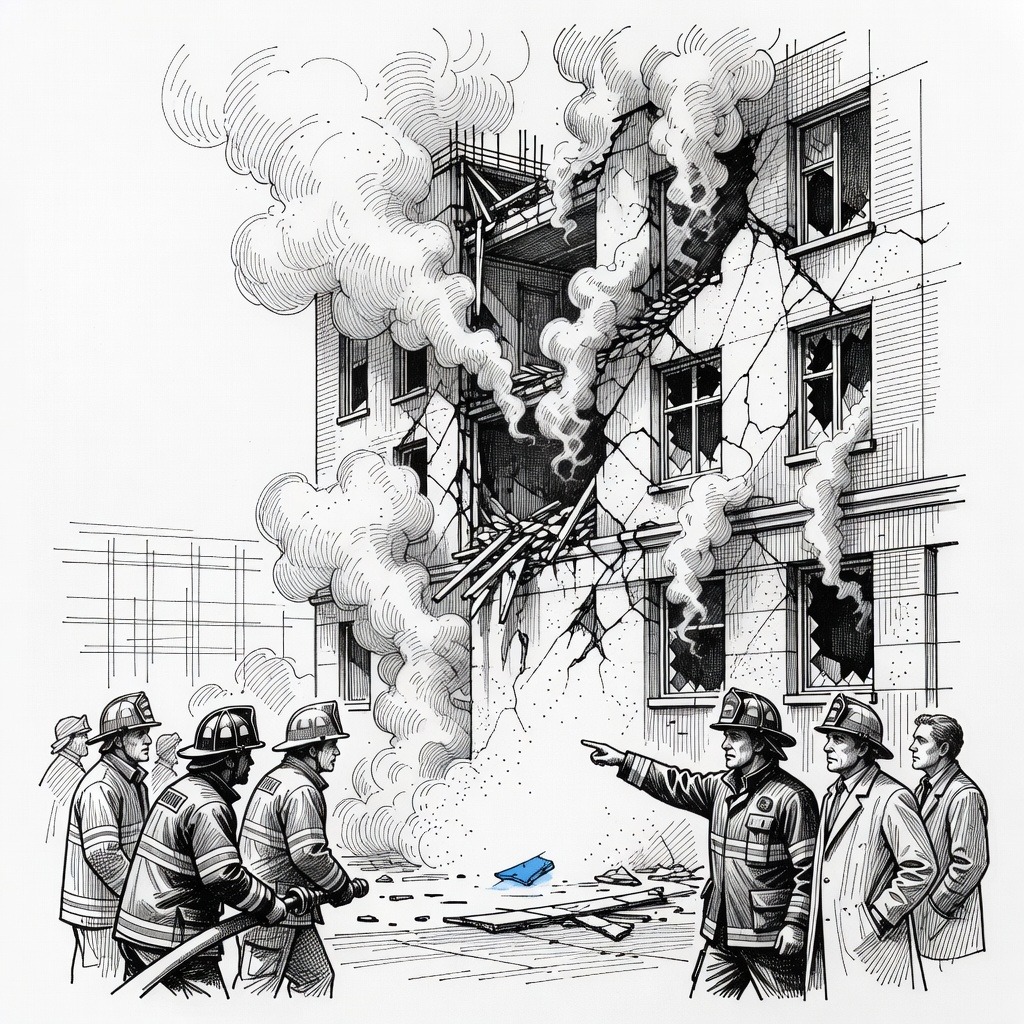
• Toll of Escalating Attrition Prioritizing human life and the protection of non-combatants reframes the overnight assault as a severe failure of international conflict resolution. The launching of nearly 400 drones and 30 missiles—resulting in residential fires, four fatalities, and over two dozen injuries—demonstrates the inevitable civilian casualties of prolonged warfare. Even with a high interception rate, the sheer volume of munitions guarantees tragic collateral damage, illustrating that relying solely on military defense cannot prevent humanitarian suffering.
• Cycle of Destructive Retaliation Viewing peace through the lens of diplomatic de-escalation highlights the danger of reciprocal military strikes. The exchange of nearly 400 Russian munitions for 55 Ukrainian drones signals an entrenched tit-for-tat dynamic that deepens the conflict without yielding a decisive resolution. This symmetry of cross-border attacks normalizes continuous destruction, pushing both sides further away from the negotiating table and ensuring the conflict remains a grueling war of attrition.
• Catalyst for Regional Spillover The paramount fear of unchecked military escalation is the inadvertent triggering of a wider regional war. The scrambling of fighter jets by Polish and Romanian military commands as strikes neared their airspace underscores the extreme fragility of current borders. When massive aerial bombardments occur near neighboring territories, a single miscalculated trajectory or interception could inadvertently draw external nations into the violence, transforming a localized crisis into a disastrous continental conflict.
How it may affect me
As a U.S. reader:
• Based strictly on the provided text, this event is not expected to have a significant practical impact on the general public in the United States, as the military escalation, defensive investments, and risks of regional spillover are entirely localized to Eastern Europe without any mention of U.S. involvement or broader consequences.