
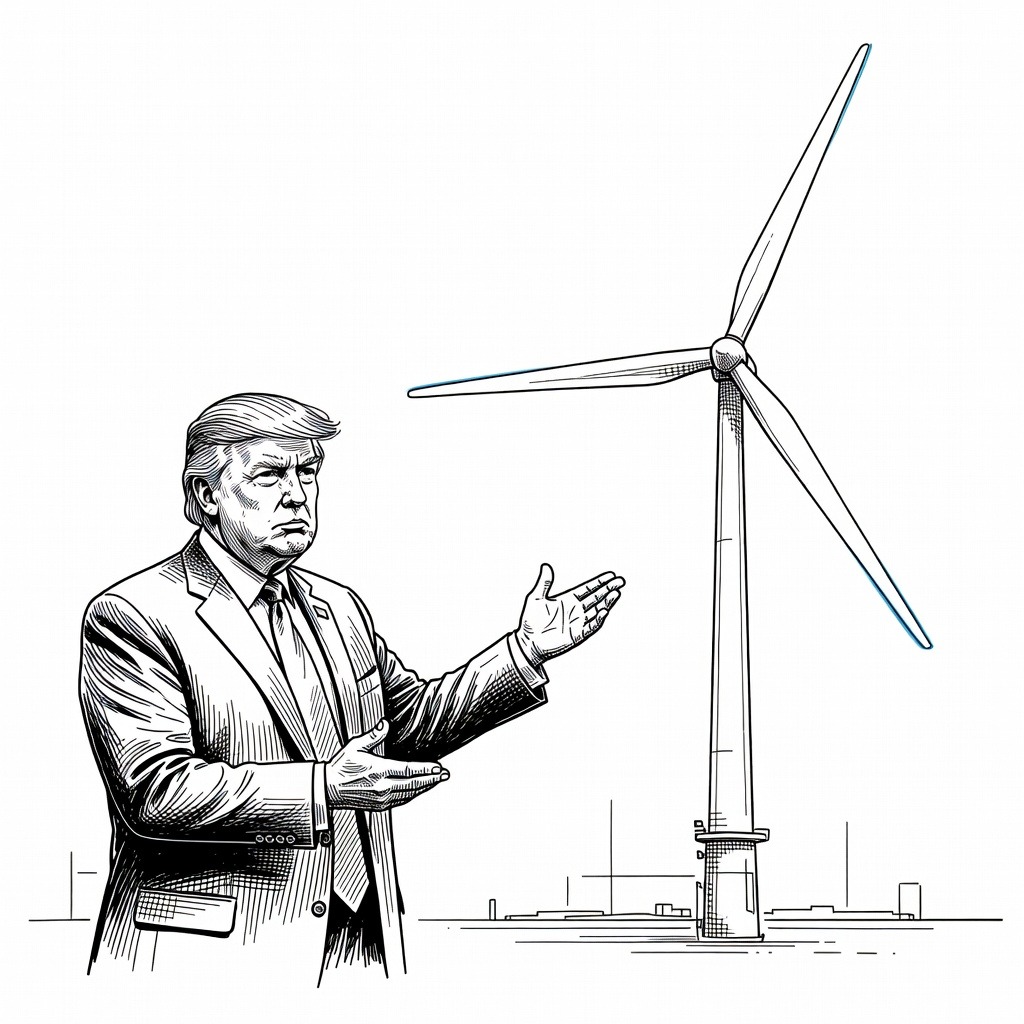
• Rewarding Legacy Corporate Extraction The Left views the $1 billion reimbursement as a direct transfer of public wealth to entrench the fossil fuel industry. Senator Whitehouse’s accusation highlights the fundamental belief that redirecting these funds toward Gulf oil, shale gas, and a Texas LNG facility prioritizes corporate monopolies over the broader public good. From this perspective, the federal government is weaponizing its authority to penalize clean innovation while artificially sustaining legacy polluters.
• Sabotaging Global Economic Competitiveness Abandoning offshore wind development is interpreted as a severe blow to future-proof domestic job creation. Warnings from Clean Energy for America and the NRDC anchor the logic that halting these projects strands billions of dollars in active investments. The Left reasons that voluntarily ceding ground on offshore wind directly surrenders America’s competitive edge in the rapidly expanding global green economy, sacrificing long-term prosperity for short-term political posturing.
• Imposing Arbitrary Regulatory Paralysis The administration’s use of stop-work orders and federal lease cancellations represents a dangerous deployment of executive power to thwart state-level progress. Governor Hochul’s criticism illustrates the frustration that federal interference is actively dismantling local democratic mandates designed to meet state clean energy targets. The overarching fear is that this aggressive volatility will permanently chill green infrastructure investment by signaling that the U.S. is an unsafe, unreliable market for sustainable capital.
How it may affect me
As a U.S. reader:
• The use of $1 billion in public funds to cancel offshore leases will shift near-term domestic energy development away from offshore wind and toward conventional oil, shale gas, and liquefied natural gas.
• Workers and local economies tied to the green energy sector may experience short-term job losses and stranded capital due to the abrupt halting of East Coast offshore wind projects.
• Residents in coastal states such as New York and North Carolina will likely see delays in their local governments meeting long-term clean energy targets due to the lease cancellations.
• Long-term domestic energy infrastructure will increasingly rely on fossil fuels alongside solar, onshore wind, and battery technologies, a shift the administration asserts will provide more reliable and cost-effective power for consumers.
• The sudden change in federal energy priorities may affect the broader economy by potentially chilling future green infrastructure investments, though proponents argue it secures long-term national defense by keeping coastal maritime domains unencumbered.