
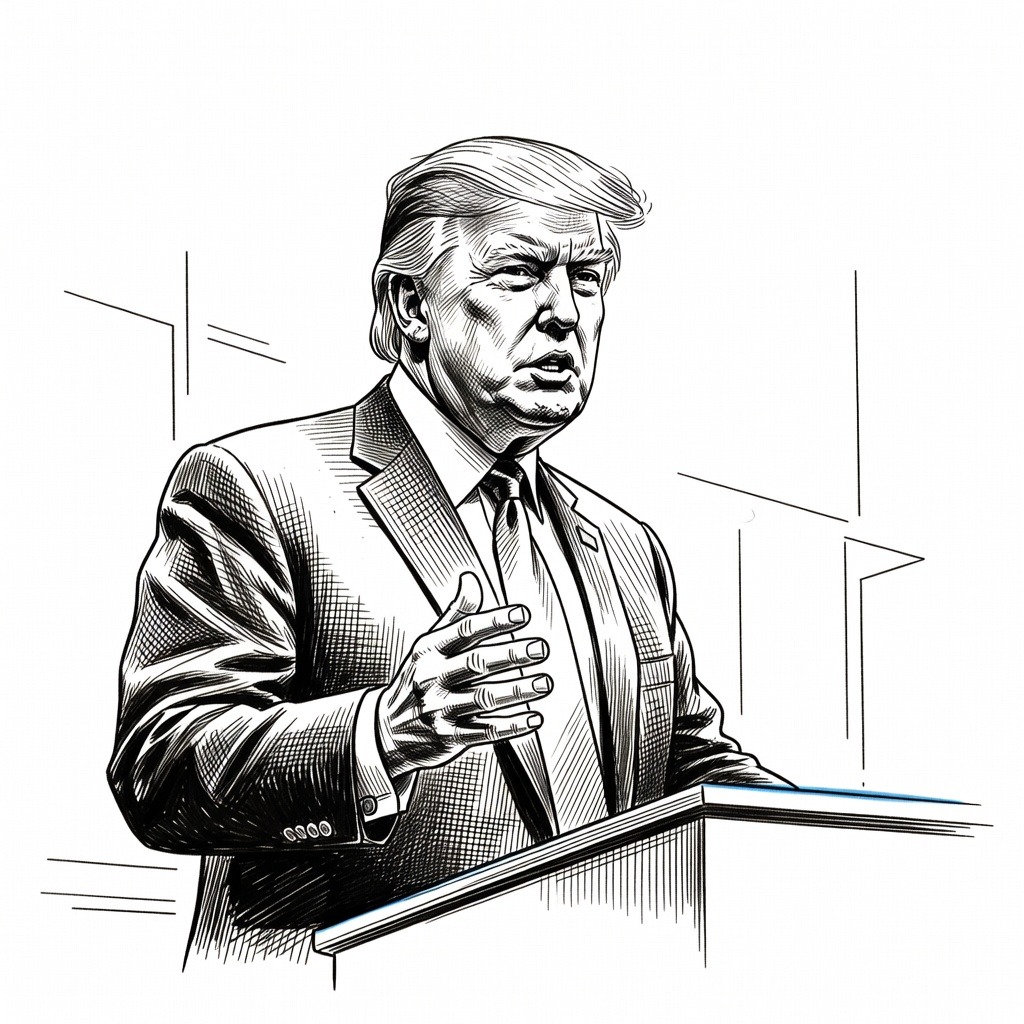
AI-generated illustration. Visual interpretation does not represent real individuals or scenes.
Global Markets Rally and Oil Plunges as U.S. Halts Strikes on Iranian Energy Infrastructure
2026-03-23
The BareStory
On Monday, March 23, 2026, President Donald Trump announced that the United States and Iran have engaged in talks, prompting a five-day halt on planned U.S. military strikes against Iranian power plants and energy infrastructure. The diplomatic development follows weeks of military conflict that escalated after a joint U.S. and Israeli attack on Iran in late February. The ongoing war has led to Iranian strikes on commercial ships and caused a historic disruption of global oil supplies moving through the Strait of Hormuz.
The announcement of the ceasefire triggered an immediate shift in global financial markets. Major stock indices rallied by approximately 2 percent, while global crude oil prices experienced a sharp decline, with the international benchmark Brent crude dropping 10 percent to $100 per barrel. Ahead of the market shift, traders observed a sudden, isolated surge in equity and oil futures trading volume roughly 15 minutes prior to the president's announcement, which allowed the investors involved to profit significantly from the subsequent price swings.
The Middle East conflict has driven substantial economic volatility and inflated fuel costs, pushing U.S. diesel prices up 40 percent to $5.29 per gallon. To mitigate the supply crisis, Energy Secretary Chris Wright stated that the administration expects to introduce additional diesel to the domestic market soon, complementing an ongoing release of 172 million barrels of oil from the U.S. strategic reserve. Meanwhile, financial officials are monitoring the broader economic impact. Chicago Federal Reserve President Austan Goolsbee cautioned that the unpredictability of the conflict continues to complicate monetary policymaking and efforts to stabilize inflation.
Left Perspective
Bearing the Inflationary Burden
Extracting Elite Insider Profits
Masking Deep Systemic Fragility
Right Perspective
Restoring Vital Market Equilibrium
Deploying Strategic Supply Buffers
Defending Macroeconomic Policy Constraints
Left Perspective
• Bearing the Inflationary Burden
Prioritizing social equity requires acknowledging how geopolitical brinkmanship functions as a deeply regressive tax on the working class. The 40 percent surge in domestic diesel prices to $5.29 per gallon directly punishes ordinary consumers by universally inflating the cost of logistics and basic goods. This side views the economic fallout of the conflict as a disproportionate burden placed on vulnerable domestic populations to absorb the shock of volatile foreign policy maneuvers.
• Extracting Elite Insider Profits
Consumer advocates view sudden wealth concentration during global crises as a glaring symptom of an extractive and unbalanced financial system. The isolated surge in equity and oil futures exactly 15 minutes before the official announcement highlights a fundamentally rigged architecture where privileged actors capitalize on non-public diplomatic intelligence. For this camp, the reality that financial insiders profited massively while the broader public absorbed weeks of inflated fuel costs represents a catastrophic failure of institutional fairness.
• Masking Deep Systemic Fragility
Dependence on unpredictable global commodities leaves the domestic economy dangerously exposed to external shocks that consistently harm the lower and middle classes. Relying on the release of 172 million barrels from the strategic reserve to counteract the Strait of Hormuz disruption is viewed as an unsustainable band-aid rather than a structural fix. As Federal Reserve President Austan Goolsbee warned, this perpetual volatility prevents any meaningful stabilization of inflation, ensuring that consumers remain trapped in a state of economic precarity.
Right Perspective
• Restoring Vital Market Equilibrium
Market realists prioritize systemic stability, viewing the sudden diplomatic pivot as a necessary measure to eliminate the destructive risk premium artificially inflating global energy costs. The immediate 2 percent rally in major stock indices and the 10 percent plunge of Brent crude to $100 per barrel validate the pragmatic decision to halt the planned infrastructure strikes. This camp views the five-day ceasefire as a critical market correction that immediately restores investor confidence and incentivizes broader economic recovery.
• Deploying Strategic Supply Buffers
Shielding domestic industry from international supply chain disruptions is paramount for maintaining national economic productivity and growth. Energy Secretary Chris Wright’s planned introduction of domestic diesel, paired with the 172-million-barrel strategic reserve release, represents vital leverage used to offset the blockades in the Strait of Hormuz. These aggressive supply-side injections are celebrated as necessary macroeconomic shock absorbers designed to keep the logistical engines of the economy from stalling out.
• Defending Macroeconomic Policy Constraints
Effective monetary policy and long-term capital preservation cannot function in an environment dictated by continuous global supply shocks. As Chicago Fed President Austan Goolsbee explicitly noted, the sheer unpredictability of the ongoing conflict actively sabotages central bank efforts to tame inflation. This side fears that unless commercial shipping routes are permanently secured, unpredictable geopolitical volatility will continuously override domestic monetary policy and threaten broad market efficiency.
How it may affect me
As a U.S. reader:
• In the short term, the cost of purchasing basic household goods may fluctuate, as a 40 percent surge in domestic diesel prices is currently being countered by the government's ongoing release of 172 million barrels from the strategic reserve to ease logistical costs.
• If you hold personal investments or retirement accounts tied to major stock indices, you may see a short-term increase in your portfolio value driven by the recent 2 percent market rally that followed the five-day ceasefire announcement.
• Over the long term, ongoing unpredictability and disruptions to global commercial shipping routes could keep domestic inflation elevated, directly complicating the Federal Reserve's efforts to execute monetary policy and stabilize consumer prices.
• You may operate at a disadvantage in financial markets during geopolitical crises, as recent trading patterns demonstrated that insiders were able to profit significantly from non-public diplomatic intelligence 15 minutes before the official announcement reached ordinary consumers.