
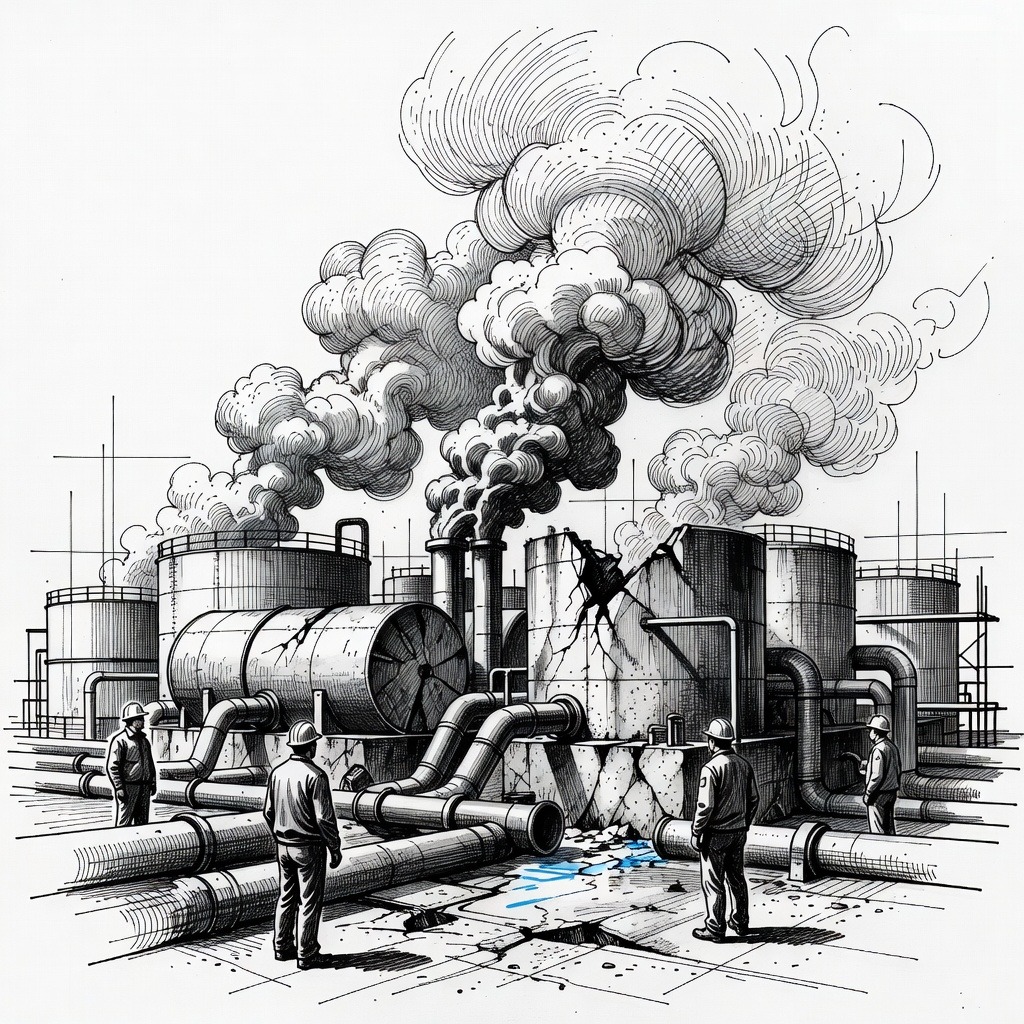
• Tragedy of Unchecked Escalation Values human life and international law above strategic posturing, viewing military force as a destructive tool that ultimately harms populations rather than solving geopolitical disputes. The staggering toll of at least 1,300 reported civilian deaths in just three weeks is seen as a fundamental failure of this campaign. Airstrikes on dense urban centers like Tehran demonstrate that aggressive military intervention inevitably inflicts profound, disproportionate suffering on non-combatants.
• Catalyst for Regional Chaos Values diplomatic containment and de-escalation, arguing that preemptive military strikes frequently spark wider, uncontainable conflicts. The Iranian retaliatory missile salvos striking a Kuwaiti oil refinery and threatening airspace across the UAE, Bahrain, and Saudi Arabia are viewed as direct proof that the US-Israeli campaign has destabilized the broader Middle East. Rather than neutralizing a threat, this approach has forced neighboring states and energy hubs into the crossfire, amplifying the danger to global security.
• Entrenching the Authoritarian State Fears that aggressive external pressure consistently backfires by handing hardline regimes the ultimate pretext to crush domestic civil liberties and consolidate power. The hostilities have triggered a telecommunications blackout and unleashed Basij militias to establish checkpoints and suppress internal dissent. While the U.S. President publicly urges an Iranian uprising, this camp sees the military campaign as counterproductive, providing the regime with a wartime justification to enforce martial control while punishing everyday global citizens with a 47 percent spike in crude oil prices.
How it may affect me
As a U.S. reader:
• You will likely experience short-term increases in gasoline and everyday energy costs due to the 47 percent spike in global crude oil prices since the campaign began.
• You may face additional, temporary economic friction as international energy markets remain disrupted by ongoing strikes against oil refineries in the Middle East.
• You are a citizen of a nation actively participating in a joint military campaign, meaning U.S. defense resources are directly engaged in a conflict that carries long-term implications for global security.