
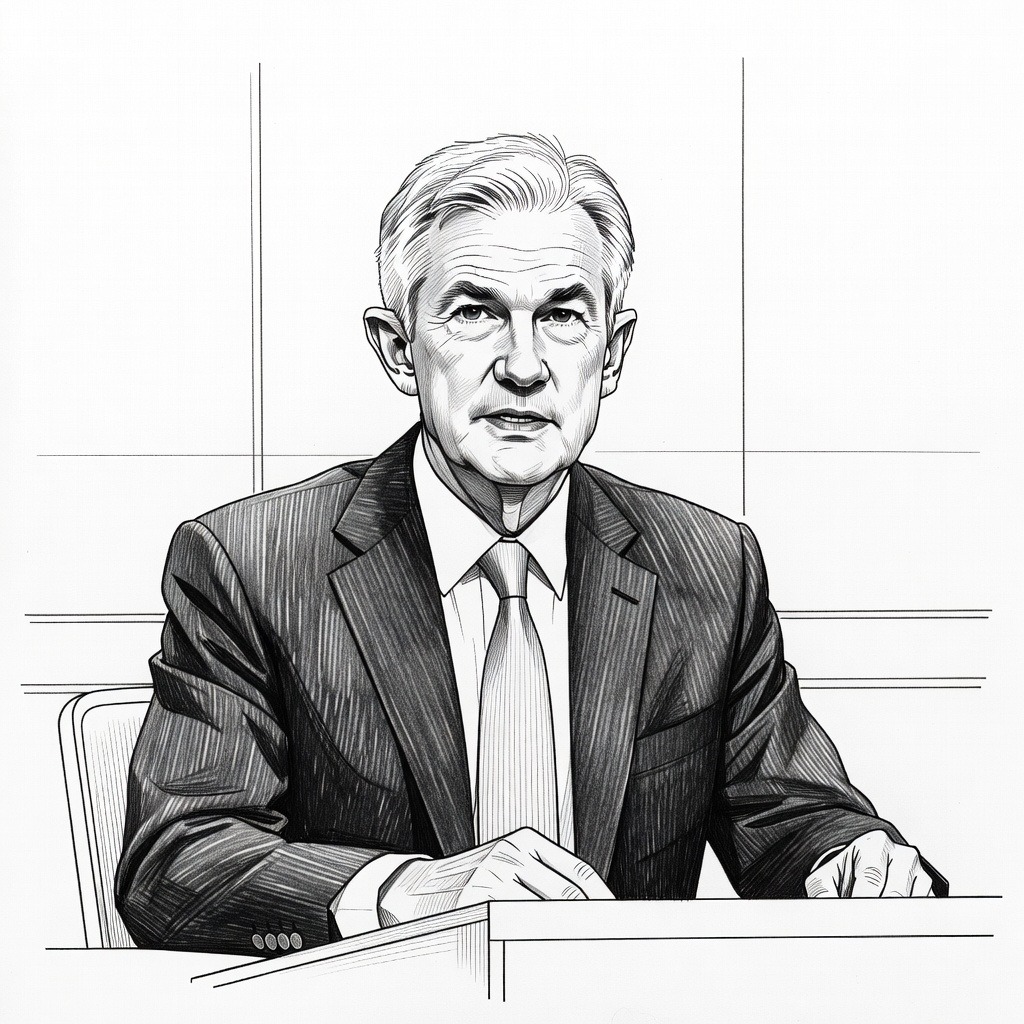
AI-generated illustration. Visual interpretation does not represent real individuals or scenes.
Federal Reserve Pauses Interest Rates Amid Shifting Market Expectations
2026-03-19
The BareStory
The Federal Reserve maintained current interest rates this week, pausing its rate-cutting campaign. The decision follows a previous rate hold in January 2026 and coincides with inflation remaining above the central bank's two percent target, alongside indicators of stalled job growth and rising unemployment.
Following the meeting, expectations for an interest rate reduction later this year significantly decreased. According to a market tracking group, there is a greater than 80 percent probability that borrowing costs will remain at their current levels through the fall. Futures markets now reflect a near-zero chance of a rate cut at the upcoming April meeting, with traders instead pricing in a slight probability of a rate hike.
During a post-meeting press conference, Federal Reserve Chair Jerome Powell described economic growth as solid but acknowledged elevated forecast uncertainty. According to the Federal Open Market Committee's statement and Powell's remarks, future monetary policy will be influenced by inflation data and the potential economic impacts of tariffs and an escalating war in Iran. Financial analysts noted that investors interpreted the central bank's position as a sign that monetary policy interventions may be limited amid the Middle East conflict.
The interest rate pause has generated varied impacts across the economy. Stock markets and equity index futures declined following the central bank's decision, and mortgage interest rates have recently risen despite the pause. Conversely, the environment continues to benefit savers, with banking institutions maintaining yields of four percent or higher on flexible savings vehicles like money market accounts.
Left Perspective
Sacrificing the Labor Market
Squeezing the Working Consumer
Shielding Concentrated Capital
Right Perspective
Anchoring the Inflation Target
Buffering Against Geopolitical Shocks
Incentivizing Fiscal Discipline
Left Perspective
• Sacrificing the Labor Market
Prioritizing a rigid two percent inflation target over maximum employment creates severe vulnerabilities for the working class. With data explicitly showing stalled job growth and rising unemployment, maintaining high interest rates acts as a blunt instrument that destroys livelihoods. The central bank's refusal to ease monetary policy effectively shifts the macroeconomic burden of cooling the economy directly onto the backs of wage earners.
• Squeezing the Working Consumer
Prolonged high borrowing costs systematically lock everyday consumers out of upward economic mobility. As the pause drives up mortgage rates despite the lack of a formal hike, the foundational wealth-building tool of homeownership is further restricted to the wealthy. The near-zero probability of an April rate cut guarantees that working families will continue bleeding disposable income to service debt instead of participating in the broader economy.
• Shielding Concentrated Capital
The resulting economic environment structurally benefits those who already hold excess capital at the expense of those who rely on a paycheck. While policymakers tout banking yields of four percent or higher on savings vehicles, this dynamic primarily enriches institutional investors and affluent households. Meanwhile, the average consumer facing rising unemployment lacks the excess liquidity required to profit from these money market accounts, widening the wealth gap.
Right Perspective
• Anchoring the Inflation Target
Maintaining systemic economic stability requires uncompromising fiscal discipline when the two percent inflation threshold has yet to be achieved. Pausing the rate-cutting campaign following the January 2026 hold is a necessary defense mechanism to prevent the permanent erosion of the dollar's purchasing power. The Federal Reserve's refusal to prematurely ease rates ensures that embedded inflation is starved out of the economy before irreversible structural damage occurs.
• Buffering Against Geopolitical Shocks
Forward-looking monetary policy must prioritize strategic risk management over short-term market appeasement. With elevated uncertainty regarding the inflationary impacts of tariffs and an escalating war in Iran, the 80 percent probability of sustained borrowing costs serves as a prudent firewall against supply chain shocks. The subsequent decline in stock markets and equity index futures represents a healthy, necessary repricing of risk rather than an economic failure.
• Incentivizing Fiscal Discipline
Sustaining current interest rates restores the foundational mechanics of a healthy, functioning capitalist economy. Yields of four percent or higher on savings accounts correctly reward fiscal prudence and capital retention over reckless, debt-fueled speculation. This environment forces markets to deleverage and ensures that future economic expansion is built on actual retained capital rather than cheap, artificially subsidized borrowing.
How it may affect me
As a U.S. reader:
• In the short term, individuals looking to buy a home or take out loans will face higher expenses, as mortgage rates have risen and general borrowing costs are expected to remain elevated through the fall.
• Savers will continue to see immediate financial benefits, as banking institutions are maintaining yields of four percent or more on flexible savings and money market accounts.
• Workers may experience increased job insecurity over time, as the central bank's decision to hold rates coincides with current indicators of stalled job growth and rising unemployment.
• People with stock market investments or equity-based retirement funds may see short-term declines in their portfolio values as markets adjust to the rate pause and geopolitical risks.
• Over the long term, the rate pause is intended to protect the purchasing power of everyday consumers by bringing inflation down to two percent, though prices remain vulnerable to supply chain shocks from tariffs and foreign conflicts.