
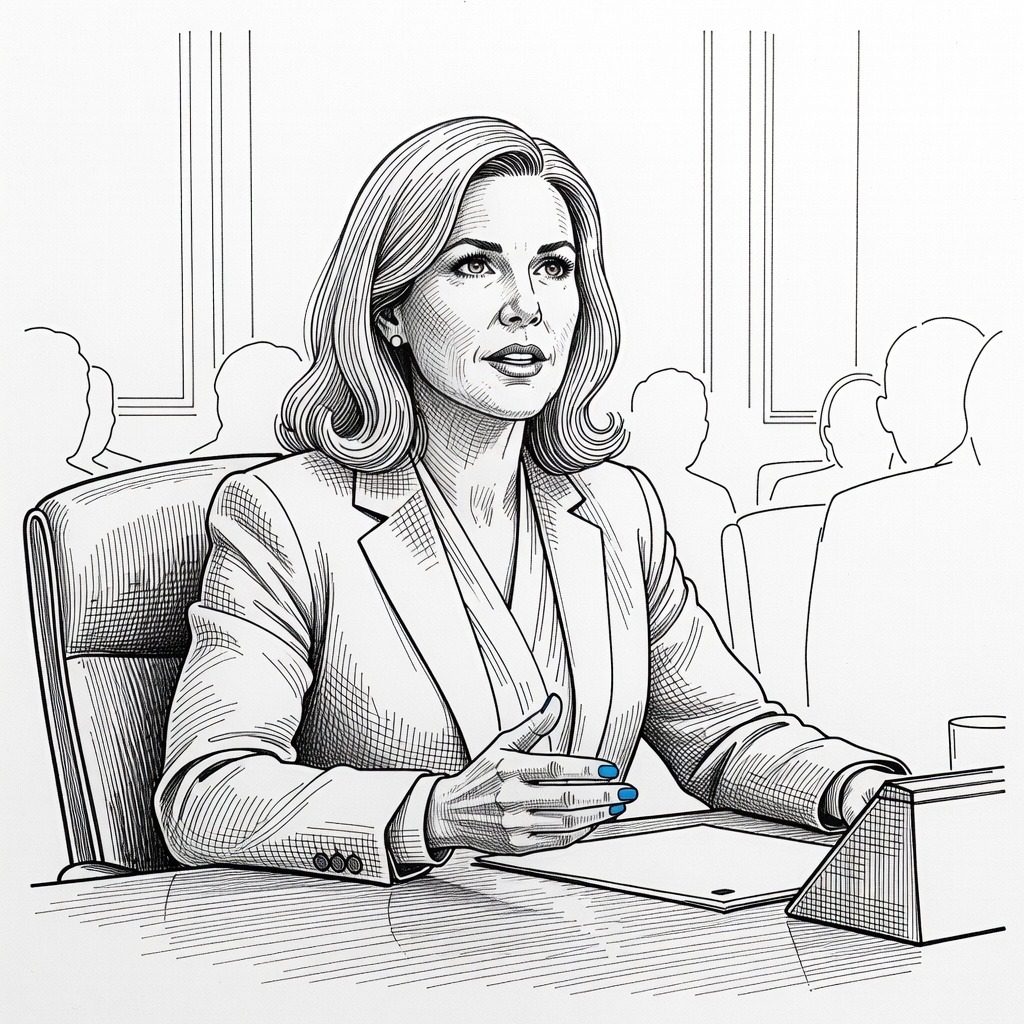
• Demand for Sworn Accountability Government transparency dictates that executive officials must answer to legislative oversight under the penalty of perjury. For reform-minded lawmakers, an unrecorded, unsworn briefing with Attorney General Bondi and Deputy Attorney General Blanche is not an act of compliance, but a deliberate tactic to evade a formal congressional subpoena. By refusing to testify under oath, the administration denies the public an enforceable, legal record regarding the handling of the Epstein investigation. This circumvention directly undermines the constitutional mechanisms designed to hold powerful institutions in check.
• Rejection of Procedural Theater Participating in a closed-door session actively legitimizes a process designed to obscure the truth rather than reveal it. Representatives like Garcia and Lee view the walkout not as a stunt, but as a necessary refusal to participate in a manufactured facade of cooperation. From this perspective, the administration is leveraging informal briefings to conceal sensitive Epstein case files from rigorous, public scrutiny. Tolerating this format allows the executive branch to feign transparency while protecting the institutional status quo and shielding elite actors.
• Precedent of Executive Impunity The refusal to enforce congressional authority signals a dangerous erosion of institutional checks and balances. When Committee Chair Comer dismisses inquiries about pursuing contempt of Congress proceedings, it establishes a standard where executive officials can ignore legal subpoenas without consequence. Reformers argue that shielding the Attorney General from a formal deposition grants the Justice Department unchecked power to manage the Epstein fallout entirely on its own terms. Ultimately, this prioritizes the protection of entrenched power structures over the pursuit of justice for victims.
How it may affect me
As a U.S. reader:
• In the short term, your direct visibility into the Justice Department's handling of the Epstein investigation remains restricted due to the closed-door and unrecorded nature of the current congressional briefings.
• You may face ongoing uncertainty regarding the completeness of public case files, as lawmakers and the administration continue to dispute whether the millions of recently released documents are improperly redacted or fully compliant with transparency laws.
• In the long term, the resolution of this conflict over congressional subpoenas and unsworn testimony could set an institutional precedent, impacting the future ability of your elected representatives to compel on-the-record answers and enforce accountability from the executive branch.