
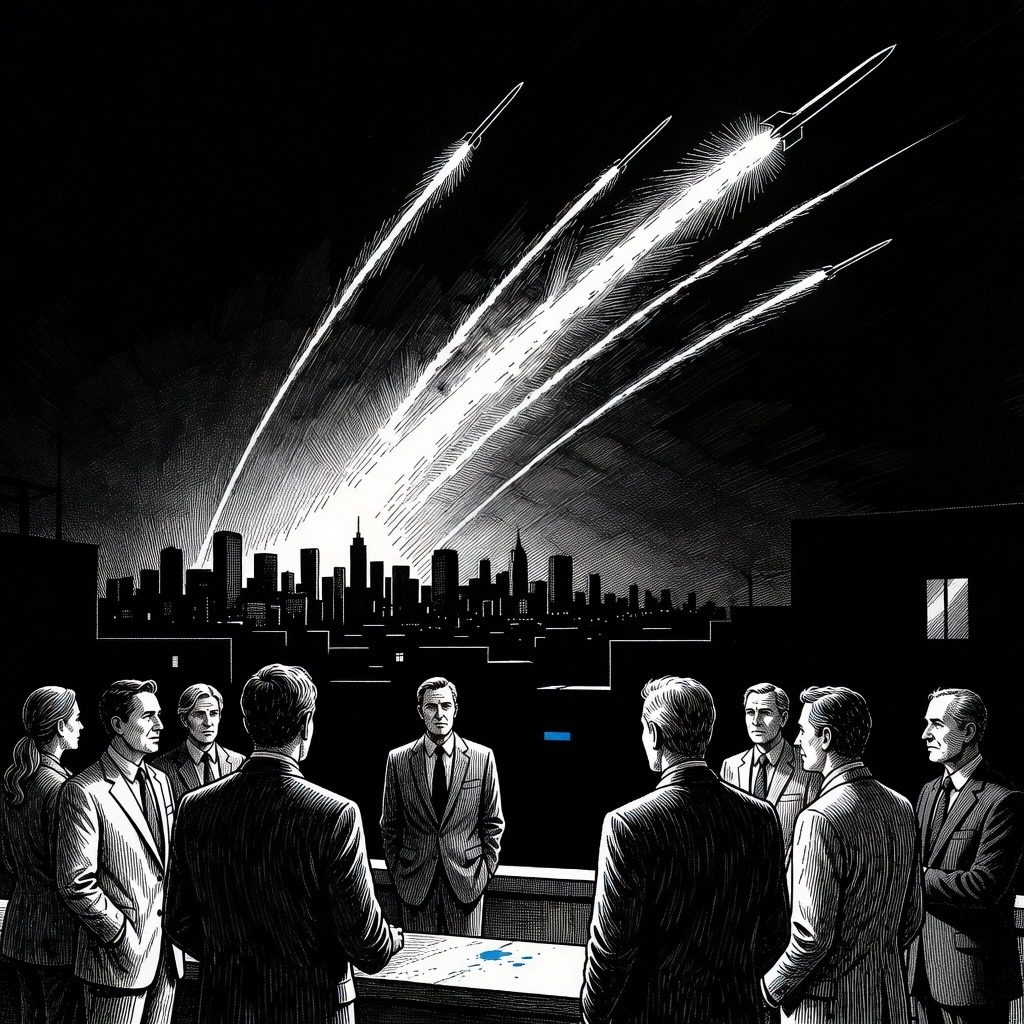
• Cycle of Unchecked Escalation Prioritizing de-escalation and civilian protection, this framework views the targeted assassinations of senior Iranian officials like Ali Larijani and Gholamreza Soleimani as perilous triggers for inevitable, deadly blowback. The retaliatory ballistic missile strike on Ramat Gan, which killed an Israeli couple in their 70s, exemplifies the fatal flaw of relying on kinetic force over diplomatic containment. The inherent danger is a self-perpetuating loop where preemptive military aggression reliably produces innocent casualties rather than lasting security.
• Destabilizing Vital Global Corridors Valuing international stability, this perspective views the broader campaign of U.S. and Israeli strikes as recklessly widening the theater of war to the detriment of the global public. The fact that Iranian forces are now threatening commercial shipping routes through the Strait of Hormuz demonstrates how localized military provocations quickly metastasize into global economic and security crises. Utilizing unilateral force endangers vast civilian and commercial networks by pushing the adversary into desperate, asymmetric economic retaliation.
• Illusion of Decapitation Tactics Rooted in the belief that systemic conflicts cannot be solved by eliminating individuals, this lens treats the assassination strategy—including the unconfirmed killing of Intelligence Minister Esmaeil Khatib—as a dangerously shortsighted gamble. While the military justifies these strikes by citing Larijani's orchestration of attacks and domestic crackdowns, removing hardliners rarely dismantles the underlying military apparatus. Instead, Iran's deployment of multiple-warhead missiles like the Khorramshahr-4 and Qadr to deliberately evade air defenses indicates that such strikes merely accelerate an adversary's technological and tactical radicalization.
How it may affect me
As a U.S. reader:
• In the short term, Iranian threats to commercial shipping routes through the Strait of Hormuz could disrupt global trade networks, potentially leading to supply chain issues and broader economic instability for American consumers.
• The immediate risk of security threats or targeted attacks against U.S. interests may rise, as Iran has explicitly promised retaliation against the United States following the assassination of its senior officials.
• The death of Ali Larijani removes an adversary who carried a $10 million State Department bounty and had threatened to assassinate a U.S. president, which may degrade specific short-term operational threats against domestic political figures.
• Over the long term, the ongoing exchange of U.S. military strikes and Iranian multiple-warhead ballistic missile attacks risks widening the conflict, potentially drawing the United States into a prolonged and destabilizing global security crisis.