
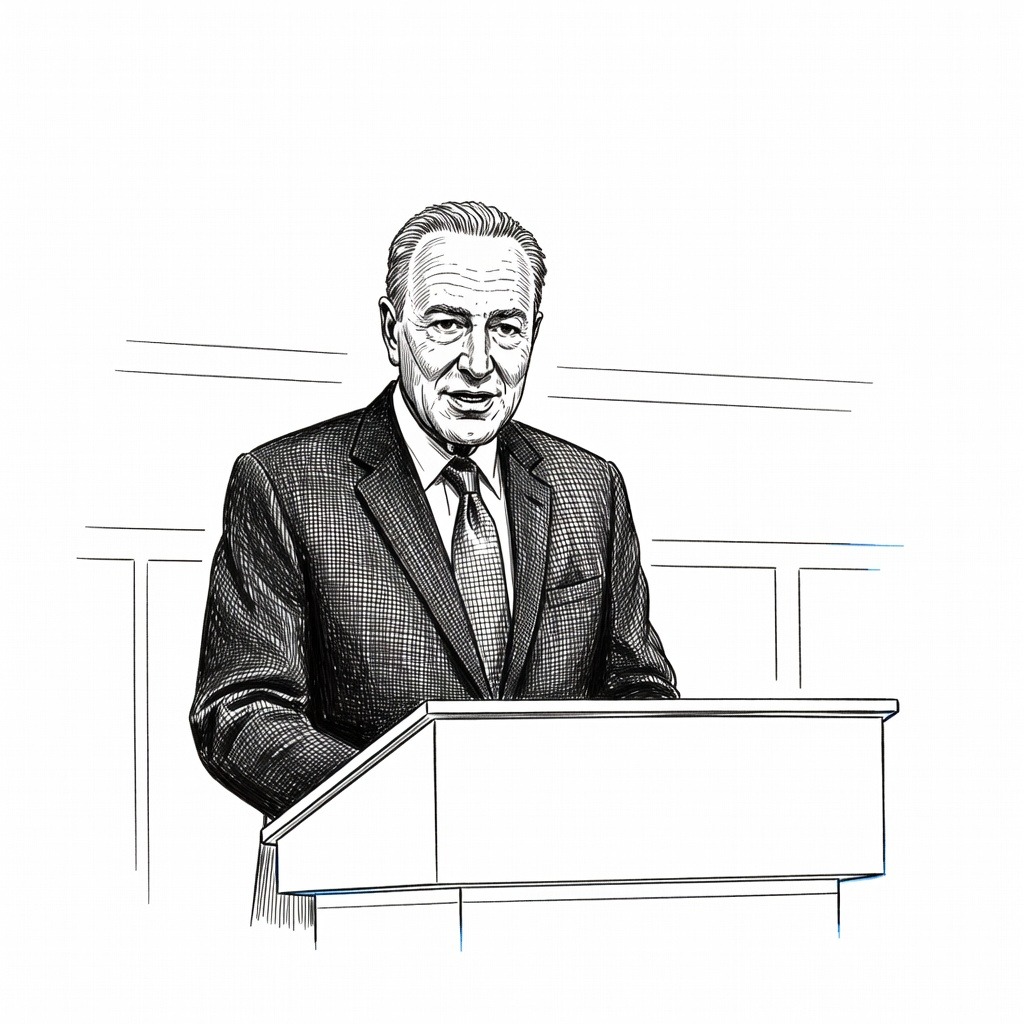
AI-generated illustration. Visual interpretation does not represent real individuals or scenes.
Partial Government Shutdown Causes Airport Delays as White House Releases Funding Proposal
2026-03-18
The BareStory
A partial government shutdown over immigration enforcement funding has reached its fifth week, leading to unpaid wages and staffing shortages that are causing extended wait times at airports nationwide. Transportation Security Administration Acting Deputy Administrator Adam Stahl warned that some airports could face full closures if absentee rates among unpaid officers continue to climb.
The funding lapse affects over 250,000 Department of Homeland Security employees. While TSA officers and other civilian employees are missing paychecks, a department spokesperson stated that active-duty Coast Guard personnel are receiving pay through discretionary funding. Outgoing Secretary Kristi Noem also informed lawmakers that Immigration and Customs Enforcement and Secret Service agents are continuing to be paid. Meanwhile, the TSA absentee rate has forced the closure of security checkpoints and caused significant delays at multiple major airports.
To address the impasse, the White House released a proposal outlining five policy changes, including expanded body camera usage for federal immigration agents, visible officer identification, and limits on enforcement in sensitive locations like hospitals. A senior White House official characterized the offer as a serious attempt to end the shutdown.
Conversely, Senate Minority Leader Chuck Schumer stated the administration is not acting seriously. According to Schumer, the proposal ignores Democratic demands to ban federal agents from wearing masks and to require judicial warrants before entering private property. Administration officials have previously called the warrant requirement a redline, with a White House letter arguing that the Democratic demands would endanger citizens and expose law enforcement to violence. As of early Wednesday, no meetings were planned between the president and Democratic leadership.
Left Perspective
Rejecting Hostage Labor Tactics
Exposing Performative Accountability Offers
Defending Constitutional Due Process
Right Perspective
Prioritizing Sovereign Security Operations
Engineering Pragmatic Operational Compromise
Shielding Tactical Enforcement Agility
Left Perspective
• Rejecting Hostage Labor Tactics
Holding 250,000 Department of Homeland Security employees without pay treats public servants as expendable leverage for ideological gains. The escalating absentee rates and checkpoint closures reflect the unsustainable burden placed on civilian workers like TSA officers who are expected to maintain critical infrastructure without compensation. For reformers, forcing employees to work indefinitely without wages represents a systemic failure of governance that economically punishes the working class to fund aggressive enforcement mandates.
• Exposing Performative Accountability Offers
The administration’s five-point proposal, which includes body cameras and limiting enforcement in hospitals, is viewed as a superficial concession that avoids dismantling inherently oppressive tactics. Senate Minority Leader Chuck Schumer’s insistence on banning masked federal agents targets the psychological intimidation and lack of transparency historically utilized in immigration operations. True institutional reform requires structural changes to how agents interact with communities, making the White House’s refusal to ban masks a defense of an unaccountable status quo.
• Defending Constitutional Due Process
The administration’s designation of a judicial warrant requirement as a non-negotiable "redline" signals a direct threat to foundational civil liberties. Bypassing warrants to enter private property grants the state unchecked power over vulnerable immigrant populations and ordinary citizens alike. Reformers argue that requiring judicial oversight is not a danger to enforcement, but rather the essential democratic mechanism required to prevent systemic civil rights abuses and government overreach.
Right Perspective
• Prioritizing Sovereign Security Operations
Maintaining pay for active-duty Coast Guard, ICE, and Secret Service personnel during the funding lapse demonstrates a critical commitment to continuous national defense. While airport delays and TSA shortages are unfortunate operational frictions, traditionalists view the uninterrupted funding of active-duty law enforcement as the paramount duty of the state. Securing the nation's borders and preserving the rule of law must supersede the temporary logistical inconveniences of civilian air travel.
• Engineering Pragmatic Operational Compromise
The White House’s proposal integrating body cameras, visible officer identification, and sensitive location limits represents a balanced, good-faith attempt to modernize immigration enforcement. By offering these five distinct policy changes, the administration is addressing transparency demands while maintaining the core functionality of homeland security authorities. The refusal of opposition leadership to engage with this framework is interpreted as political obstructionism that prioritizes partisan gridlock over practical, institutional governance.
• Shielding Tactical Enforcement Agility
Imposing blanket mask bans and strict judicial warrant requirements for private property entry strips law enforcement of essential operational flexibility. The administration correctly identifies these demands as a "redline" because such restrictions actively endanger officers by broadcasting their identities and delaying time-sensitive tactical interventions. Traditionalists argue that prioritizing procedural hurdles over security realities ultimately exposes both federal agents and civilian communities to heightened risks of violence.
How it may affect me
As a U.S. reader:
• In the short term, you may face extended wait times, closed security checkpoints, and the potential for full airport closures when traveling due to ongoing unpaid TSA staffing shortages.
• You will not see an immediate interruption in active-duty Coast Guard, Secret Service, or Immigration and Customs Enforcement operations, as these personnel are still receiving pay.
• In the long term, depending on the shutdown resolution, you could encounter federal agents operating under new transparency rules, such as mandatory body cameras, visible identification, and enforcement limits in sensitive locations like hospitals.
• Future interactions with federal law enforcement on private property may also change in the long term, as current negotiations involve whether agents should be legally required to secure judicial warrants before entering private premises.