
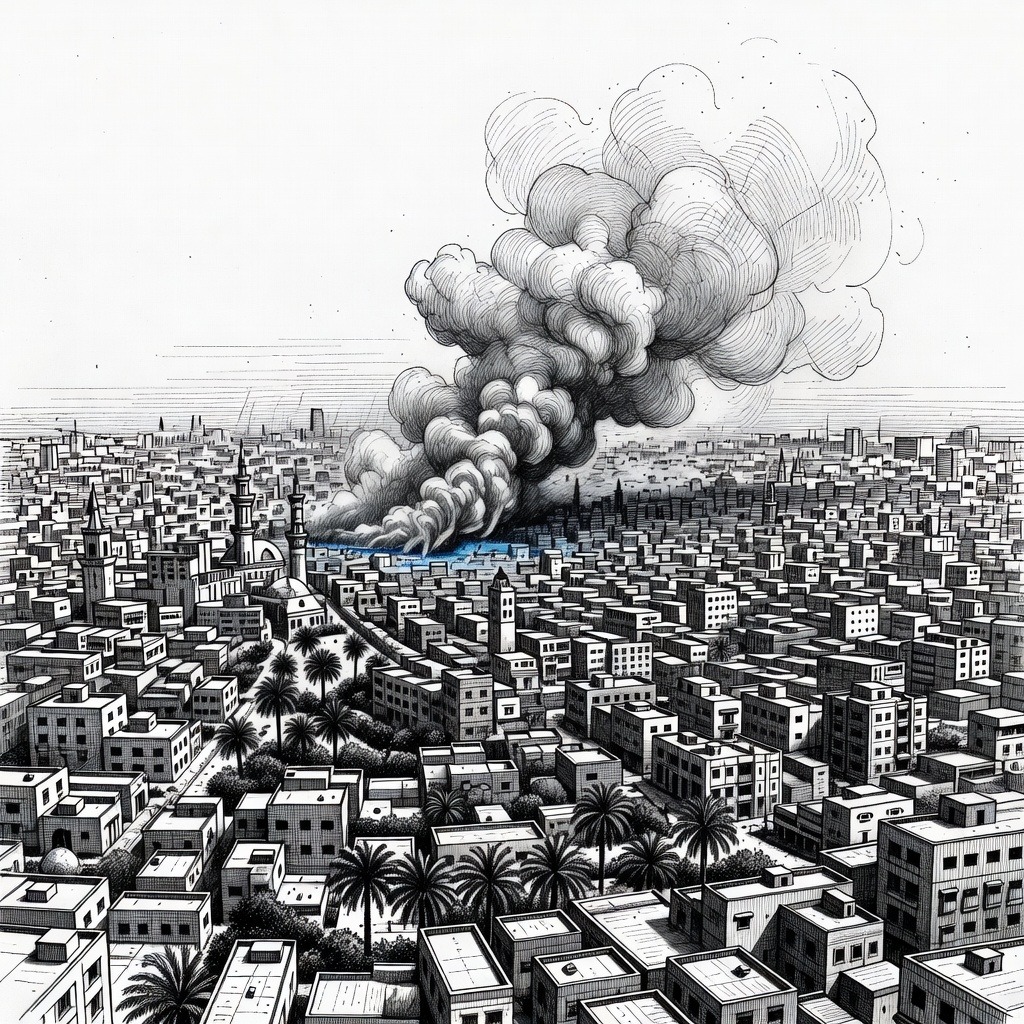
• Catalyst For Disproportionate Suffering Prioritizes the preservation of human life and views the metric of operational success through the lens of civilian toll and proportionality. The targeted assassination of figures like Ali Larijani and Gholamreza Soleimani is interpreted not as a surgical victory, but as an accelerant to a devastating conflict that has already claimed roughly 1,300 lives in Iran and 886 in Lebanon, compared to 12 in Israel. This stark casualty asymmetry highlights a failure of proportional response, where aggressive military campaigns prioritize tactical gains over immense regional suffering.
• Escalation Breeds Regional Instability Emphasizes that kinetic military action inevitably generates uncontrollable geopolitical chaos and blowback. The retaliatory closure of the strategically vital Strait of Hormuz, alongside Iranian missile and drone strikes against neighboring Gulf nations, demonstrates how isolated strikes rapidly metastasize into broader regional crises. European leaders' explicit warnings regarding the Israeli ground offensive in southern Lebanon validate the perspective that aggressive deterrence simply traps all actors in a protracted, multi-front war with severe humanitarian consequences.
• Rejection Of Military Adventurism Champions diplomatic restraint and international coalition-building over the unilateral deployment of hard power. The European Union’s outright refusal to deploy naval forces alongside the United States president to forcefully reopen the Strait of Hormuz is viewed as a necessary and principled stand against further militarization. This framework fears that compounding ground offensives and targeted killings will permanently dismantle diplomatic off-ramps, drawing global powers into an unwinnable quagmire that continually generates newly radicalized combatants.
How it may affect me
As a U.S. reader:
• In the short term, American military families and communities are directly impacted by the physical toll of the conflict, with 13 U.S. service members already reported killed and approximately 200 wounded.
• The closure of the Strait of Hormuz and targeted attacks on commercial shipping disrupt global trade routes, which could lead to practical supply chain and economic impacts for American consumers.
• Because the European Union has refused the U.S. president's request to help reopen the strait, the American military will likely bear the primary burden and risk of securing these international waters unilaterally.
• In the long term, compounding escalations and a lack of European military assistance increase the likelihood that the U.S. could be drawn into a protracted, multi-front regional conflict.