
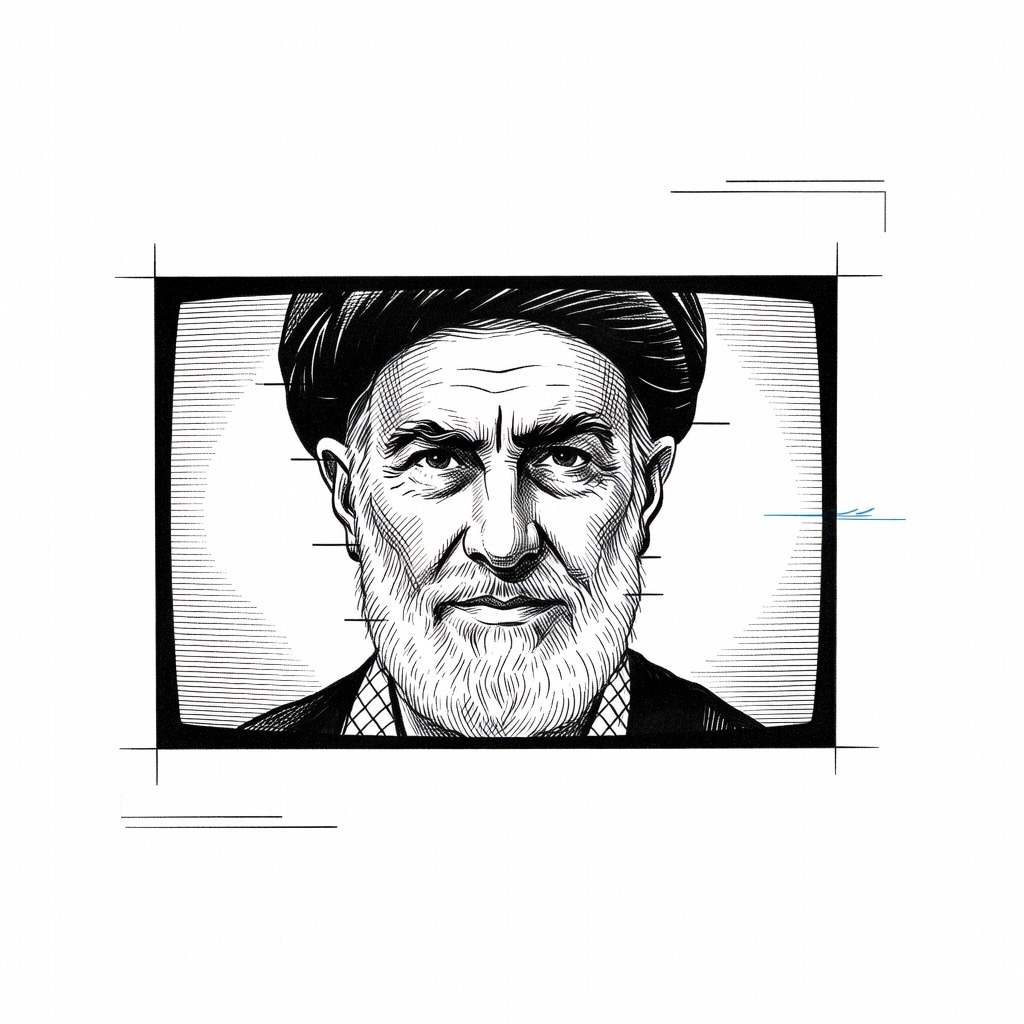
• Catalyst for Rogue Militarism Prioritizing regional stability and de-escalation, this camp views the decimation of Iran's civilian and religious leadership not as a victory, but as a dangerous catalyst for unchecked chaos. The White House assessment that the Islamic Revolutionary Guard Corps (IRGC) is now directly running the country indicates that diplomatic off-ramps are effectively severed. Removing the supreme political authority empowers hardline military factions who operate without institutional constraints, making the conflict significantly more volatile.
• Fog of Algorithmic Deception Valuing transparency and rational statecraft, the use of artificial intelligence to mask Mojtaba Khamenei’s injuries introduces perilous ambiguity into the geopolitical landscape. Former cybersecurity official Bridget Bean's assertion that Iranian state media is manipulating images creates a high-stakes "fog of war" scenario. When a wounded adversary projects illusions to obscure a crippled command structure, the risk of catastrophic miscalculation multiplies because allied forces lack a reliable counterpart to read or negotiate with.
• Vacuum of Regime Collapse Centering the long-term humanitarian and geopolitical costs, this perspective warns that actively hunting the remaining leadership pushes a fragile state toward total systemic collapse. President Trump's assertion that Iran is effectively "leaderless," combined with the $10 million bounty on key officials, encourages a desperate power vacuum rather than behavioral reform. A fractured, desperate nation lacking central authority threatens to destabilize the broader Middle East, spreading asymmetric violence and civilian suffering far beyond its own borders.
How it may affect me
As a U.S. reader:
• In the short term, the direct takeover of Iran by the Islamic Revolutionary Guard Corps limits diplomatic solutions, increasing the likelihood of unpredictable escalation and volatility in the ongoing military conflict involving U.S. forces.
• The use of artificial intelligence by Iranian state media to obscure the condition of its leadership creates dangerous ambiguity, complicating U.S. efforts to accurately assess military threats or identify reliable counterparts for negotiation.
• Public resources are being directly utilized for intelligence gathering in this conflict, with the U.S. government offering a reward of up to 10 million dollars for information regarding the location of Mojtaba Khamenei and nine other officials.
• Over the long term, the strategic degradation of Iran's central command could lead to total regime collapse, which may severely destabilize the broader Middle East and increase the risk of asymmetric violence spreading internationally.