
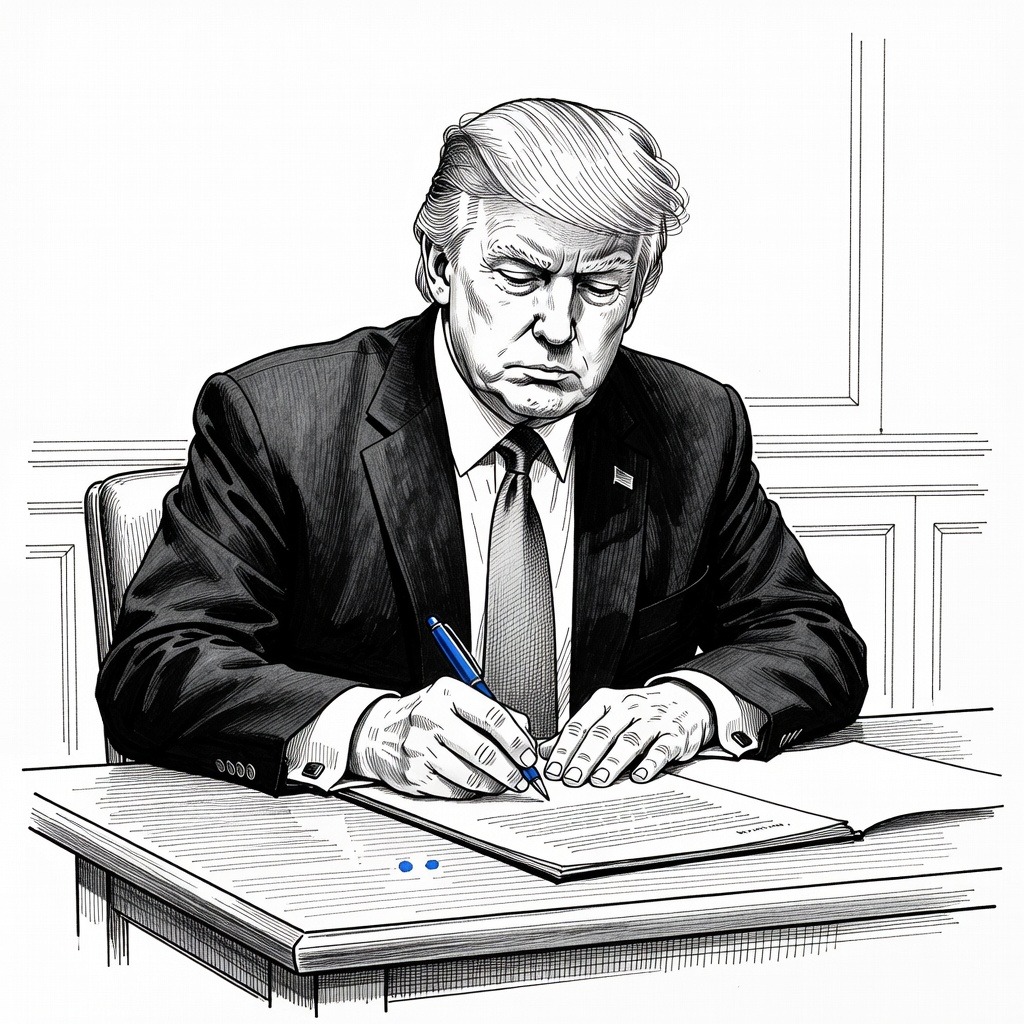
AI-generated illustration. Visual interpretation does not represent real individuals or scenes.
U.S. Launches Trade Investigations into 60 Economies Over Forced-Labor and Excess Capacity Practices
2026-03-13
The BareStory
The United States government has initiated trade investigations into 60 economies over their alleged failure to restrict imports produced with forced labor. The inquiries follow separate probes launched a day earlier into 16 trading partners regarding excess industrial capacity.
Conducted under Section 301 of the Trade Act of 1974, the investigations target major trading partners, including China, the European Union, and Mexico. United States Trade Representative Jamieson Greer stated the inquiries will evaluate foreign enforcement of forced-labor bans and assess their economic impact on American businesses. In response, a spokesperson for China's commerce ministry characterized the excess capacity allegations as narrow-minded and urged diplomatic negotiations.
Section 301 grants the federal government the authority to impose tariffs if unfair trade practices are identified. The administration initiated the new probes after the Supreme Court recently struck down a previous set of reciprocal tariffs, ruling that President Donald Trump had exceeded his executive authority.
Following the court's decision, the president utilized a separate statute to enact a temporary 10 percent global blanket tariff, which is legally capped at a duration of 150 days. Greer indicated that the administration aims to conclude the Section 301 investigations before the temporary duties expire in July.
Left Perspective
Shield Labor Standards
Rebuild Rule-of-Law Trade
Avoid Blanket Tariff Harm
Right Perspective
Assert Enforcement Leverage
Restore Tariff Authority
Preempt Industrial Hollowing
Left Perspective
• Shield Labor Standards
Value is human rights and accountability in supply chains, so investigations into 60 economies over forced-labor import restrictions read as an overdue enforcement push rather than protectionism. Using Section 301 is seen as a concrete lever to pressure governments that under-enforce forced-labor bans. The fact that the inquiries will evaluate “economic impact on American businesses” is acceptable insofar as it aligns profit incentives with rights compliance. Success is defined as creating credible consequences for forced-labor-linked trade.
• Rebuild Rule-of-Law Trade
Value is constitutional governance and predictable institutions, so the Supreme Court striking down prior reciprocal tariffs for exceeding executive authority is interpreted as a guardrail working. Moving to Section 301 looks like a legitimacy reset: a process-based pathway rather than improvisational tariffing. The temporary 10% global blanket tariff being capped at 150 days highlights the risk of policy whiplash; the better outcome is durable action grounded in statutory authority. A “win” is trade enforcement that can survive court scrutiny and outlast a single presidency.
• Avoid Blanket Tariff Harm
Value is protecting consumers and vulnerable workers from broad cost shocks, so a 10% global tariff—even temporary—looks like a blunt instrument with collateral damage. The push to conclude investigations before the temporary duties expire in July is read as a race to swap indiscriminate duties for targeted remedies. China’s call for diplomatic negotiations is viewed as a potential off-ramp if it yields verifiable changes rather than delay tactics. The feared long-term risk is normalizing global tariffs that raise prices without measurably reducing forced-labor exposure.
Right Perspective
• Assert Enforcement Leverage
Value is national sovereignty and credible deterrence, so launching Section 301 investigations into 60 economies signals the U.S. will not outsource trade discipline to foreign regulators. The focus on failures to restrict forced-labor imports frames enforcement as defending lawful commerce and domestic producers from unfairly cheap inputs. The parallel probes into 16 partners over excess industrial capacity reinforce a belief that distortive state-backed production must be confronted systematically. Success is defined as reestablishing U.S. leverage to compel compliance.
• Restore Tariff Authority
Value is institutional continuity through lawful tools, so the Supreme Court ruling is taken as a constraint that requires smarter strategy, not retreat. Pivoting to Section 301 is seen as using a tested statutory mechanism that can justify tariffs if unfair practices are found. The temporary 10% global blanket tariff, capped at 150 days, functions as a bridge measure to prevent trading partners from “running out the clock.” A “win” is converting temporary pressure into durable, legally defensible tariff remedies.
• Preempt Industrial Hollowing
Value is long-term productive capacity and strategic resilience, so “excess capacity” is treated as a direct threat to American businesses and critical supply chains. China’s characterization of the allegations as narrow-minded is read as an attempt to dilute scrutiny and delay consequences via talks. The July deadline becomes a forcing mechanism: conclude investigations fast enough to keep pressure continuous when the blanket tariff expires. The feared risk is that without sustained tariffs, distortive imports will accelerate deindustrialization and weaken national power.
How it may affect me
As a U.S. reader:
• In the short term, you may experience higher consumer prices and broad cost shocks across various goods due to the temporary 10 percent global blanket tariff currently in effect.
• In the long term, if the ongoing investigations identify unfair trade practices, the temporary global duties may be replaced by targeted Section 301 tariffs, which could alter the costs of specific imports from major partners like Mexico, China, and the European Union.
• Stricter enforcement of forced-labor bans and excess capacity restrictions across 60 economies may compel companies to restructure their international supply chains, potentially changing the availability of certain imported products.
• Workers and businesses in domestic manufacturing may experience long-term economic protections, as the investigations aim to defend American industries from unfairly cheap foreign inputs and prevent deindustrialization.