
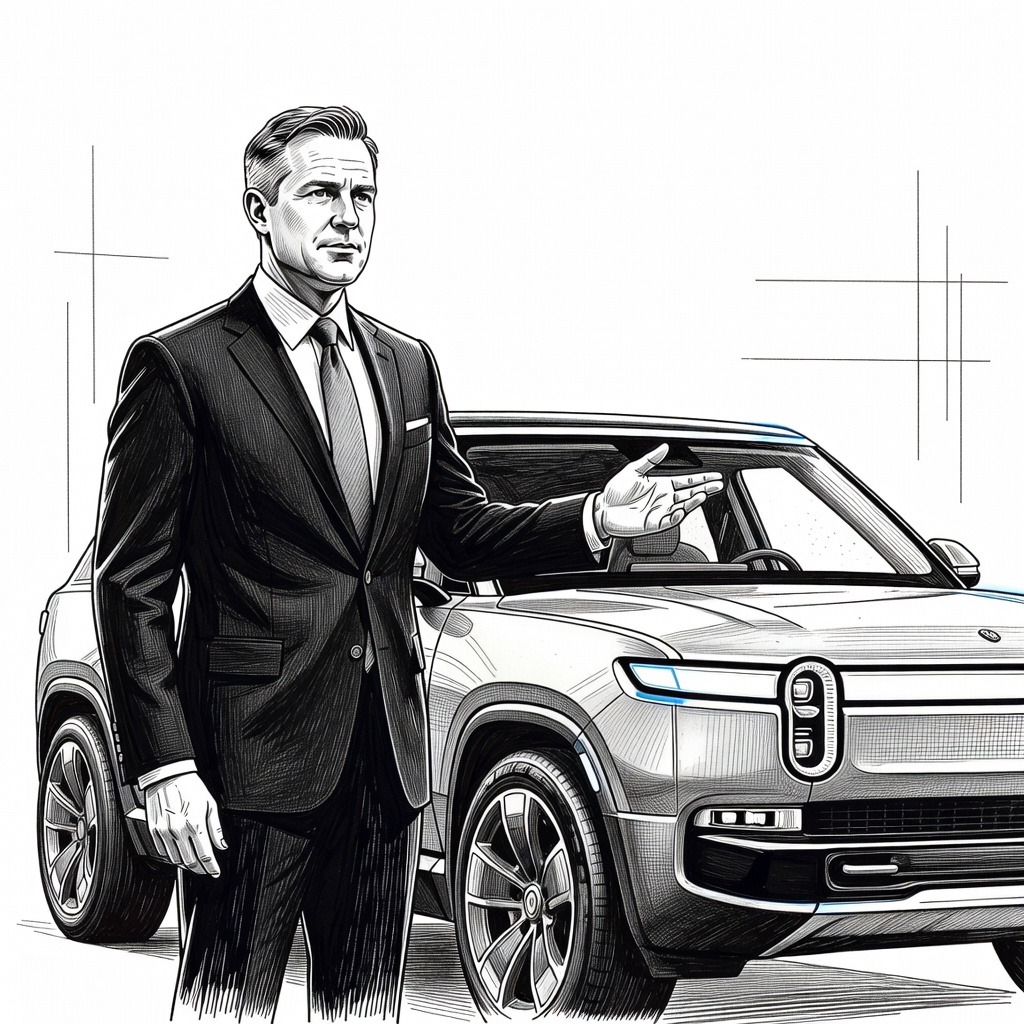
• Delay Broad Consumer Accessibility Progress toward sustainable transportation requires affordable access for the working and middle classes. Launching the R2 with a $57,990 performance model while delaying the $45,000 entry-level version until 2026 or 2027 perpetuates a top-down approach to green technology. Compounded by the expiration of the $7,500 federal tax credit, this pricing strategy restricts vital EV adoption to affluent buyers rather than accelerating a mass-market ecological transition.
• Anchor Domestic Green Manufacturing Industrial policy must prioritize tangible community investments over pure corporate shareholder value. Rivian's commitment to anchoring vehicle production in Normal, Illinois, and a planned facility in Georgia serves as a critical engine for localized job creation. Revamping software, parts, and electrical systems domestically ensures that the shift away from fossil fuels translates directly into working-class employment and resilient community supply chains.
• Expose Fragile Private Innovation Relying exclusively on free-market dynamics to solve systemic environmental challenges presents massive societal risks. The looming $1.8 billion to $2.1 billion in projected 2026 losses and weaker consumer demand demonstrate that private automakers struggle to sustain necessary technological transitions without public support. The removal of federal subsidies threatens to derail this momentum, subjugating urgent, long-term ecological goals to the short-term volatility of corporate balance sheets.
How it may affect me
As a U.S. reader:
• In the short term, consumers interested in purchasing the R2 this spring will only have access to the $57,990 performance model, while a more affordable $45,000 entry-level option will be delayed until 2026 or 2027.
• Buyers will face higher out-of-pocket costs when purchasing these electric vehicles due to the expiration of a $7,500 federal tax credit.
• Workers and local economies in Normal, Illinois, and Georgia may benefit from localized manufacturing job creation and supply chain investments as the company anchors its production at these domestic facilities.
• Consumers relying on the promised lifetime access to the vehicle's driver-assistance system face potential long-term uncertainty, as the automaker projects up to $2.1 billion in losses by 2026 and is navigating weaker domestic demand without the support of federal subsidies.