
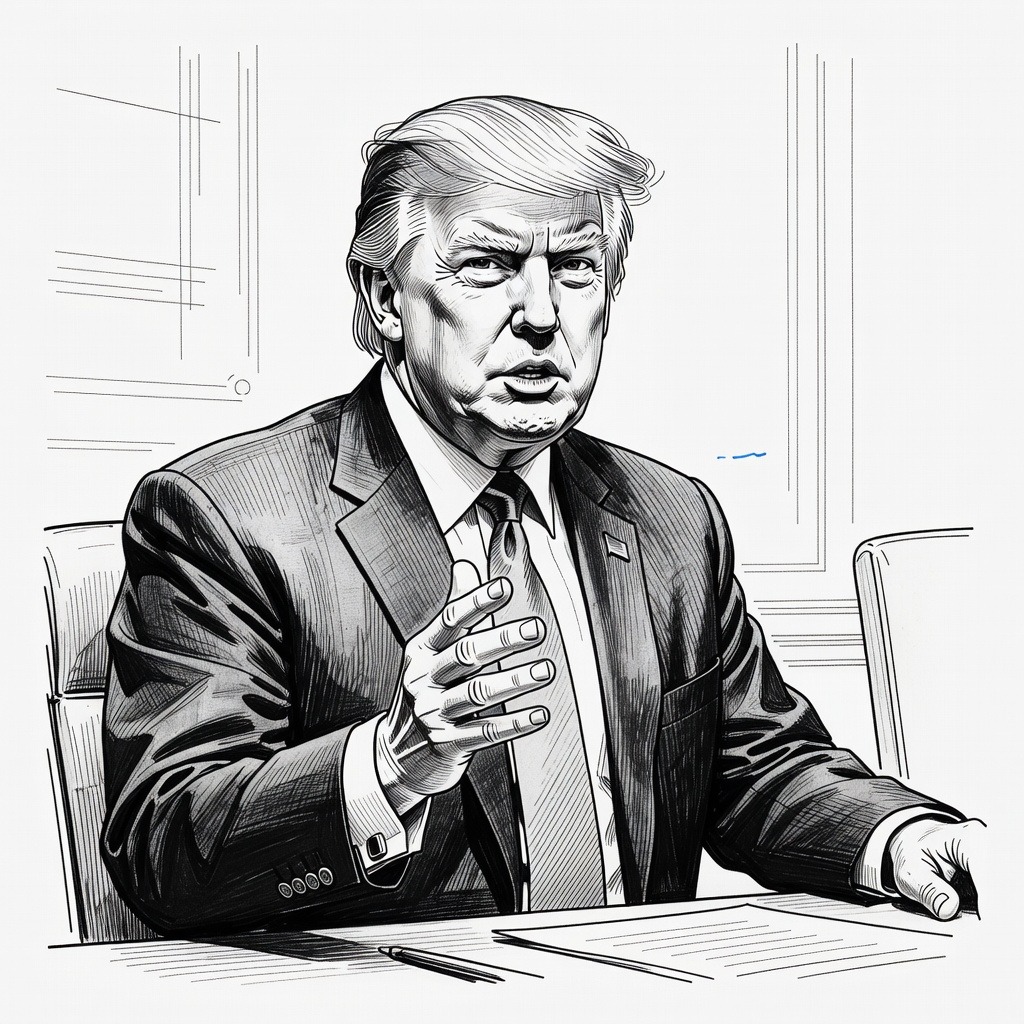
AI-generated illustration. Visual interpretation does not represent real individuals or scenes.
Oil Prices Experience Extreme Volatility Amid Middle East Conflict
2026-03-10
The BareStory
Global oil prices surged past $100 per barrel before retreating to around $90 amid an ongoing military conflict involving the United States, Israel, and Iran. The market volatility centers on potential disruptions in the Strait of Hormuz, a critical transit route for global seaborne oil. Crude prices began to decline after U.S. President Donald Trump indicated the conflict could conclude shortly.
President Trump warned that the U.S. would strike Iran with significantly greater force if Tehran halted oil traffic through the strait, adding that he is considering taking control of the waterway. Concurrently, an Iranian foreign affairs spokesperson cautioned that transiting oil tankers must operate carefully. To address potential supply shocks, Group of Seven nations discussed releasing strategic oil reserves, with the U.S. proposing a joint international release of 300 million to 400 million barrels.
Economists cautioned that the energy cost surge poses broader domestic economic risks, including the potential to neutralize the consumer benefits of recent U.S. tax legislation. The initial price spike also elevated fears of stagflation, compounding a recent economic report that showed a loss of 92,000 U.S. jobs in February, a 4.4 percent unemployment rate, and core inflation remaining at 3 percent. In response to the market conditions, investors adjusted their forecasts, delaying expectations for upcoming Federal Reserve interest rate cuts.
Left Perspective
Taxing the Vulnerable Consumer
Erasing Domestic Prosperity Gains
Triggering the Stagflation Trap
Right Perspective
Shielding the Global Artery
Engineering Market Supply Resilience
Deterring the Stagflation Threat
Left Perspective
• Taxing the Vulnerable Consumer
Geopolitical posturing acts as an immediate, regressive tax on the domestic working class. President Trump’s threat to use “significantly greater force” in the Strait of Hormuz directly triggered the initial $100 per barrel oil surge, instantly raising baseline living costs. This framework views militaristic brinkmanship as fundamentally extractive, prioritizing global power projection over the immediate economic stability of everyday citizens relying on affordable energy.
• Erasing Domestic Prosperity Gains
Military-induced supply shocks systematically undermine social equity and wealth distribution. The ensuing energy cost spike threatens to completely neutralize the consumer benefits generated by recent U.S. tax legislation, effectively transferring wealth from middle-class wallets to global oil speculators. For this camp, the loss of 92,000 U.S. jobs in February and a 4.4 percent unemployment rate are not isolated metrics, but the direct domestic casualties of an unstable, aggressive foreign policy.
• Triggering the Stagflation Trap
Prolonged conflict guarantees systemic economic degradation for those least able to endure it. With core inflation trapped at 3 percent and Federal Reserve interest rate cuts formally delayed, the working class faces the dual threat of shrinking employment opportunities and rising consumer costs. This perspective views the proposed 300 million to 400 million barrel G7 reserve release as a mere temporary band-aid that fails to address the root danger of prioritizing militarized solutions over diplomatic de-escalation.
Right Perspective
• Shielding the Global Artery
Absolute deterrence is the fundamental prerequisite for global market stability and systemic efficiency. President Trump’s threat to unleash significantly greater force and potentially take control of the Strait of Hormuz is viewed as a necessary assertion of order to protect vital international commerce. By forcefully countering Iranian threats to seaborne oil traffic, this projection of unyielding strength successfully forced oil prices to retreat back to $90 per barrel, proving that securing trade routes dictates economic security.
• Engineering Market Supply Resilience
Strategic coordination is required to prevent hostile, rogue actors from holding international capital hostage. The U.S. proposal to lead Group of Seven nations in releasing 300 million to 400 million barrels of strategic oil reserves demonstrates essential fiscal discipline and decisive market intervention. This action directly neutralizes Iranian-induced supply shock risks, ensuring that temporary regional volatility cannot derail long-term capitalist production and global trade networks.
• Deterring the Stagflation Threat
Domestic economic stability requires the aggressive defense of international supply chains. With the U.S. economy already flashing warning signs—evidenced by 92,000 lost jobs in February, 3 percent core inflation, and delayed Fed rate cuts—conceding vital transit routes to adversaries would guarantee crippling domestic stagflation. In this view, utilizing military supremacy to secure the Strait of Hormuz is the only reliable mechanism to preserve the broad prosperity generated by recent tax legislation and maintain macroeconomic continuity.
How it may affect me
As a U.S. reader:
• Short-term spikes in global oil prices can directly increase your baseline living expenses, particularly for everyday energy and transportation costs.
• The resulting surge in energy prices threatens to erase the personal financial benefits you may have gained from recent U.S. tax legislation.
• Because market volatility has delayed anticipated Federal Reserve interest rate cuts, consumer borrowing costs for mortgages, credit cards, and loans will likely remain elevated longer than expected.
• A prolonged conflict risks long-term economic stagflation, exposing the public to the combined financial pressures of sustained consumer inflation and shrinking employment opportunities following recent domestic job losses.
• A proposed international release of up to 400 million barrels of strategic oil reserves could provide temporary, short-term relief against sudden fuel supply shortages and price hikes at the pump.