
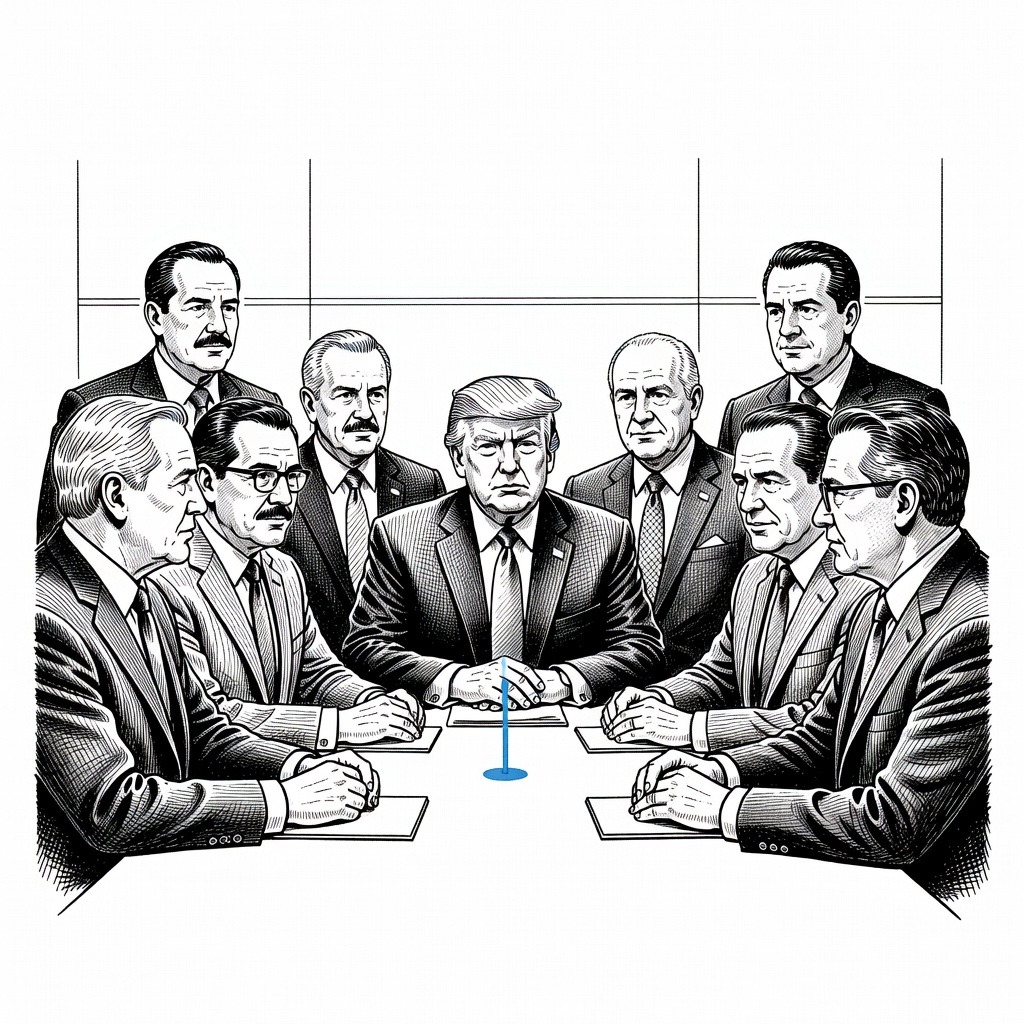
• Shattering Sovereign Diplomatic Norms The capture of former Venezuelan President Nicolas Maduro is viewed as a dangerous violation of international law rather than a security victory. By detaining a foreign leader and prosecuting him in New York, the U.S. establishes a precedent of unilateral intervention that severely undermines the foundational principle of national sovereignty. This perspective argues that celebrating such actions at the "Shield of the Americas" summit normalizes imperial overreach and degrades the established, rules-based diplomatic order.
• Militarizing Root Social Crises Framing illegal immigration and drug trafficking primarily as targets for a hardened security coalition ignores the underlying humanitarian conditions driving these phenomena. The prominent inclusion of the Secretary of War and the structural mandate of Kristi Noem's new envoy role suggest a highly punitive, force-first approach to complex socioeconomic challenges. Relying heavily on joint security declarations rather than poverty alleviation or institutional reform risks escalating regional violence while failing to address the true catalysts of mass migration.
• Weaponizing Transactional Resource Diplomacy Justifying a controversial international raid by pointing to subsequent "economic cooperation and energy market access" reduces diplomatic relations to extractive resource-grabbing. Treating Venezuelan energy access as the ultimate reward for an aggressive intervention validates the fears of regional leaders who previously criticized the capture. This highly transactional framework threatens long-term hemispheric trust, signaling to Latin American nations that U.S. partnerships rely on yielding to hard-power coercion rather than fostering mutual, equitable development.
How it may affect me
As a U.S. reader:
• You may experience changes in domestic energy availability and prices due to new economic cooperation and energy market access established between the U.S. and Venezuela.
• In the short term, you could see new border enforcement and drug interdiction tactics impacting U.S. entry points as the government implements a multinational security agreement targeting cartels.
• Over the long term, illegal immigration levels at the U.S. border may either decline through coordinated regional deterrence or persist if the military-first approach escalates violence without addressing the root causes of mass migration.
• You might observe an increase in U.S. military and diplomatic resources being directed toward Latin American operations, driven by the new special envoy role and the direct involvement of defense officials.