
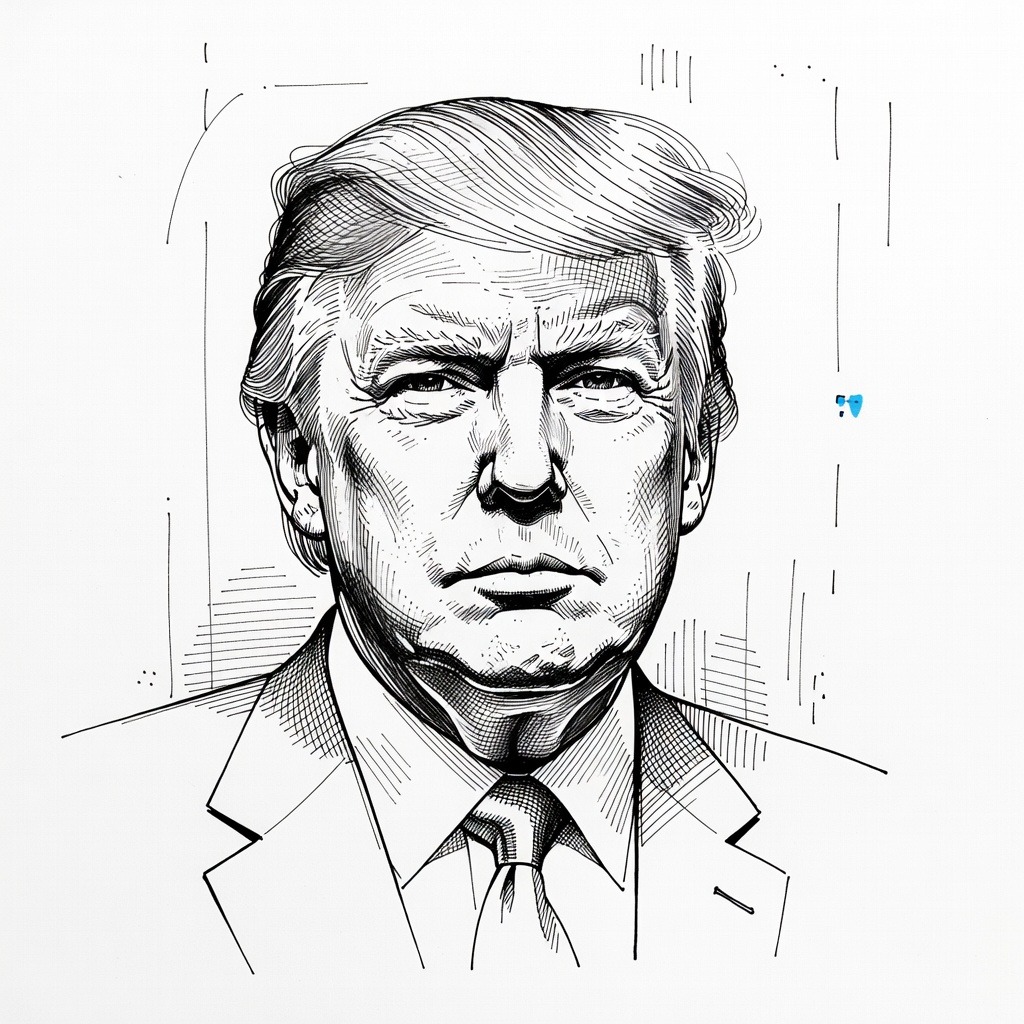
AI-generated illustration. Visual interpretation does not represent real individuals or scenes.
U.S. Stock Indexes Decline Amid Geopolitical Tensions as Marvell Technology Shares Surge
2026-03-06
The BareStory
According to market data from Friday, March 6, 2026, the S&P 500 and Nasdaq indexes each declined by approximately one percent, while oil prices reached their highest levels since April 2024. The broader market downturn followed a statement from President Donald Trump, who announced that the United States would not agree to end its war against Iran without an unconditional surrender, raising concerns over an escalating conflict in the Middle East.
Despite the index declines, Marvell Technology shares increased by nearly twenty percent to $92.24. In its fourth-quarter financial release, the semiconductor company reported $2.2 billion in revenue and adjusted earnings of eighty cents per share. Chief Executive Officer Matt Murphy attributed the results to sustained demand for artificial intelligence, stating the company anticipates accelerated year-over-year revenue growth throughout 2027. According to its corporate forecast, Marvell projected first-quarter 2027 revenue of $2.4 billion.
Other individual equities demonstrated mixed results during Friday's trading. Costco shares advanced by one percent following a quarterly earnings report in which the retailer cited momentum in comparable sales. Conversely, BlackRock shares dropped by nearly six percent after the asset management firm announced a decision to limit withdrawals from one of its private credit funds. Financial sector stocks, including Capital One and Wells Fargo, also experienced recorded declines during the trading session.
Left Perspective
Reckless Geopolitical Consumer Tax
Disconnected Tech Wealth Concentration
Exposing Hidden Financial Fragility
Right Perspective
Pricing Necessary Strategic Deterrence
Engine of U.S. Innovation
Prudent Market Self-Regulation
Left Perspective
• Reckless Geopolitical Consumer Tax
Prioritizing aggressive military ultimatums actively transfers geopolitical costs directly onto the working class. President Trump’s demand for Iran's unconditional surrender immediately pushed oil prices to their highest levels since April 2024, acting as a regressive tax on consumers at the pump. The resulting one percent decline in the S&P 500 and Nasdaq reflects systemic anxiety that escalating Middle Eastern conflicts will continually erode purchasing power and destabilize the real economy.
• Disconnected Tech Wealth Concentration
The financial rewards of technological advancement are dangerously isolated at the top, failing to translate into broad-based economic prosperity. Marvell Technology’s twenty percent surge to $92.24 and its $2.2 billion revenue highlight a hyper-concentrated AI boom that disproportionately enriches corporate shareholders. While everyday consumers lean heavily on big-box discounters—evidenced by Costco's modest one percent advance—the simultaneous decline of major consumer finance institutions like Capital One signals a bifurcated economy where speculative tech thrives while Main Street struggles.
• Exposing Hidden Financial Fragility
Institutional wealth hoarding and opaque financial mechanisms pose severe risks to systemic economic stability. BlackRock’s decision to limit withdrawals from its private credit fund—triggering a nearly six percent drop in its shares—reveals the inherent dangers and illiquidity of the under-regulated shadow banking sector. This sudden restriction of client capital exposes underlying structural vulnerabilities, raising fears that corporate greed and a lack of oversight could spark a broader liquidity crisis while the public is distracted by tech booms and foreign wars.
Right Perspective
• Pricing Necessary Strategic Deterrence
Securing long-term global trade and economic stability requires confronting adversarial regimes with definitive strength, even at the cost of short-term volatility. The one percent dip in major indices and elevated oil prices represent a rational market repricing of President Trump’s hardline demand for Iran's unconditional surrender. Tolerating temporary friction in the energy markets is viewed as a necessary strategic investment to re-establish vital deterrence in the Middle East, ultimately protecting global supply chains from perpetual disruption.
• Engine of U.S. Innovation
Free-market incentives successfully drive the technological dominance required to secure America's future economic leadership. Marvell Technology’s $2.2 billion fourth-quarter revenue and its projection of $2.4 billion for Q1 2027 prove that capital markets efficiently fund the artificial intelligence revolution. CEO Matt Murphy’s ability to generate an eighty cents per share return and a massive twenty percent stock surge demonstrates that private enterprise remains the most reliable engine for generating extraordinary wealth, easily outpacing macroeconomic headwinds.
• Prudent Market Self-Regulation
Financial systems are best equipped to manage their own risk and liquidity without the need for heavy-handed government intervention. BlackRock’s decision to limit private credit fund withdrawals is a standard, protective mechanism designed to preserve underlying asset values and prevent panic during periods of geopolitical volatility. Rather than a systemic crisis, the subsequent six percent equity adjustment—alongside the routine ebb and flow of banking stocks like Wells Fargo—shows the free market effectively correcting and insulating itself from overexposure.
How it may affect me
As a U.S. reader:
• You will likely face higher fuel costs and reduced short-term purchasing power as oil prices reach two-year highs in response to the escalating conflict with Iran.
• Your broader investment portfolios and retirement accounts may experience short-term value declines due to the recent drops in major stock indexes and financial sector equities.
• In the long term, the administration's military ultimatum in the Middle East could either stabilize global supply chains through deterrence or create persistent economic disruption and market anxiety.
• If your investments are tied to private credit funds, you may encounter temporary freezes on withdrawing your money during periods of high geopolitical volatility, as demonstrated by BlackRock limiting client withdrawals.
• The sustained boom in artificial intelligence indicates that the tech sector may continue to outpace the broader economy, potentially benefiting tech investors while traditional consumer finance sectors experience slower growth.