
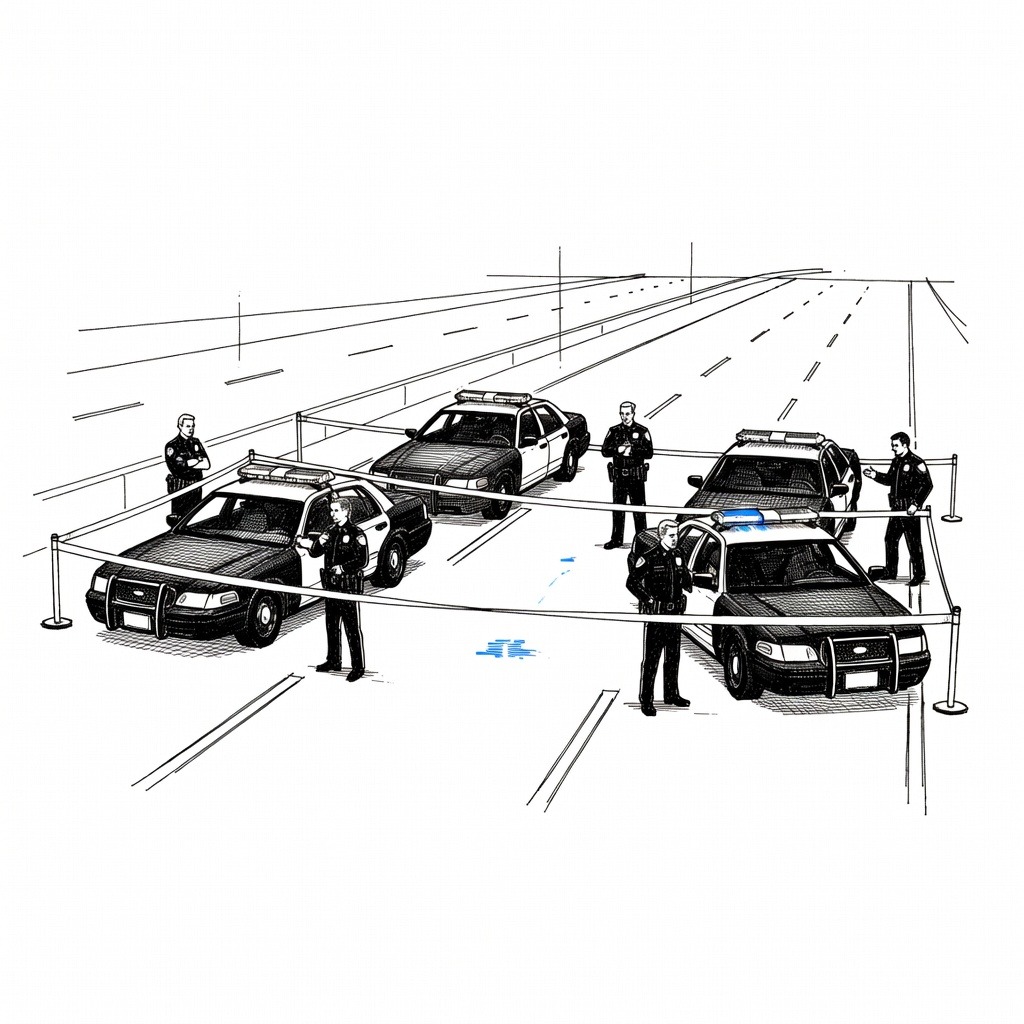
• Diagnosing Institutional Mental Rupture Values understanding the underlying catalyst for violence over simply labeling an event as inherent criminality. The revelation that Jared Llamado was a highly vetted U.S. Department of State foreign service officer who abruptly snapped—killing Michele Adams and stabbing his own dog—points to an acute, untreated psychological crisis. This framework seeks to interrogate how systemic mental health failures can allow a public servant to deteriorate to the point of committing a random, horrific attack.
• Mandating Strict Lethal Oversight Prioritizes absolute government accountability in the deployment of state-sanctioned violence. Placing the responding Virginia State Police trooper on administrative leave is viewed not as a presumption of guilt, but as an essential democratic safeguard. Thoroughly investigating the "self-defense" shooting of the knife-wielding suspect ensures that lethal force is heavily scrutinized, maintaining the standard that the state must justify every life it takes.
• Protecting Vulnerable Civic Spaces Emphasizes the fundamental right of everyday citizens to exist in public without facing sudden, unpredictable harm. The random, unprovoked nature of the attacks on the three surviving women and Adams on Interstate 495 highlights a terrifying reality of civilian vulnerability. This perspective focuses on the profound human toll of the tragedy and the necessity of comprehensive social interventions to prevent everyday environments from devolving into sites of spontaneous violence.
How it may affect me
As a U.S. reader:
• In the short term, local commuters experienced severe travel disruptions, as the incident and subsequent investigation caused major delays on a primary interstate for nearly six hours.
• In the long term, the suspect's status as a U.S. Department of State foreign service officer could lead to stricter mental health evaluations and ongoing psychological monitoring for federal government employees.
• Communities may see changes in local law enforcement protocols as institutions balance public demands for strict administrative oversight following police shootings with the need to swiftly clear officers and maintain operational readiness.
• The unprovoked nature of the highway attack may prompt new public safety measures in everyday civic spaces, potentially resulting in either increased social interventions or a more robust, visible police presence.