
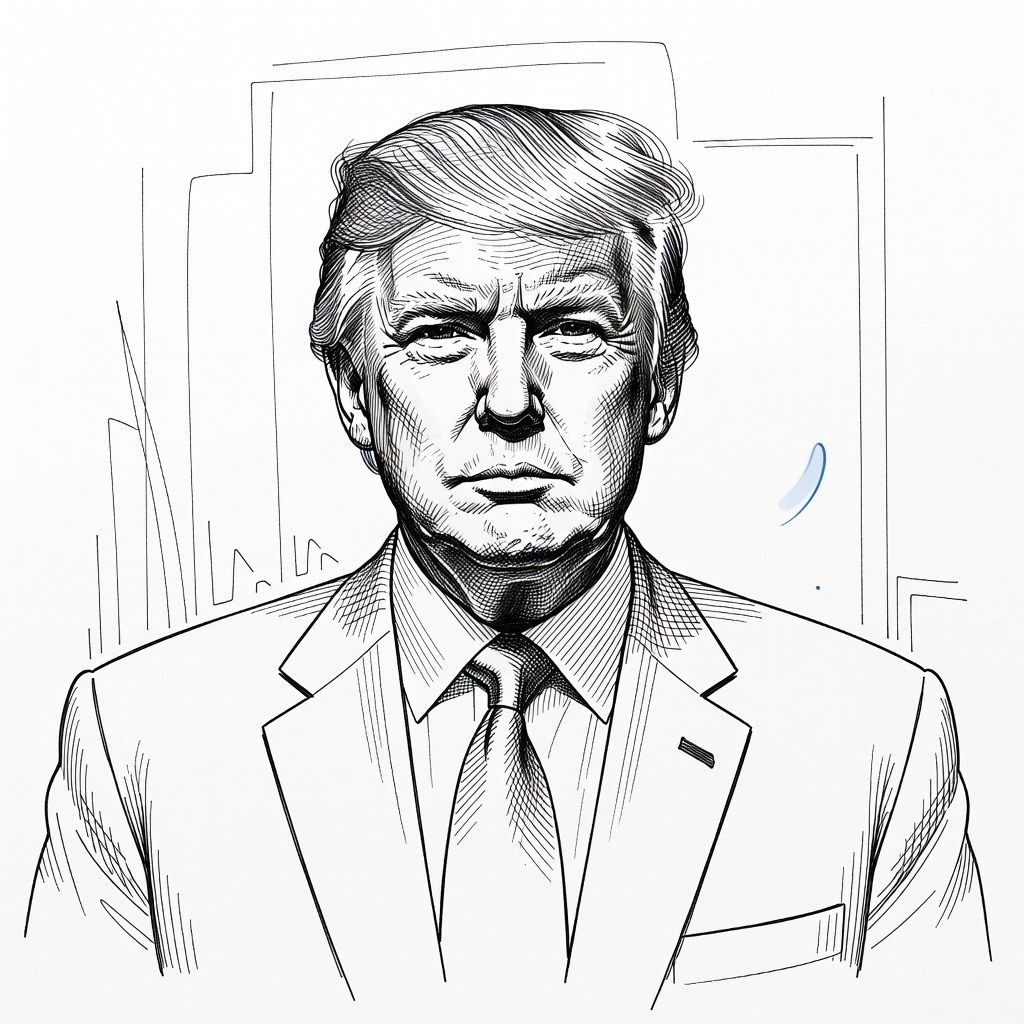
AI-generated illustration. Visual interpretation does not represent real individuals or scenes.
U.S. Government Halts Use of Anthropic AI Following Contract Dispute
2026-03-04
The BareStory
President Donald Trump directed federal agencies to stop using technology from artificial intelligence startup Anthropic following a breakdown in contract negotiations with the Department of Defense. The impasse occurred last week when Anthropic sought guarantees that its models would not be used for fully autonomous weapons or domestic mass surveillance. In contrast, the Pentagon required that the military be allowed to use the technology for all lawful applications.
Following the stalled talks, Defense Secretary Pete Hegseth labeled the company a supply chain risk, asserting that Anthropic's actions endangered national security. This designation prohibits Pentagon contractors from conducting business with the firm. Additionally, the president announced a six-month phase-out period for Anthropic's technology across government agencies and threatened the company with potential civil and criminal consequences.
Anthropic characterized the government's response as legally unsound, warning the blacklisting sets a dangerous precedent for businesses negotiating with federal agencies. Chief Executive Officer Dario Amodei stated the company could not accept the military's terms in good conscience, though the firm maintained it attempted to reach an agreement in good faith. Federal Communications Commission Chairman Brendan Carr publicly stated that Anthropic "made a mistake" by rejecting opportunities to resolve the dispute and suggested the startup should attempt to correct its course.
The escalating conflict has prompted intervention from lawmakers. Senator Mike Rounds requested a formal Pentagon briefing on the situation, stating he would withhold judgment until receiving more information. A group of senators also sent a letter to both the Defense Department and Anthropic urging de-escalation, while Senator Thom Tillis cautioned that the administration's actions could improperly pressure artificial intelligence startups into compromising their ethical standards.
Left Perspective
Shielding Against Automated Overreach
Weaponizing Federal Contract Leverage
Chilling Ethical Technological Innovation
Right Perspective
Mandating Unrestricted Military Readiness
Neutralizing Supply Chain Vulnerabilities
Enforcing Sovereign Contract Supremacy
Left Perspective
• Shielding Against Automated Overreach
Civil liberties and human oversight must take precedence over unchecked military expansion. Anthropic’s demand for explicit guarantees against domestic mass surveillance and fully autonomous weapons represents a necessary ethical boundary against state overreach. The company's refusal to concede to the Pentagon's sweeping "lawful applications" clause is viewed as a vital defense of human rights and privacy in the digital age.
• Weaponizing Federal Contract Leverage
Government accountability demands protection against the abuse of executive power to crush institutional resistance. Defense Secretary Pete Hegseth’s decision to label the company a "supply chain risk" and the president's threat of criminal consequences merely for negotiating ethical boundaries demonstrates an authoritarian impulse. This aggressive retaliation validates Senator Thom Tillis’s concern that the administration is improperly coercing tech startups to abandon their moral frameworks.
• Chilling Ethical Technological Innovation
Punishing principled corporate stances risks creating a toxic defense ecosystem where only ethically compromised tech firms survive. By enforcing a six-month government-wide phase-out and blacklisting Anthropic, the administration signals that operating in "good conscience," as CEO Dario Amodei noted, actively disqualifies companies from public service. The long-term implication is the creation of a technologically advanced military-surveillance apparatus entirely decoupled from democratic oversight or humanitarian constraints.
Right Perspective
• Mandating Unrestricted Military Readiness
National security and strategic deterrence require that the armed forces operate without arbitrary technological handicaps. The Pentagon’s requirement to utilize AI technology for "all lawful applications" is fundamentally essential for maintaining military supremacy in an era of rapid technological conflict. Allowing a private startup to unilaterally dictate the operational parameters of national defense severely undermines the sovereignty and effective lethality of the military.
• Neutralizing Supply Chain Vulnerabilities
Institutional continuity and operational reliability are paramount when establishing partnerships for defense infrastructure. A vendor that refuses to support lawful military operations inherently becomes a liability, validating the Defense Department's classification of Anthropic as a supply chain risk. As FCC Chairman Brendan Carr suggested, national security apparatuses cannot rely on commercial partners who might weaponize their own ethical frameworks to withdraw critical services during geopolitical crises.
• Enforcing Sovereign Contract Supremacy
The executive branch must exercise decisive authority to ensure total compliance and reliability from its defense partners. The president’s swift implementation of a six-month phase-out and the threat of legal consequences establishes a firm baseline that the federal government will not be held hostage by private-sector ideological demands. Failing to penalize Anthropic’s obstructionism would set a dangerous precedent, emboldening other contractors to arbitrarily restrict vital technologies and thereby fracturing the nation's defense readiness.
How it may affect me
As a U.S. reader:
• Over a short-term six-month period, federal agencies will phase out Anthropic technology, potentially causing transitions or disruptions in government services or administrative systems that currently rely on these artificial intelligence tools.
• The military's rejection of explicit guarantees against domestic mass surveillance points to a long-term possibility that citizens could face increased automated monitoring by federal agencies.
• Professionals and businesses in the technology sector may experience immediate operational shifts, as Pentagon contractors are now barred from working with Anthropic, and other startups may face pressure to drop their own ethical restrictions to secure or maintain government partnerships.
• In the long term, the government's mandate that artificial intelligence be available for all lawful military applications, without exceptions for fully autonomous weapons, will directly shape the technological capabilities and operational readiness of the national defense infrastructure.