
US and Israel Launch Major Air Campaign Against Iran; Supreme Leader Khamenei Reported Killed

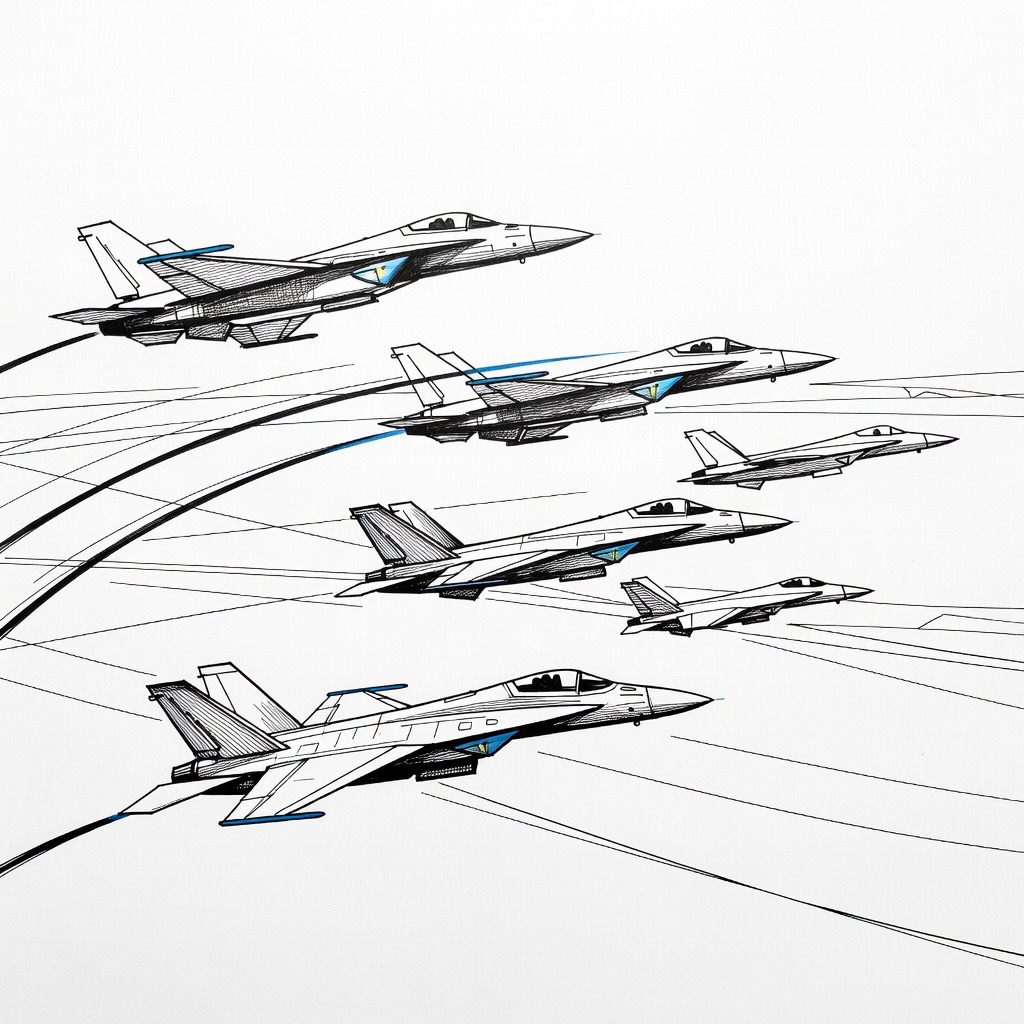
Illustration for: US and Israel Launch Major Air Campaign Against Iran; Supreme Leader Khamenei Reported Killed
AI-generated illustration. Visual interpretation does not represent real individuals or scenes.

THE BARE STORY

The United States and Israel have initiated a large-scale joint military offensive against Iran, designated "Operation Epic Fury." The campaign, which began on Saturday, utilizes heavy bombers, fighter jets, and missiles to target the regime’s military infrastructure. President Donald Trump confirmed on Monday that the strikes resulted in the death of Iranian Supreme Leader Ayatollah Ali Khamenei and dozens of senior government officials.

Defense Secretary Pete Hegseth and Joint Chiefs Chairman Gen. Dan Caine outlined the mission’s primary objectives: destroying Iran’s missile production capabilities, annihilating its navy, and ensuring the nation cannot acquire a nuclear weapon. Officials reported that the initial 24-hour phase struck more than 1,000 targets, including command-and-control centers and ballistic missile sites. President Trump stated that ten Iranian naval vessels had been sunk and described the operation as the "last best chance" to neutralize threats from Tehran.

Casualties have been reported on both sides. The Pentagon confirmed that four U.S. service members were killed when a munition struck a tactical operations center in Kuwait. Additionally, U.S. Central Command reported that three American warplanes were shot down by Kuwaiti air defenses in a friendly fire incident, though the pilots survived. The Iranian Red Crescent Society stated that at least 555 people have been killed in Iran during the bombardment.

Regarding the operation's duration, President Trump projected a timeline of four to five weeks but noted the U.S. is prepared to extend the mission if necessary. The President justified the strikes by citing a 2024 Iranian plot against his life and the need to prevent the regime from projecting power abroad. In response to the offensive, Iran has launched retaliatory missile and drone attacks targeting Israel and U.S. facilities in the region.

Same Facts. Different Perspectives.

Two AI models. Two viewpoints. One factual foundation.

• Decisive Threat Neutralization Prioritizing national security and the physical removal of existential risks, this framework interprets the destruction of missile production capabilities and nuclear potential as a necessary calibration of the balance of power. By physically eliminating the regime’s capacity to project power, specifically through the sinking of ten naval vessels and the striking of missile sites, the operation is viewed as the only reliable method to prevent the adversary from holding the region hostage.

• Enforcing Sovereignty and Accountability Viewing the strike on Ayatollah Khamenei as a legitimate response to the reported 2024 assassination plot against President Trump, this side argues that national honor requires exacting a heavy price for threats against leadership. The elimination of the Supreme Leader serves as an ultimate deterrent, signaling to all adversaries that state-sponsored plots against the United States will result in existential consequences for the perpetrators' regime.

• Peace Through Overwhelming Force The utilization of heavy bombers and the "Epic Fury" shock-and-awe doctrine aligns with the belief that maximizing initial intensity is the quickest path to conflict resolution. While acknowledging the tragic loss of U.S. personnel in Kuwait, this perspective regards such sacrifices as the unavoidable price of pre-empting a nuclear-armed Iran, arguing that hesitation or "proportional" responses only invite prolonged aggression.

How it may affect me

As a U.S. reader:

• You should prepare for potential updates on American military casualties, as the Pentagon has already confirmed the deaths of four service members and the loss of three warplanes in the initial stage of the offensive.

• U.S. personnel and facilities in the region face heightened security risks due to confirmed retaliatory missile and drone attacks launched by Iranian forces.

• While the operation is currently projected to last four to five weeks, the timeline may be extended if the conflict escalates into a prolonged engagement rather than a quick resolution.

• The death of Supreme Leader Khamenei and the destruction of military infrastructure are intended to remove the threat of an Iranian nuclear weapon, though this creates a power vacuum that could lead to unpredictable regional instability.

Read the story at

Note: All TheBareNews content is AI-generated. For additional context, reporting, and updates, you are invited to explore the news outlets linked above.