
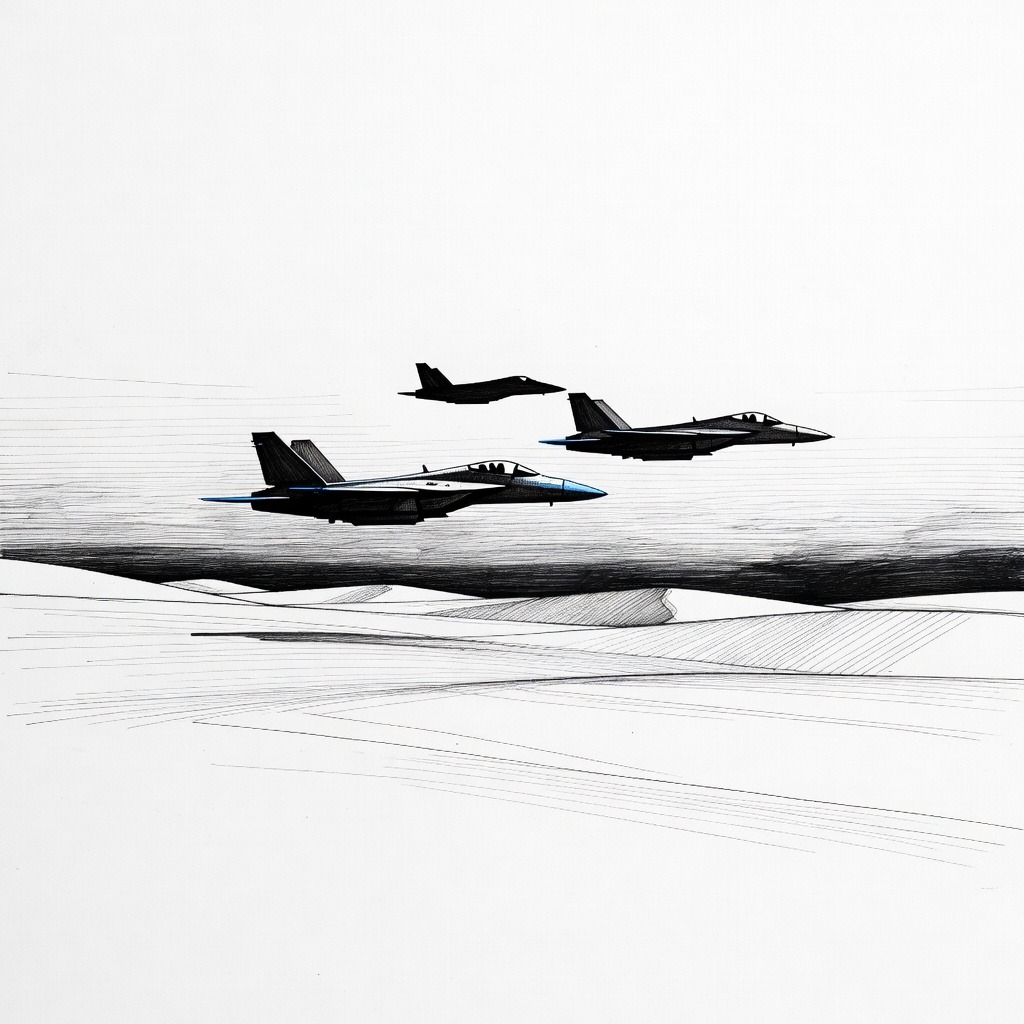
• Systemic Fog of War The downing of three advanced F-15Es by allied Kuwaiti forces highlights the inherent uncontrollability of complex combat environments. While the crew survived, this "friendly fire" incident serves as a stark rebuttal to the myth of surgical precision, demonstrating that expanding the theater of war inevitably invites chaotic, unintended errors that endanger personnel regardless of technological superiority.
• Slippery Slope to Quagmire Secretary Hegseth’s refusal to rule out ground troops, juxtaposed with the death of four U.S. service members, signals the classic precursors to prolonged entanglement. By defining success through the physical destruction of infrastructure rather than diplomatic off-ramps, the operation risks shifting from a limited campaign into the very "endless" conflict officials claim to be avoiding.
• Provocation Over Stabilization The sheer scale of striking 1,000 targets creates a kinetic feedback loop rather than resolution, evidenced by Iran’s immediate retaliatory missile and drone barrages. From this view, attempting to bomb a nation out of nuclear ambition ignores the historical reality that existential threats often harden an adversary's resolve rather than breaking it, leading to a higher human cost.
How it may affect me
As a U.S. reader:
• The conflict has resulted in immediate American casualties and equipment loss, with four troops killed and three aircraft downed, highlighting the severe physical risks facing U.S. personnel in the region.
• You face uncertainty regarding the war's duration; while the President projects a limited four-week timeline, the Pentagon has not ruled out deploying ground troops, which could extend U.S. involvement.
• The operation aims to eliminate long-term nuclear and missile threats, but the current exchange of over 1,000 U.S. strikes and Iranian retaliatory fire creates a volatile environment with ongoing security challenges.