
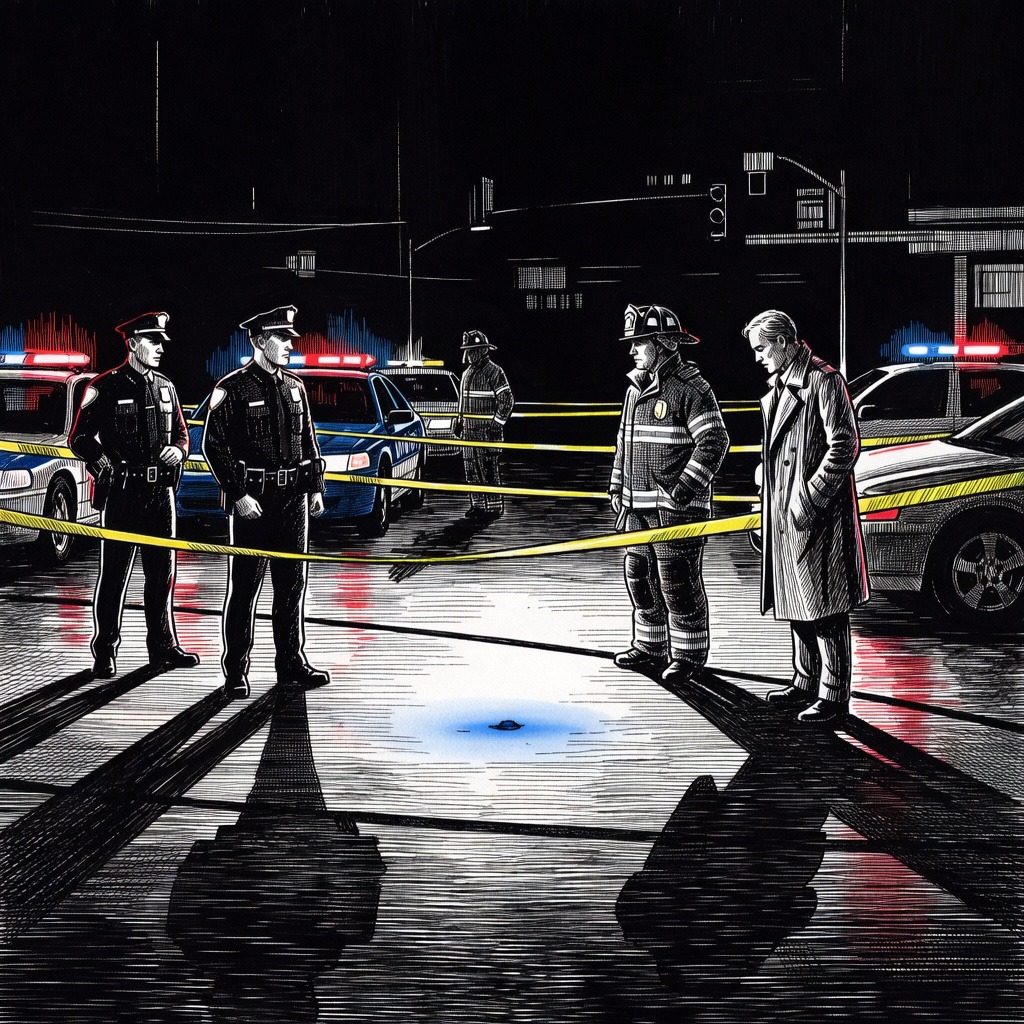
• The Reactionary Paradox Despite a "heavy police presence" and a response time of "less than a minute," nearly 20 people were struck by gunfire. This tragedy illustrates the inherent limitations of a security model based solely on armed reaction rather than prevention; the proximity of law enforcement failed to deter the violence, proving that rapid physical intervention often arrives too late to stop the initial carnage.
• The Cost of Chaos The focus on the "rapid response" acts as a palliative narrative that obscures the trauma of the 14 injured survivors and the fatalities. By celebrating the efficiency of the cleanup and the neutralization of the suspect, the system risks normalizing the violence itself as an inevitable aspect of nightlife, rather than addressing the societal volatility that allows an armed individual to enter a crowded district.
• Scrutiny of Engagement While the immediate threat was ended when police "returned fire," the lethal use of force by the state requires rigorous oversight. With the suspect dead and "no immediate information" regarding a motive, there is a risk that the investigation becomes a closed loop; federal involvement is necessary to ensure that the chaotic environment did not lead to collateral harm during the exchange of fire.
How it may affect me
As a U.S. reader:
• You may observe a continued emphasis on high-visibility police deployments in entertainment districts, as supporters argue that immediate resource allocation is essential for limiting casualties during active crises.
• Public debate may arise regarding the limitations of armed response, contrasting the view that rapid intervention saves lives with the concern that police proximity does not necessarily prevent the initial outbreak of violence.
• You can expect a detailed investigation involving federal assistance to uncover the shooter’s motive and review the lethal engagement, addressing concerns about potential collateral risks in crowded environments.