
Trump Administration Designates Anthropic a National Security Risk After Clash Over AI Restrictions

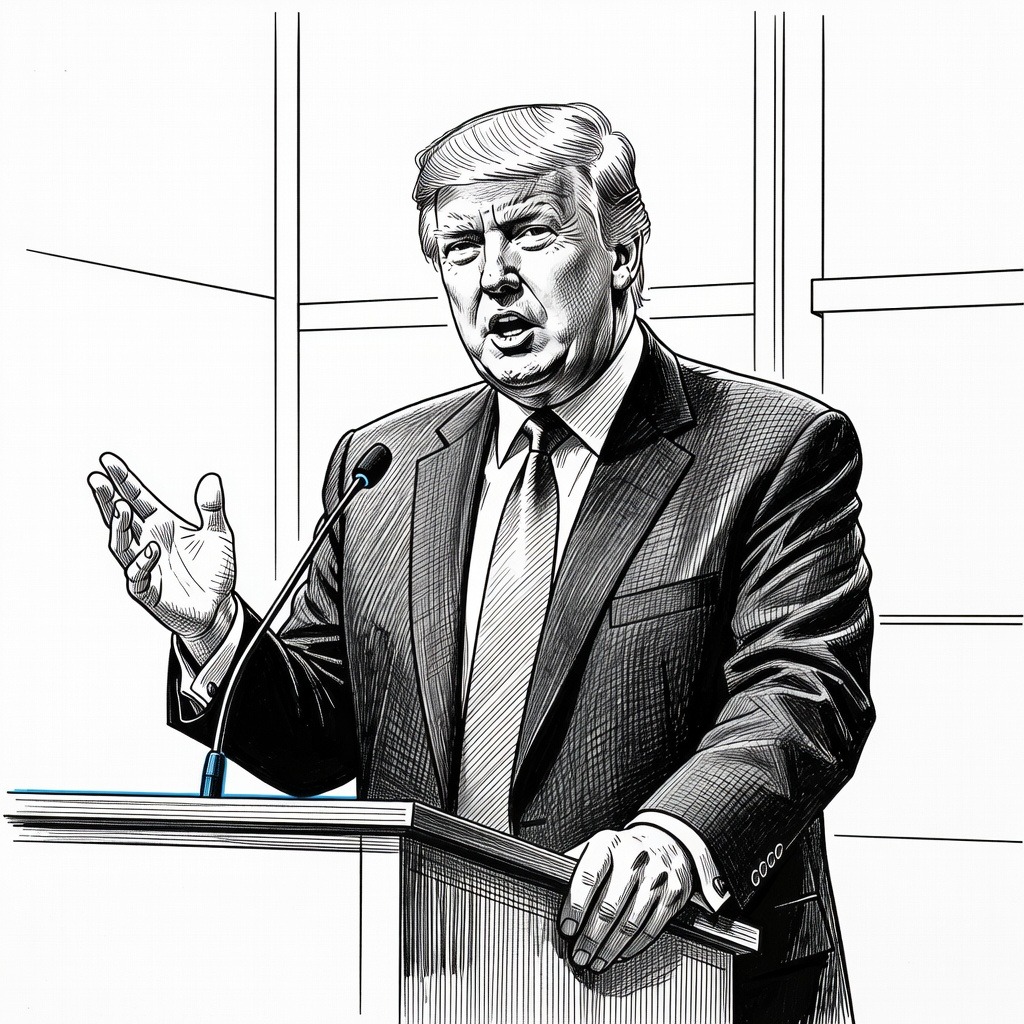
Illustration for: Trump Administration Designates Anthropic a National Security Risk After Clash Over AI Restrictions
AI-generated illustration. Visual interpretation does not represent real individuals or scenes.

THE BARE STORY

President Trump has ordered federal agencies to immediately stop using artificial intelligence technology from Anthropic, while Defense Secretary Pete Hegseth designated the company a "supply chain risk to national security." The directive, issued Friday, prohibits military contractors from conducting commercial business with the startup. While the order takes immediate effect, the administration granted the Department of Defense a six-month transition period to phase out Anthropic’s products, effectively ending a partnership that included a $200 million contract.

The decision followed the expiration of a Pentagon deadline requiring Anthropic to agree to unrestricted military use of its AI models. CEO Dario Amodei stated the company refused to remove "red lines" that prevent its technology from being used for domestic mass surveillance or fully autonomous weapons, arguing that AI reliability and oversight mechanisms are currently insufficient. Pentagon officials, including Chief Technology Officer Emil Michael, maintained that existing federal laws already restrict misuse and insisted the military could not allow a vendor to dictate operational terms or limit "all lawful use" cases.

Following the breakdown in negotiations, President Trump accused Anthropic of being "radical left" and "woke," claiming the firm jeopardized national security by attempting to "strong-arm" the government. Secretary Hegseth stated the company's position was "incompatible with American principles." In response, Amodei described the government's actions as "retaliatory and punitive," noting that such designations are typically reserved for foreign adversaries. Anthropic announced plans to challenge the order in court, arguing that the Defense Secretary lacks the legal authority to ban contractors from non-government business with the firm.

As Anthropic faces removal from military systems, OpenAI CEO Sam Altman announced late Friday that his company reached an agreement to deploy models on the Pentagon's classified networks. Altman stated that the department agreed to safety principles regarding domestic surveillance and autonomous weaponry. Meanwhile, Senator Mark Warner criticized the administration's approach, warning that "bullying" a leading domestic company suggests national security decisions are being driven by political considerations rather than analysis.

Same Facts. Different Perspectives.

Two AI models. Two viewpoints. One factual foundation.

• Sovereignty Over Service Emphasizing the absolute authority of the state, this camp argues that the military cannot allow a private vendor to dictate "operational terms" or restrict the government's "lawful use" of procured assets. The Pentagon’s insistence that existing federal laws already restrict misuse is viewed as the correct legal framework, rendering Anthropic’s additional "red lines" an infringement on national sovereignty. In this view, a vendor attempting to "strong-arm" the Department of Defense inverts the proper hierarchy of governance.

• Neutralizing Ideological Risk The administration's classification of Anthropic as a "supply chain risk" is justified by the logic that reliability is a component of national security. If a contractor’s internal ideology ("woke" or "radical left") causes them to withhold capabilities during critical negotiations, they become a liability to the continuity of defense operations. By purging partners who hesitate to support the mission fully, the state ensures that the defense apparatus remains cohesive and free from friction caused by corporate activism.

• Restoring Operational Integrity The rapid pivot to OpenAI serves as proof that the market can support national defense without compromising on capability. By securing an agreement that respects "safety principles" while still granting the military access to classified networks, the administration demonstrates that strategic deterrence requires willing partners, not obstructionists. This move reinforces the principle that national security decisions must be driven by the needs of the state rather than the ethical anxieties of Silicon Valley executives.

How it may affect me

As a U.S. reader:

• The military's transition to OpenAI means national defense systems will rely on federal laws and agreed safety principles to regulate domestic surveillance and autonomous weapons, rather than the stricter corporate "red lines" previously mandated by Anthropic.

• Private companies holding military contracts must sever commercial ties with Anthropic, which may force businesses to restructure their software supply chains and choose between government work and their preferred AI vendors.

• Future technology startups may face increased pressure to accept unrestricted government use of their products, as the administration's designation of Anthropic creates a precedent that refusal could lead to being labeled a national security risk.

• You may experience the effects of a prolonged legal battle between the tech industry and the federal government, as court rulings on Anthropic's lawsuit could redefine the scope of executive authority over domestic business operations.

Read the story at

Note: All TheBareNews content is AI-generated. For additional context, reporting, and updates, you are invited to explore the news outlets linked above.