
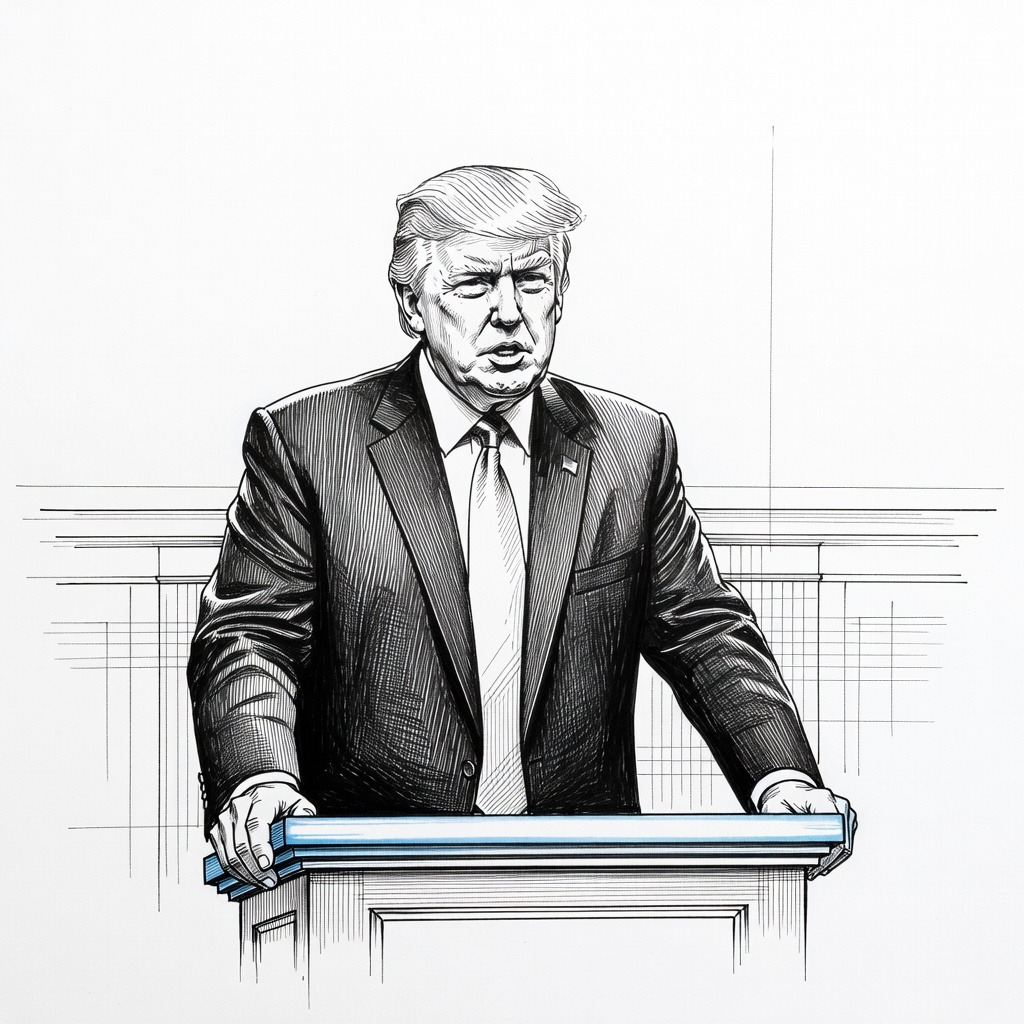
• Regressive Cost Shock Prioritizing social equity means rejecting policies that disproportionately burden the working class. The New York Federal Reserve's finding that 90% of tariff costs are borne by U.S. businesses and consumers exposes the proposal as a consumption tax in disguise. By shifting the revenue burden from progressive income taxes to goods-based tariffs, the policy effectively cuts taxes for high earners while inflating the cost of living for vulnerable populations.
• Fiscal Fantasy Math Economic stability requires policies grounded in numerical reality rather than nostalgia. The gap between the $2.66 trillion collected in income tax and the $195 billion from customs duties reveals a catastrophic revenue shortfall in the President's "19th-century" vision. Because the tax base for imports is significantly smaller than that of income, attempting to replace the former with the latter would necessitate exorbitant tariff rates, risking hyperinflation or national insolvency.
• Statutory Firewall The protection of civil and economic liberties relies on preventing the executive branch from unilaterally rewriting the tax code under the guise of emergency powers. The Supreme Court’s 6-3 decision serves as a vital check, ensuring that the IEEPA cannot be weaponized to bypass legislative oversight for sweeping economic changes. This ruling forces any radical fiscal restructuring back into the legislative arena, where the true costs to the taxpayer can be debated transparently.
How it may affect me
As a U.S. reader:
• Consumers and businesses may continue to experience higher prices for imported goods, as federal data indicates that 90% of tariff costs are currently absorbed by Americans rather than foreign entities.
• The Supreme Court ruling ensures that any new tariffs must be implemented through specific trade statutes rather than emergency powers, which may alter the procedural timeline and legal requirements for future trade policies.
• A long-term shift from income taxes to tariffs would effectively move the federal revenue burden from earnings to consumption, which proponents argue encourages domestic productivity while critics warn it increases the cost of living for working-class populations.
• The proposal to replace the income tax system faces practical hurdles, as the current $2.66 trillion in income tax revenue vastly exceeds the $195 billion collected from customs duties, implying that maintaining government funding would require significantly higher tariff rates.