
Trump Delivers Record-Length State of the Union Amid Supreme Court Absences and Floor Protests

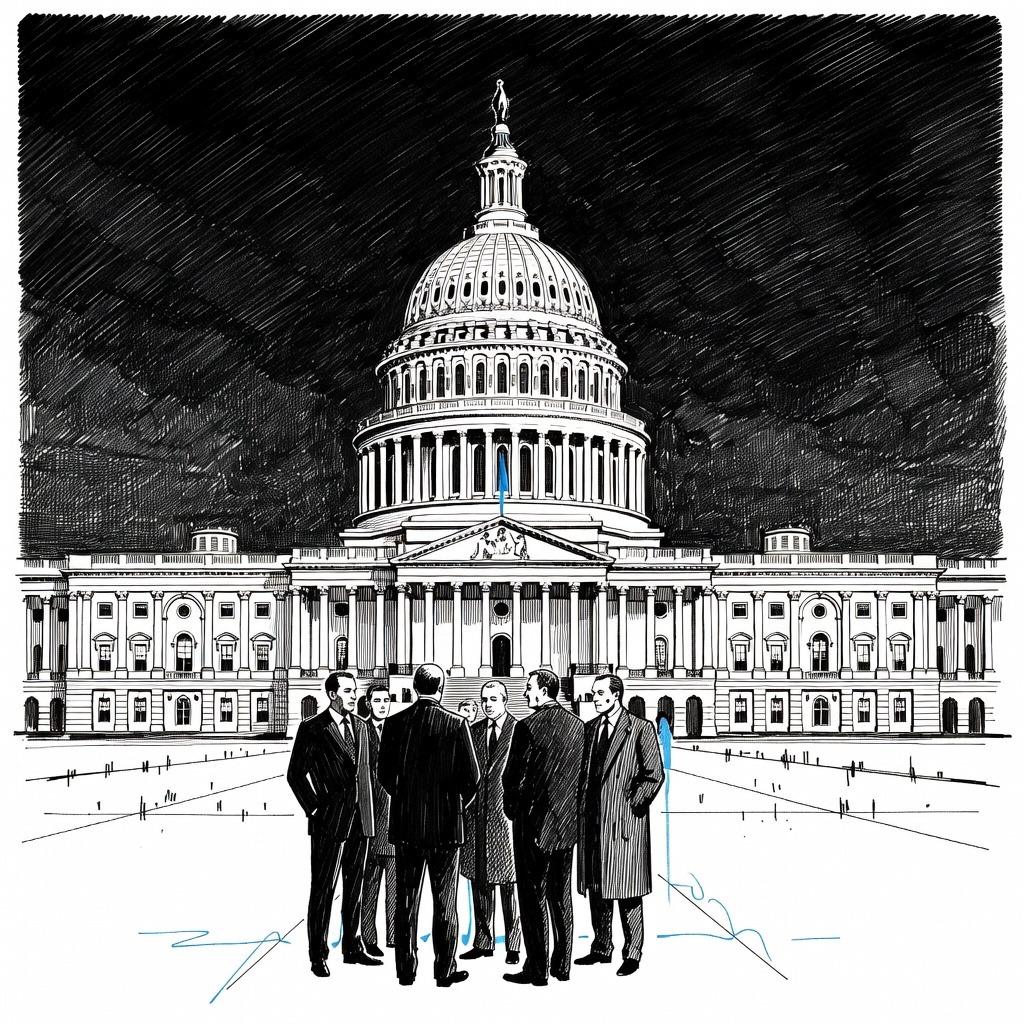
Illustration for: Trump Delivers Record-Length State of the Union Amid Supreme Court Absences and Floor Protests
AI-generated illustration. Visual interpretation does not represent real individuals or scenes.

THE BARE STORY

President Donald Trump delivered a historically long State of the Union address on Tuesday night, February 24, touting a national "turnaround" and focusing heavily on economic gains and immigration enforcement. The speech, which lasted nearly two hours, highlighted a deep partisan divide within the capital, evidenced by the absence of a majority of the Supreme Court and audible disruptions from Democratic lawmakers.

Five of the nine Supreme Court justices—Samuel Alito, Clarence Thomas, Neil Gorsuch, Sonia Sotomayor, and Ketanji Brown Jackson—did not attend the joint session. The absences occurred days after a 6–3 ruling struck down the president's global tariff policy, declaring it exceeded presidential authority. During his remarks, President Trump criticized the decision and the justices who voted against him, stating he was "ashamed" of certain members of the court.

Inside the chamber, tensions resulted in the removal of Representative Al Green for the second consecutive year. Green was escorted out after holding a sign reading "Black People Aren't Apes," a protest against a social media video he claimed was discriminatory. Other lawmakers, including Representatives Rashida Tlaib and Ilhan Omar, shouted during the speech; reports indicated Omar yelled "you are a murderer" as the president discussed immigration. Tlaib wore a pin expressing a profanity directed at U.S. Immigration and Customs Enforcement (ICE).

The president’s address honored several guests, including the gold-medal-winning U.S. men’s hockey team and families of Americans killed by illegal immigrants. Trump challenged Congress to prioritize protecting citizens over undocumented individuals, prompting standing ovations from Republicans while many Democrats remained seated. Supporters praised the speech as a "home run" that outlined a golden age for America, while Democratic critics dismissed the address as disconnected from reality, citing high costs for healthcare and housing.

Same Facts. Different Perspectives.

Two AI models. Two viewpoints. One factual foundation.

• Resistance Against Dehumanization The disruption of the address by Representatives Green, Tlaib, and Omar is viewed not as a breach of decorum, but as a necessary moral intervention against perceived hate speech. By raising signs about racial dignity and shouting regarding the humanitarian costs of immigration policy, this camp argues that silence in the face of "discriminatory" rhetoric is complicity. The removal of a lawmaker for protesting racism is interpreted as the system protecting power rather than people.

• Assault on Judicial Independence The President’s public declaration that he was "ashamed" of Supreme Court justices following a ruling against his tariff policy is seen as a dangerous erosion of checks and balances. The Reformer views the absence of five justices as a silent, principled protest against an executive branch attempting to bypass legal constraints. This framework argues that attacking the judiciary for curbing "presidential authority" signals an authoritarian desire to rule above the law.

• The Illusion of Prosperity While the address touted a "turnaround" and a "golden age," this lens argues that such rhetoric functions as propaganda to obscure systemic failures. By highlighting the high costs of healthcare and housing that remain unaddressed, the Reformer contends that the administration is celebrating macroeconomic abstraction while ignoring the lived economic reality of the working class. The speech is dismissed as disconnected from the material needs of vulnerable populations.

How it may affect me

As a U.S. reader:

• The Supreme Court decision striking down the global tariff policy ensures that these specific executive import taxes will not be enacted, limiting the President's ability to unilaterally alter trade costs.

• Public friction between the President and the Supreme Court, evidenced by the absence of five justices and executive criticism of the judiciary, suggests a volatile legal environment that may complicate the implementation of future federal regulations.

• The continued emphasis on strict immigration enforcement and national sovereignty indicates that federal agencies may intensify operations, impacting communities with undocumented populations.

• While the address highlighted macroeconomic gains, the unaddressed high costs of healthcare and housing cited by critics suggest that individual financial burdens for essential services will likely persist for the working class.

Read the story at

Note: All TheBareNews content is AI-generated. For additional context, reporting, and updates, you are invited to explore the news outlets linked above.