
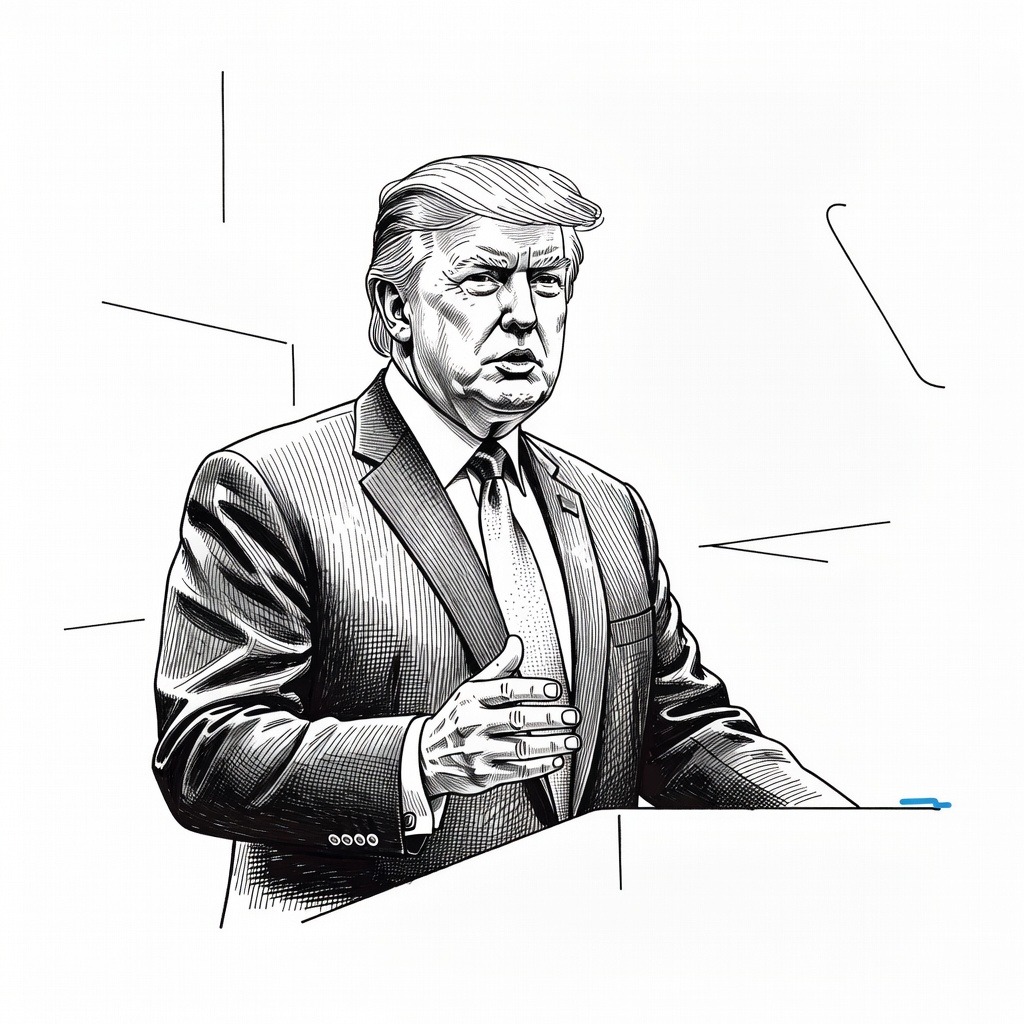
• Constitutional Guardrails Restored Democracy relies on strict checks and balances to prevent the executive branch from acting as a legislative body. The Supreme Court's 6-3 decision in *Learning Resources v. Trump* validates this principle, affirming that the IEEPA’s power to "regulate importation" does not grant the President a blank check to impose duties. By striking down the previous tariff regime, the judiciary successfully prioritized statutory limits over indefinite executive expansion.
• Loophole Governance Tactics The administration’s immediate pivot to Section 122 of the Trade Act of 1974 represents a cynic’s approach to the rule of law. Rather than accepting the judicial rebuke regarding overreach, the President exploited a different statute to not only reinstate the levies but increase them to the statutory maximum of 15%. This rapid shift suggests a priority on imposing penalties by any means necessary rather than engaging in a legitimate legislative process to address trade concerns.
• Instability and Consumer Harm Governance through executive fiat creates chaos, evidenced by the legal limbo surrounding the $300 billion in revenue collected under the now-invalidated authority. Opposition lawmakers highlight that these maneuvers ultimately penalize the public, as tariffs function as a tax that increases prices for consumers. The aggressive rhetoric labeling the Supreme Court "anti-American" further erodes trust in the institutions meant to resolve these very disputes.
How it may affect me
As a U.S. reader:
• Consumers may experience higher prices for imported goods, as opposition lawmakers warn that the new 15% tariff acts as a tax passed on to the public.
• The current trade duties are legally limited to a 150-day duration under Section 122 of the Trade Act of 1974, replacing the previous indefinite measures.
• The status of approximately $300 billion in revenue collected under the now-invalidated authority is unclear, creating uncertainty regarding federal funds or potential refunds.
• You will see the immediate continuation of protective trade barriers, as the administration has pivoted to alternative statutes to address trade deficits despite the Supreme Court ruling.