
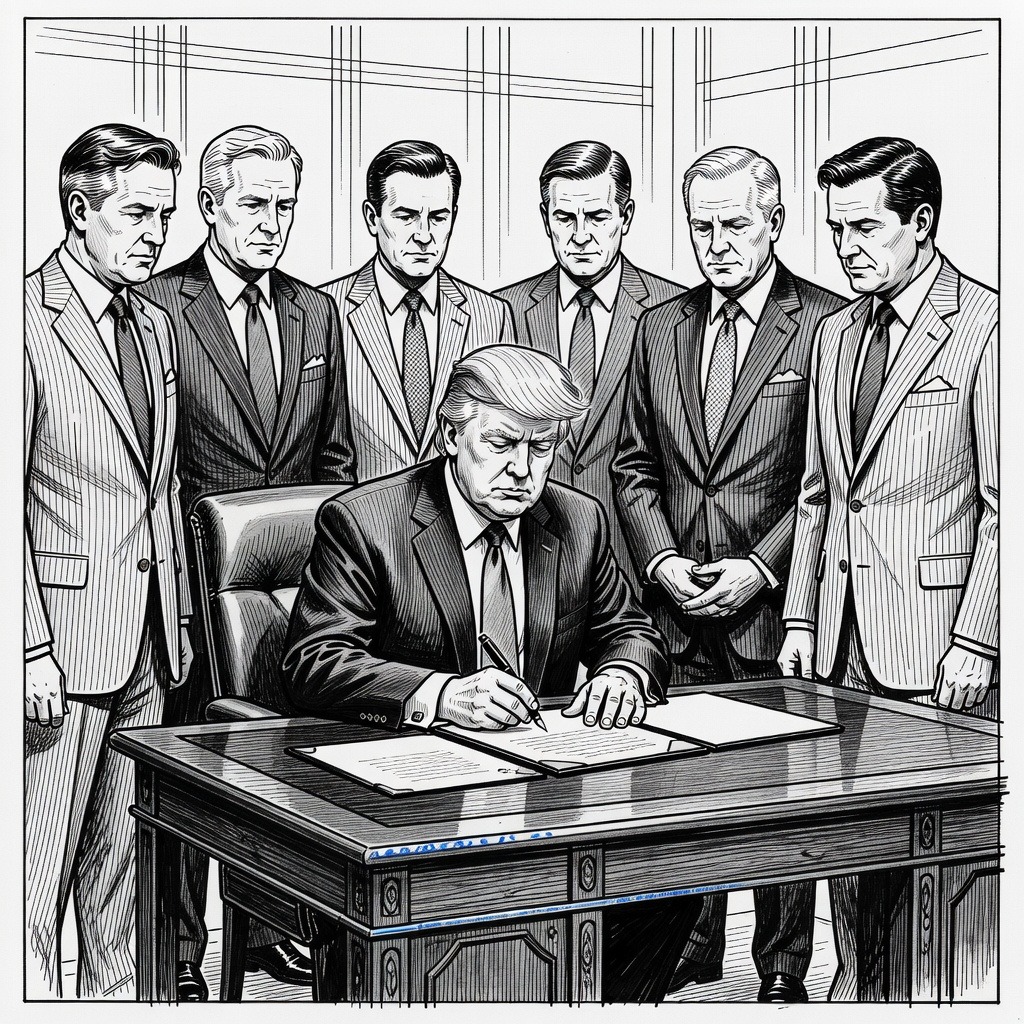
• Constitutional Guardrails Affirmed By striking down the use of the IEEPA for tariff implementation, the judiciary has reasserted the fundamental democratic principle that taxing power belongs exclusively to the legislature. The Reformer views the 6-3 decision, led by Chief Justice Roberts, as a vital check on executive overreach, ensuring that economic burdens on the citizenry are the result of Congressional deliberation rather than unilateral fiat. This ruling protects the institutional integrity of the separation of powers against an administration attempting to bypass the legislative branch.
• Executive Loophole Exploitation The immediate pivot to Section 122 of the Trade Act of 1974 is viewed as a cynical maneuver to subvert the spirit of the Supreme Court’s ruling while technically adhering to the letter of the law. By utilizing a different statute to reimpose the exact same 10% levy within hours, the Executive branch is effectively mocking the judicial demand for deliberation. This action signals a refusal to engage in the democratic process, preferring to rule by decree through statutory loopholes rather than seeking the consensus Justice Gorsuch emphasized.
• Illegitimate Revenue Retention The administration’s refusal to refund billions of dollars collected under the now-invalidated framework represents a profound violation of government accountability. From this perspective, retaining funds seized through unconstitutional means equates to state-sanctioned theft from businesses and consumers. By predicting years of litigation rather than voluntarily correcting the error, the administration prioritizes retaining ill-gotten power and revenue over adherence to the rule of law and fairness to the taxpayer.
How it may affect me
As a U.S. reader:
• You will likely continue to face 10% levies on many imported goods, though specific items such as beef, pharmaceuticals, automobiles, and products from Canada and Mexico are exempt from these costs.
• If you order low-value shipments from abroad that are under $800, you will continue to pay duties on these packages because the new order extends the suspension of the de minimis exemption.
• Business owners and consumers hoping for the return of taxes paid under the invalidated tariff system may face years of legal delays, as the administration stated it will not voluntarily refund the billions collected.
• You may encounter future economic uncertainty regarding these trade policies, as the new legal basis for the tariffs generally expires after 150 days without Congressional approval, setting the stage for potential conflict between the branches.