
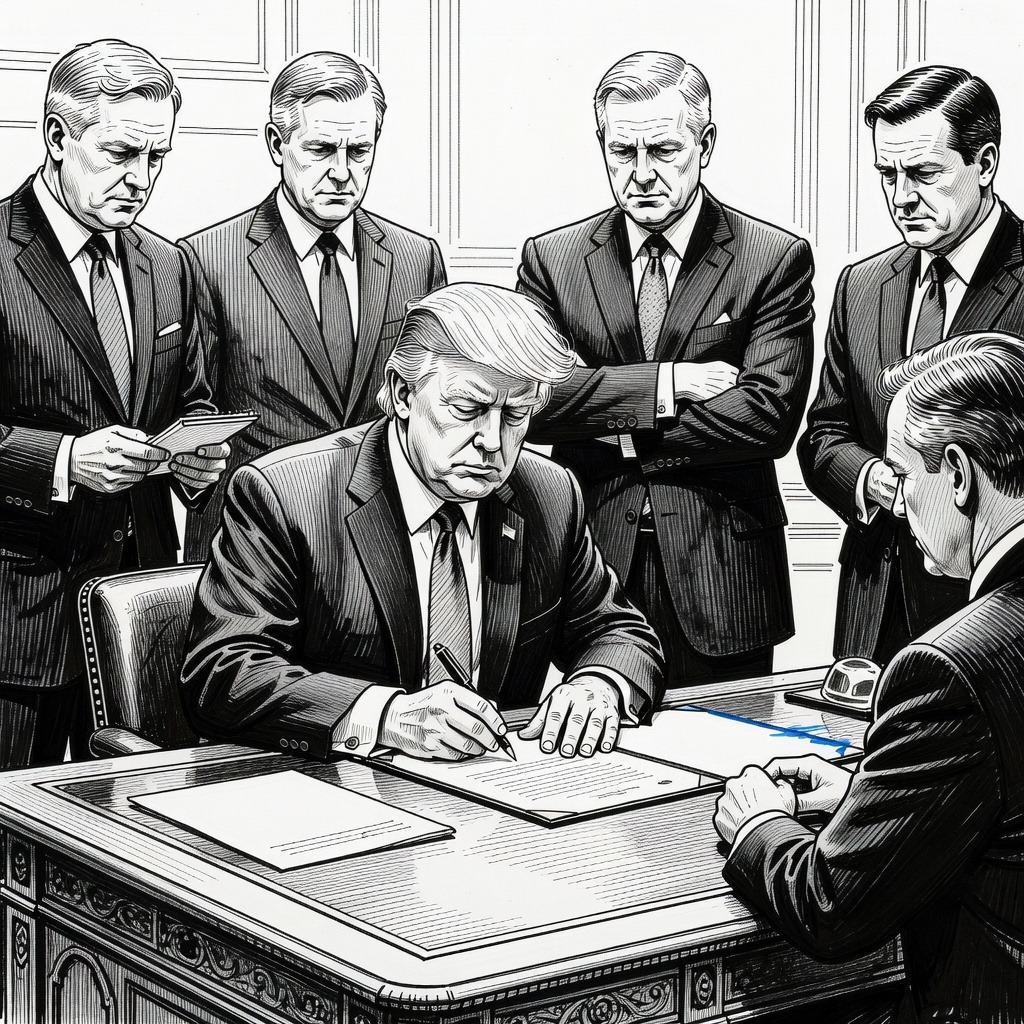
• State-Sanctioned Wealth Extraction This perspective views the government’s reluctance to immediately refund the estimated $165 billion to $175 billion in invalidated levies as an affront to economic equity. By dragging the issue into "years of litigation" via the International Tax and Trade Court, the administration is effectively retaining capital that rightfully belongs to private entities. This acts as an unauthorized seizure of funds that businesses need to maintain payrolls and stabilize prices for the public.
• Regressive Consumption Tax The rapid pivot to Section 122 of the Trade Act of 1974 is seen not as a strategic correction, but as a disguised tax on the working class. Because tariffs are often passed down as higher prices, a blanket 10% duty on foreign imports disproportionately impacts low-to-middle-income households who rely on affordable goods. The logic posits that "revitalizing American manufacturing" is a distant, theoretical benefit that comes at the immediate, concrete expense of consumer purchasing power.
• Institutional Evasion Tactics Critics argue that shifting legal justifications just hours after a Supreme Court defeat undermines the stability required for a healthy economy. By utilizing a "balance-of-payment" loophole to replace the voided IEEPA regime, the executive branch creates a cycle of "economic ambiguity" that prevents long-term investment. The priority here is the rule of law; without predictable constraints on executive power, market participants cannot plan for the future, leading to volatility that hurts the vulnerable most.
How it may affect me
As a U.S. reader: You may face increased prices on non-exempt foreign imports, as the 10% tariff can be passed down to consumers and function as a tax that reduces purchasing power for households. Your costs for specific goods such as food, electronics, and automobiles are likely to remain stable because the administration explicitly exempted these categories and products from Canada and Mexico. You could experience continued economic volatility affecting job security and business planning, as analysts note that the rapid replacement of tariffs reinstates ambiguity regarding trade rules and long-term investment. The dispute over $165 billion to $175 billion in potential refunds means businesses will not immediately access capital that advocates say is needed to stabilize prices and payrolls, while the delay prevents a shock to government liquidity.