
• Gap in Public Utility This business model highlights a fundamental deficiency in municipal infrastructure, as the founder explicitly cites "poor water quality" as the catalyst for the operation's genesis. Rather than viewing this solely as a business triumph, it underscores a systemic failure where private enterprise must step in to filter and process water—a basic public good that should be reliable at the tap. The reliance on a private solution to ensure safety and taste for local venues signals a retreat of the state in providing foundational resources.
• Resistance to Inflationary Greed In an economic environment defined by corporate price-gouging, the decision to keep the price of a 50-pack of cubes unchanged since 2017 represents a commitment to fair value over profit maximization. This pricing strategy prioritizes the stability of the local ecosystem—bars and restaurants—over the extraction of every possible dollar from the client base. It demonstrates that financial viability, evidenced by the $3 million revenue, does not require passing aggressive cost increases down the supply chain.
• Valuation of Specialized Labor The trajectory from using "chainsaws and clothing irons" to operating complex CNC routers and bandsaws illustrates a respect for the evolution of craft rather than the race-to-the-bottom automation often seen in manufacturing. By catering to over 20 Michelin-starred establishments, the business validates a market for high-quality, specialized production that resists the commodification of goods. This approach sustains a local manufacturing footprint in Queens, prioritizing product integrity and specialized skill sets over mass-market, low-quality output.
How it may affect me
As a U.S. reader:
• You may find that high-end hospitality venues increasingly rely on private filtration and processing to ensure ice quality, bypassing reliability issues associated with municipal tap water.
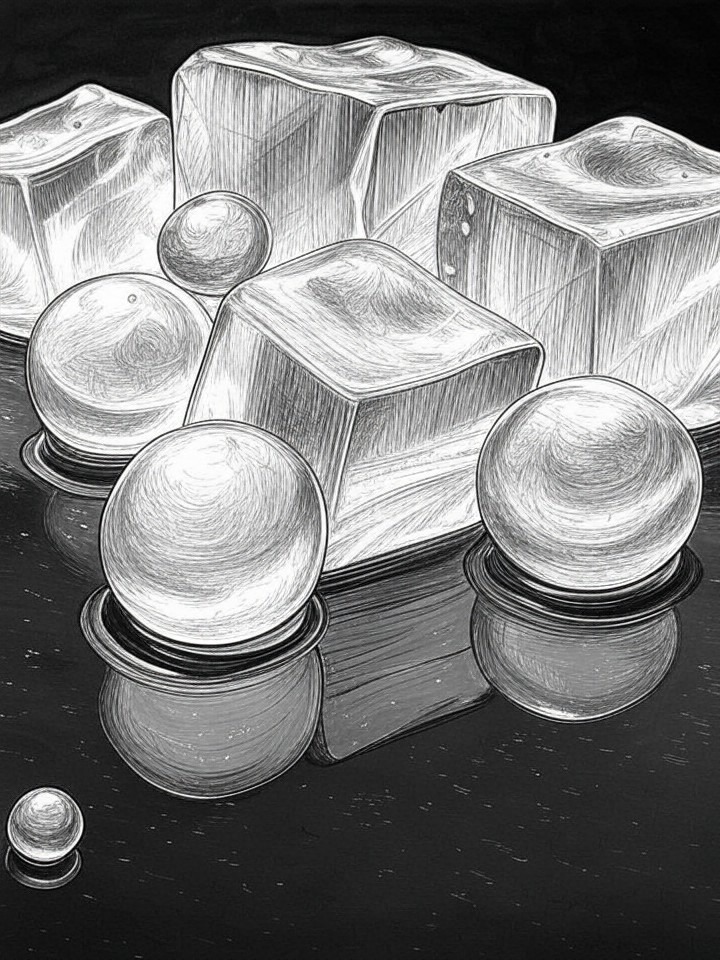
• Patrons at Michelin-starred and similar establishments might encounter specialized products, such as custom-engraved or sphere-shaped ice, resulting from heavy investment in advanced manufacturing technology.
• You could benefit from cost stability in certain dining sectors, as some vendors choose to keep prices for supplies unchanged over long periods to support the local business ecosystem.
• Aspiring business owners may see a viable path in converting logistical complaints, such as poor ingredient quality, into specialized B2B enterprises that utilize automation to scale revenue.