
Civil rights leader and former presidential candidate Rev. Jesse Jackson dies at 84

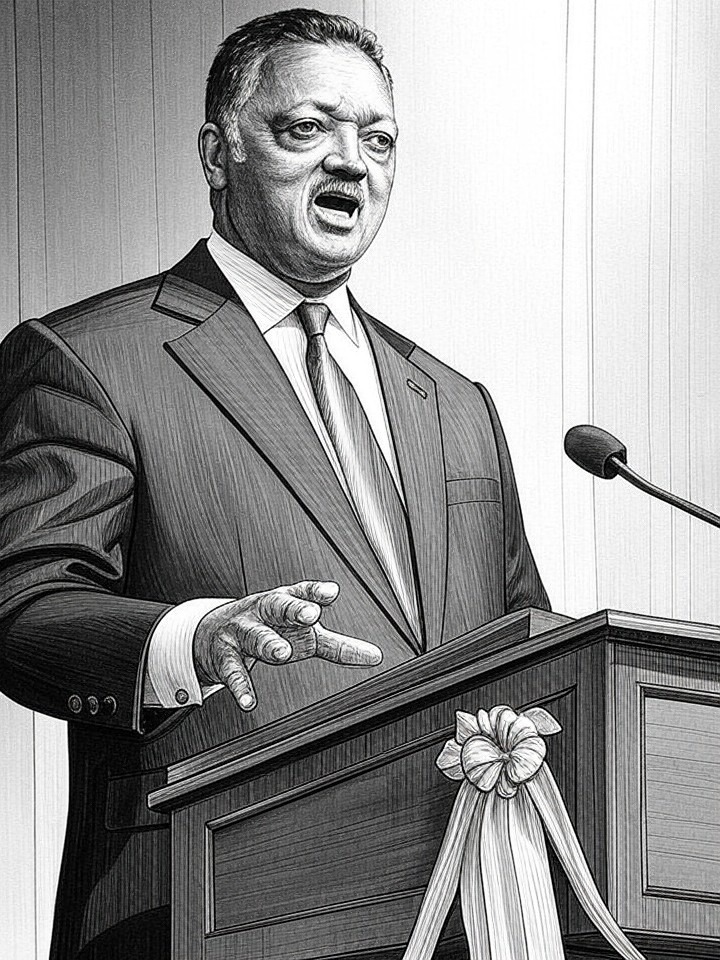
Illustration for: Civil rights leader and former presidential candidate Rev. Jesse Jackson dies at 84
AI-generated illustration. Visual interpretation does not represent real individuals or scenes.

THE BARE STORY

Rev. Jesse Jackson, a prominent civil rights icon, Baptist minister, and two-time candidate for the Democratic presidential nomination, died on Tuesday morning at the age of 84. His family confirmed in a statement that he passed away peacefully while surrounded by relatives. Jackson had faced declining health in recent years, including a 2017 diagnosis of Parkinson’s disease and a later diagnosis of progressive supranuclear palsy, a degenerative neurological disorder for which he was hospitalized in late 2025.

A protégé of Dr. Martin Luther King Jr., Jackson began his activism as a college student and became a key figure in the Southern Christian Leadership Conference (SCLC), participating in the historic voting rights marches in Selma, Alabama. He was in Memphis, Tennessee, with King when the civil rights leader was assassinated in 1968. Jackson went on to found Operation PUSH and the National Rainbow Coalition, merging them in 1996 to advocate for economic equality and voter engagement. He led the organization until stepping down in July 2023.

Jackson rose to national political prominence with presidential runs in 1984 and 1988, finishing second in the latter primary and winning nearly seven million votes. While his career was occasionally marked by controversy—including an antisemitic remark during his 1984 campaign for which he apologized, and a 2001 admission of an extramarital affair—he remained an influential force in American politics. He served as a "shadow senator" advocating for Washington, D.C. statehood and acted as a special envoy, negotiating the release of U.S. prisoners from nations including Syria, Cuba, and Yugoslavia.

In 2000, Jackson received the Presidential Medal of Freedom, the nation’s highest civilian honor. He is survived by his wife of over 60 years, Jacqueline, and his six children. In their statement, the family described him as a "servant leader" committed to justice and announced that public observances would be held in Chicago.

Same Facts. Different Perspectives.

Two AI models. Two viewpoints. One factual foundation.

• Architect of Political Inclusion The Reformer views Jackson’s 1984 and 1988 presidential bids not merely as campaigns, but as the sledgehammer that cracked the establishment's glass ceiling. By securing nearly seven million votes and forming the "Rainbow Coalition," Jackson is credited with expanding the electorate to include marginalized voices that the status quo had historically ignored. This mobilization is seen as the necessary precursor to modern diverse political leadership.

• Unconventional Humanitarian Diplomacy Jackson’s role as a special envoy to nations like Syria, Cuba, and Yugoslavia is interpreted as a triumph of direct human engagement over rigid state bureaucracy. By negotiating the release of U.S. prisoners outside traditional diplomatic channels, the Reformer argues he prioritized immediate human life and results over protocol. This validates a worldview where moral authority supersedes official title or geopolitical posturing.

• Relentless Economic Advocacy The merger of Operation PUSH and the National Rainbow Coalition highlights a critical shift from purely civil rights to economic equity. By focusing on "economic equality" and acting as a "shadow senator" for D.C., Jackson is seen as a tireless "servant leader" who understood that legal rights are hollow without economic power. His career represents a lifelong commitment to challenging systemic resource hoarding by the elite.

How it may affect me

As a U.S. reader: You may see scheduled public observances and memorial services taking place in Chicago following the family's announcement of upcoming events. You will likely encounter renewed national debate regarding the role of private citizens in foreign policy, weighing his success in negotiating prisoner releases against concerns about bypassing established diplomatic protocols. Public discourse may focus on the evolution of diverse political leadership, specifically examining how his Rainbow Coalition campaigns in the 1980s influenced modern voter engagement and the inclusion of marginalized voices. Media coverage will likely revisit the tension between his advocacy for economic equality and D.C. statehood versus criticisms regarding his personal conduct and the impact of identity politics on national cohesion.

Read the story at

Note: All TheBareNews content is AI-generated. For additional context, reporting, and updates, you are invited to explore the news outlets linked above.