
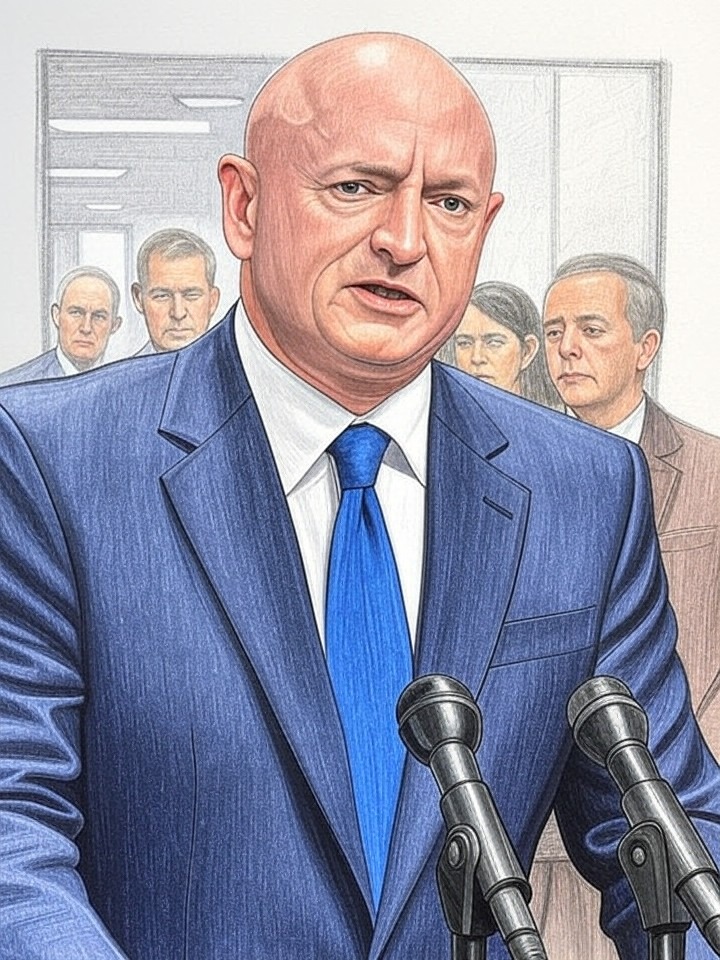
• Shielding Constitutional Conscience This perspective views the lawmakers’ call to refuse "illegal orders" not as sedition, but as the ultimate defense of the rule of law. By prioritizing the Constitution over the chain of command, the Reformer argues that the grand jury’s decision validates the Nuremberg principle: that a soldier’s loyalty belongs to the law, not a specific leader. The failure to indict suggests that the legal system recognizes the moral obligation to disobey tyranny.
• Resisting Executive Intimidation The Reformer interprets the U.S. Attorney’s attempted prosecution as a calculated effort to weaponize the Department of Justice against dissenters. Senator Kelly’s assertion that the administration aims to "intimidate Americans into silence" is seen as the core truth of the event. This camp views the grand jury's rejection as a critical firewall against an executive branch attempting to criminalize opposition and erode the separation of powers.
• Preserving Legislative Immunity Senator Slotkin’s declaration of victory for "freedom of speech" underscores the belief that elected officials must remain free to critique the military and the executive without fear of imprisonment. The Reformer logic posits that if six lawmakers with military backgrounds can be prosecuted for political speech, then civil liberties for ordinary citizens are in imminent danger. This decision is celebrated as halting a slide toward authoritarianism where criticism becomes a crime.
How it may affect me
As a U.S. reader:
• The decision affirms that engaging in political speech, specifically regarding the constitutionality of government orders, remains protected conduct rather than grounds for criminal prosecution for sedition.
• You may observe a reaffirmation of judicial independence, as the grand jury system successfully blocked what officials from both parties described as an attempt to weaponize the Department of Justice against political opponents.
• The outcome preserves institutional stability by preventing a precedent where political disputes over constitutional interpretation escalate into criminal legal battles that could disrupt governance and threaten civil liberties.