
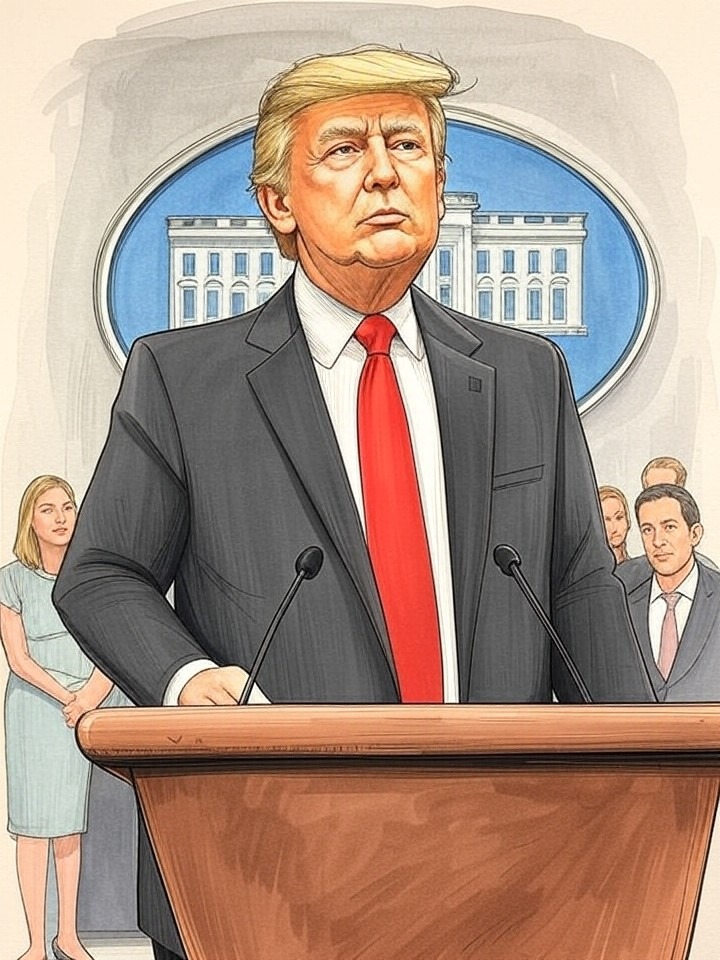
• Dismantling Public Safeguards The 2009 endangerment finding is viewed not merely as bureaucracy, but as the essential accounting mechanism for the social costs of pollution. By revoking the legal classification of greenhouse gases as a threat to "public health and welfare," the administration is effectively erasing the state's duty to protect the populace from environmental harm. This logic posits that without federal measurement and compliance, the tangible risks to public health are ignored to favor industrial expediency.
• Subsidizing Corporate Extraction Framing the removal of emission standards as a way to "lower costs" is interpreted here as allowing the energy sector to privatize profits while externalizing damages. Skepticism surrounds the push for "energy abundance," viewing it as a license for corporations to extract value without paying for the negative byproducts—emissions—that burden the broader economy. This perspective argues that true economic health requires industries to adhere to boundaries that prevent the exploitation of shared resources like air quality.
• Destabilizing Legal Precedent The move to strike down a finding that followed a 2007 Supreme Court decision and survived multiple challenges is seen as an attack on the rule of law and evidence-based governance. By discarding the statutory authority under the Clean Air Act, the administration creates a volatile regulatory environment driven by political preference rather than scientific consensus. This erosion of institutional continuity threatens long-term stability, suggesting that established legal protections can be discarded whenever they inconvenience specific market actors.
How it may affect me
As a U.S. reader:
• You may see lower costs for energy and transportation in the long term, as the administration intends to reduce consumer prices and inflation by removing compliance burdens on power plants and vehicle manufacturers.
• Public health protections related to air quality may decrease, as the repeal removes the federal requirement for the government to measure, report, and regulate greenhouse gas emissions previously classified as a threat to public welfare.
• The regulatory environment for the energy and automotive sectors is likely to become unpredictable in the near future, as the move to overturn a Supreme Court-backed finding is expected to trigger significant legal challenges.
• Corporate accountability for environmental impacts may shift, as the focus moves from federal mandates to market mechanisms, which supporters say liberates economic potential but critics argue externalizes pollution costs onto the public.