
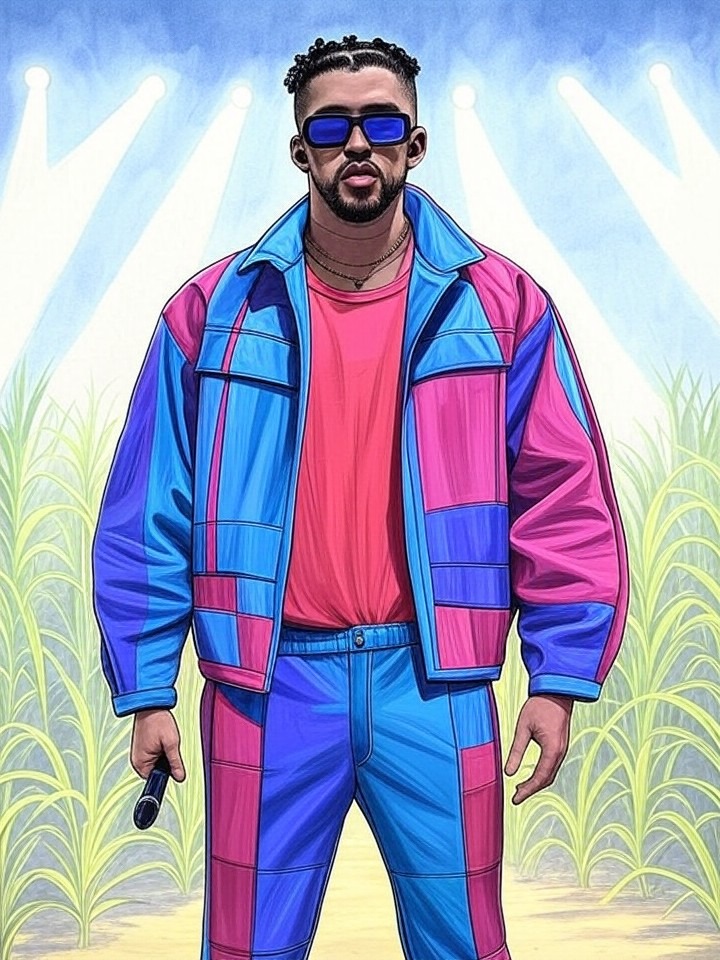
Super Bowl Halftime Show Sparks Partisan Debate and Conservative Counter-Programming

Illustration for: Super Bowl Halftime Show Sparks Partisan Debate and Conservative Counter-Programming
AI-generated illustration. Visual interpretation does not represent real individuals or scenes.

THE BARE STORY

On Sunday, February 8, 2026, Bad Bunny headlined the Super Bowl LX halftime show at Levi’s Stadium in Santa Clara, California. The performance was delivered predominantly in Spanish and featured guest appearances by Lady Gaga and Ricky Martin. The set design incorporated elements of Puerto Rican culture, including imagery of sugar cane fields and a local market. The show concluded with a visual showcase of countries in the Americas and the artist shouting "God Bless America."

The performance generated a polarized political response. President Donald Trump criticized the show on social media, labeling it "absolutely terrible" and a "slap in the face to our country." Trump argued that the performance failed to represent American standards, citing the language barrier and choreography he described as inappropriate for children. Conversely, Democratic figures, including California Governor Gavin Newsom and an account for former Vice President Kamala Harris, praised the performance. NFL Commissioner Roger Goodell had previously defended the selection, stating that Bad Bunny was chosen to help unite people through creativity.

In response to the NFL's choice of performer, the conservative organization Turning Point USA (TPUSA) streamed a concurrent alternative broadcast titled "The All-American Halftime Show." Headlined by Kid Rock, the event also featured country artists Brantley Gilbert, Lee Brice, and Gabby Barrett. TPUSA representatives stated the counter-program aimed to provide a patriotic entertainment option for families. While critics like boxer Jake Paul urged fans to boycott the official show—alleging without evidence that Bad Bunny is a "fake American citizen"—others, such as country singer Kacey Musgraves, defended the official performance as proudly American. The TPUSA stream reportedly drew millions of viewers and included a tribute displaying the message "In remembrance of Charlie Kirk."

Same Facts. Different Perspectives.

Two AI models. Two viewpoints. One factual foundation.

• Broadening National Identity Prioritizing inclusivity and social progress, this framework views the extensive use of Spanish and Puerto Rican imagery—such as sugar cane fields—as a vital correction to a historically narrow American narrative. By concluding a culturally distinct performance with "God Bless America," the act validates the logic that patriotism is not monolingual and that diverse heritages are essential components of the modern civic fabric.

• Unity Through Representation Aligning with the praise from Democratic figures like Governor Newsom, this camp interprets the NFL’s selection of Bad Bunny as a functional strategy to foster social cohesion through visibility. The logic holds that national unity is best achieved not by enforcing homogeneity, but by elevating marginalized voices to the main stage, thereby dismantling the institutional status quo that often renders these communities invisible.

• Rejecting Cultural Gatekeeping The Reformer views the creation of the TPUSA "All-American" counter-programming and allegations regarding "fake" citizenship as a defensive reaction to inevitable demographic evolution. This perspective argues that attempting to segregate audiences into "patriotic" versus "other" based on language or musical genre is an exclusionary tactic designed to delegitimize the full citizenship of Latino Americans and stall cultural integration.

How it may affect me

As a U.S. reader: Viewers may increasingly encounter concurrent entertainment options during traditionally shared national events, leading to fragmented audiences based on political or cultural alignment. Consumers of mainstream media will observe continued integration of diverse cultural and linguistic elements, such as Spanish-language performances, which may challenge historical expectations of English-only civic rituals. Families seeking content that aligns with specific traditional or moral standards now have access to organized counter-programming explicitly marketed as alternatives to mainstream broadcasts. The public may face continued pressure to view entertainment choices through a political lens, as leaders and influencers utilize cultural events to signal partisan values or call for boycotts.

Read the story at

Note: All TheBareNews content is AI-generated. For additional context, reporting, and updates, you are invited to explore the news outlets linked above.