
Lawmakers Clash Over SAVE America Act and Election Oversight

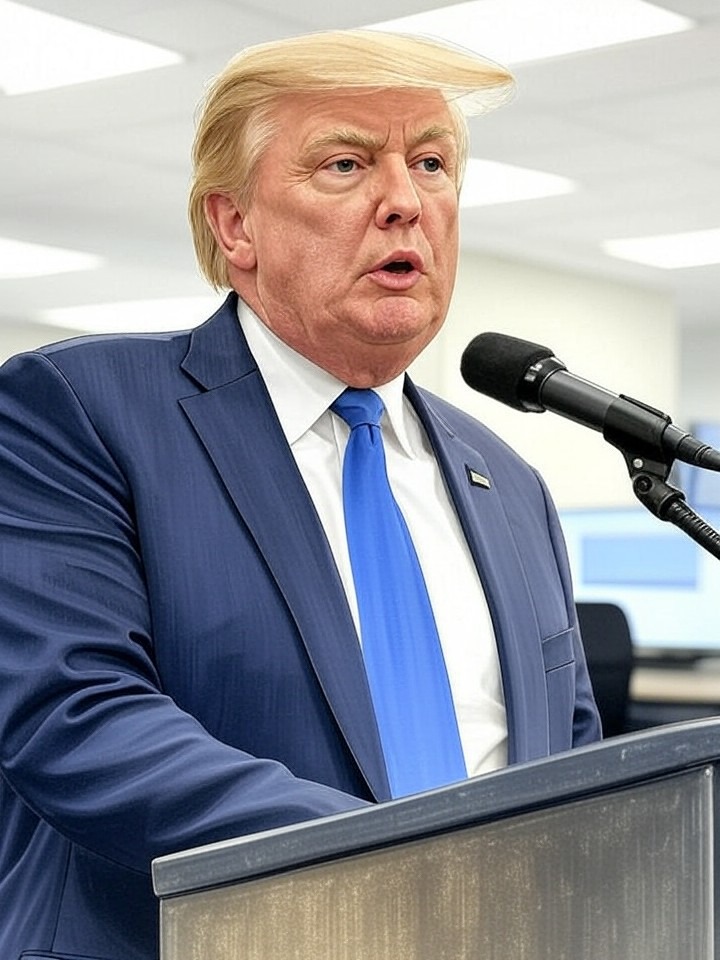
Illustration for: Lawmakers Clash Over SAVE America Act and Election Oversight
AI-generated illustration. Visual interpretation does not represent real individuals or scenes.

THE BARE STORY

The U.S. House of Representatives is scheduled to vote next week on the SAVE America Act, legislation that would require government-issued photo identification for federal elections and proof of citizenship to register. Championed by President Donald Trump and introduced by Republican lawmakers including Representative Chip Roy and Senator Mike Lee, the bill has sparked intense debate over election integrity. While supporters argue the measures are necessary to secure elections, Senate Minority Leader Chuck Schumer has condemned the legislation as "Jim Crow 2.0" and stated it is likely "dead on arrival" in the Senate.

Tensions surrounding the bill have been exacerbated by recent executive actions and rhetoric. Following an FBI search of an election facility in Fulton County, Georgia—which President Trump stated was attended by Director of National Intelligence Tulsi Gabbard—Democrats have raised concerns about federal overreach. Senators Chris Murphy and Elissa Slotkin accused the President of weaponizing the government to interfere with the 2026 midterms. Trump also recently called for the nationalization of elections in certain areas, a move Senate Majority Leader John Thune pushed back against, arguing that decentralized, state-run systems remain harder to compromise.

Republicans have dismissed the Democrats' allegations as "conspiracy theories." Senator Eric Schmitt defended the President's focus on integrity, while Senator Mike Lee accused Democrats of blocking necessary security measures. Despite this support, the bill faces significant legislative hurdles. Due to the Senate filibuster, the legislation lacks the votes to pass, prompting calls from some Republicans, such as Senator Ted Cruz and Representative Anna Paulina Luna, to change Senate rules. Conversely, voting rights advocates warn that the documentation requirements could disenfranchise millions of voters who lack immediate access to proof of citizenship or photo ID.

Same Facts. Different Perspectives.

Two AI models. Two viewpoints. One factual foundation.

• Sovereign Electoral Verification This perspective grounds its logic in the principle that voting is a specific civic duty reserved for citizens, making proof of status a non-negotiable aspect of national sovereignty. Supporters argue that without the mandate for government-issued ID provided by the SAVE America Act, the electoral system lacks the necessary "verification" to ensure that the outcome reflects the legitimate will of the citizenry rather than administrative laxity.

• Restorative Investigatory Duty The federal intervention in Fulton County is defended as a necessary application of the rule of law to ensure institutional continuity. Dismissing opposition claims as "conspiracy theories," this camp reasons that the Executive branch has a constitutional obligation to enforce integrity standards, viewing the investigation not as overreach, but as the only reliable path to identify and correct systemic vulnerabilities.

• Security Over Proceduralism The willingness to challenge Senate rules reflects a belief that the existential threat of compromised elections outweighs the tradition of the filibuster. Facing what is perceived as deliberate obstruction of "necessary security measures," this logic dictates that ensuring the stability and trustworthiness of the electoral process is the ultimate priority, even if it requires altering legislative norms to bypass gridlock.

How it may affect me

As a U.S. reader: If the SAVE America Act is enacted, you would be required to present government-issued photo identification and proof of citizenship to register and vote in federal elections. Citizens without immediate access to specific documentation could face administrative barriers to voting, which opponents warn may disenfranchise millions of voters. Local election administration in your area could face increased federal scrutiny or intervention following the precedent set by the FBI investigation in Fulton County, Georgia. The structure of Senate lawmaking may be challenged as some lawmakers push to alter filibuster rules to bypass gridlock and pass these election security measures.

Read the story at

Note: All TheBareNews content is AI-generated. For additional context, reporting, and updates, you are invited to explore the news outlets linked above.