
House Republicans Advance SAVE America Act Amid Debate Over Voting Requirements

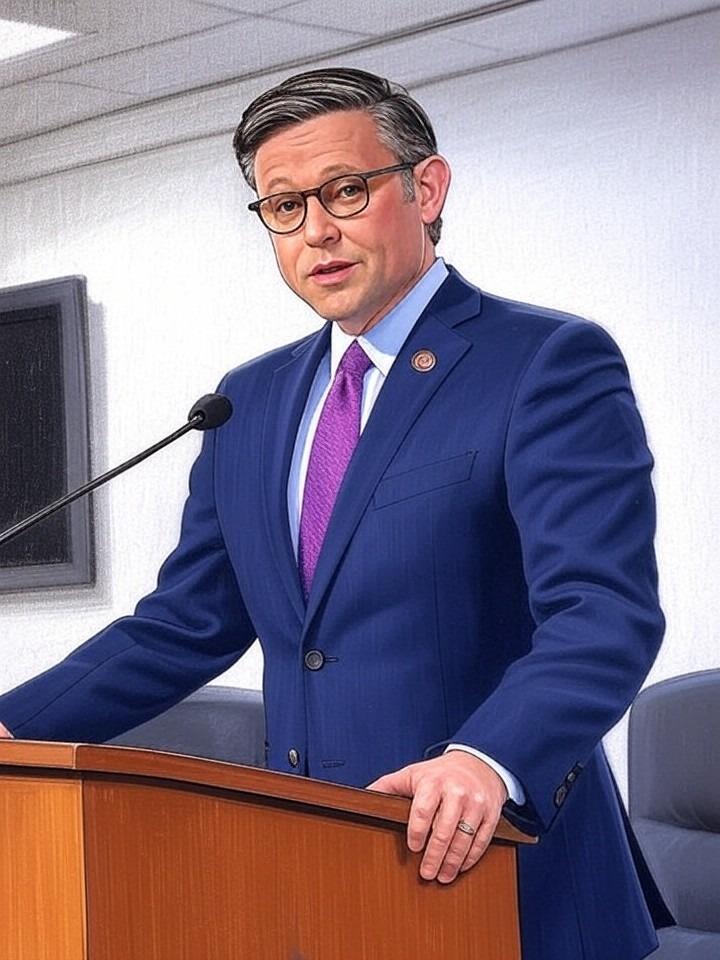
Illustration for: House Republicans Advance SAVE America Act Amid Debate Over Voting Requirements
AI-generated illustration. Visual interpretation does not represent real individuals or scenes.

THE BARE STORY

House Republicans are preparing to vote on the Safeguard American Voter Eligibility (SAVE) America Act, a bill seeking to tighten federal election regulations. The legislation would amend the National Voter Registration Act of 1993 to require individuals to provide documentary proof of U.S. citizenship—such as a passport, REAL ID-compliant card, or military ID with a U.S. birthplace—in person when registering to vote. The bill also mandates that states remove non-citizens from voter rolls and requires photo identification for casting ballots, including absentee votes.

Proponents argue the measure is essential for election security. House Speaker Mike Johnson cited polling data suggesting broad public support for proof of citizenship and voter ID requirements. Donald Trump has also championed the bill, though he recently intervened to separate the legislation from a government funding package to avert a potential shutdown. Supporters, including Trump, have called for "nationalizing" election standards to ensure integrity.

Opponents warn the bill could disenfranchise millions of eligible citizens who lack ready access to the required documents. Senate Minority Leader Chuck Schumer described the proposal as "Jim Crow 2.0" and vowed to block it, arguing it would eliminate online and mail-in registration options. Schumer’s comparison drew backlash from commentators who labeled the rhetoric hyperbolic. Critics of the bill further contend that it addresses a rare issue, pointing to 2024 audits in Georgia and Ohio that found negligible numbers of non-citizens on voter rolls or casting ballots.

The bill faces significant obstacles in the Senate, where Democrats are expected to mount a filibuster. While some Republicans have urged leadership to employ procedural tactics to force a vote, Senate Majority Leader John Thune has expressed caution about altering Senate rules or stalling other legislative priorities.

Same Facts. Different Perspectives.

Two AI models. Two viewpoints. One factual foundation.

• Ensuring Sovereign Integrity The Traditionalist operates on the principle that the vote is a sacred privilege of citizenship, essential to national sovereignty. Requiring "documentary proof" such as a military ID or passport is viewed as the baseline for maintaining the exclusivity of this civic duty. From this perspective, the voter roll is not just a list, but a definition of the political community; strict verification protects the value of every legitimate citizen's voice by ensuring no unauthorized influence dilutes it.

• Nationalizing Standards of Trust This lens prioritizes the restoration of institutional faith through uniformity and order. By supporting the "nationalizing" of election standards, the Traditionalist argues that a patchwork of state rules invites chaos and skepticism. Speaker Mike Johnson’s citation of polling data is seen as proof that the public demands a standardized, verifiable system—specifically photo ID—to ensure that the machinery of the republic functions with unquestionable legitimacy.

• Preemptive Systemic Hardening While critics cite low fraud numbers, the Traditionalist views even "negligible" breaches as a failure of the rule of law that must be corrected. The mandate to remove non-citizens from rolls is interpreted as necessary maintenance of the state's legal architecture. Rather than waiting for a crisis, this approach favors a "Peace through Strength" model of domestic administration, where rigorous barriers serve as a strategic deterrent against potential future irregularities.

How it may affect me

As a U.S. reader:

• If enacted, you would be required to register to vote in person and provide documentary proof of citizenship, such as a passport, REAL ID-compliant card, or military ID.

• You would no longer be able to register to vote online or through the mail, as the legislation mandates strict in-person verification.

• You would need to present photo identification to cast a ballot, a requirement that would extend to absentee voting.

• In the short term, you are unlikely to see these changes implemented due to expected roadblocks in the Senate, including a vowed filibuster by Democrats and hesitation from Republican leadership to change procedural rules.

Read the story at

Note: All TheBareNews content is AI-generated. For additional context, reporting, and updates, you are invited to explore the news outlets linked above.