
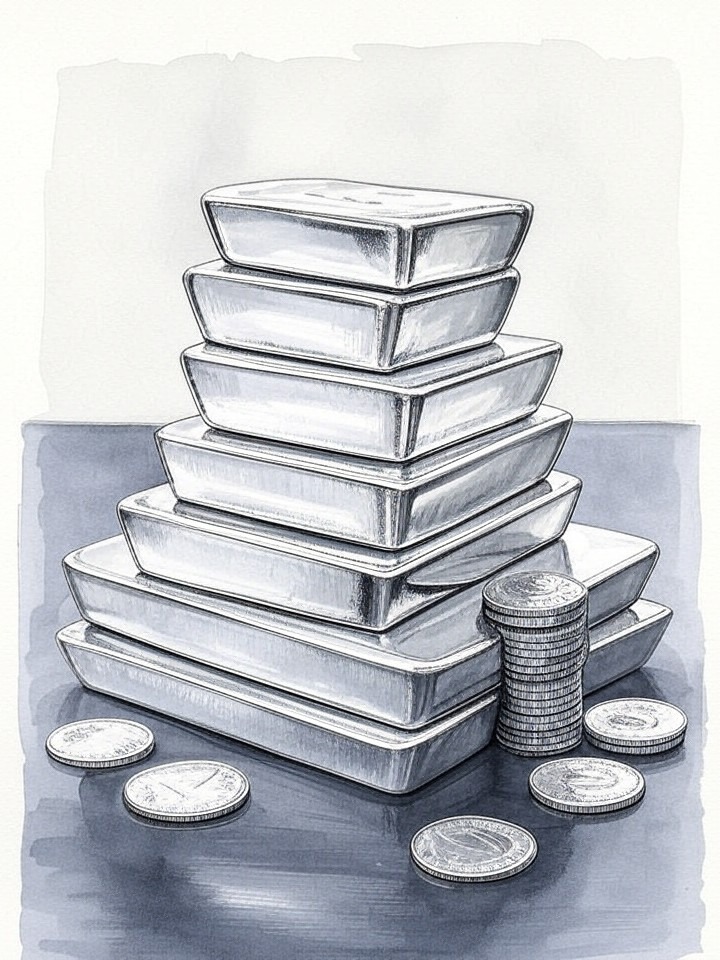
• Strong fundamental support Analysts point to heavy industrial demand as a key factor reinforcing the silver market. Usage in essential sectors such as solar energy, electronics, and medicine has helped establish a price floor, suggesting that the metal's value is supported by tangible utility rather than market sentiment alone.
• Hedge against economic instability The surge in silver prices is attributed by analysts to widespread economic uncertainty and fears regarding inflation and currency debasement. With the price remaining approximately three times higher than it was in early 2025, proponents view the metal’s performance as a successful response to shifting policies and geopolitical tensions.
• Sustained long-term growth Despite recent fluctuations, the market trajectory shows substantial year-over-year gains. While prices have retreated from record highs above $100, the current settlement of $91.72 represents a massive increase compared to early 2025, when silver traded below $35 per ounce, indicating a robust upward trend over the longer term.
How it may affect me
As a U.S. reader: Consumers purchasing electronics, solar energy systems, and medical devices may encounter price increases as manufacturers pass on the tripling cost of silver, a key industrial component in these sectors. Individuals seeking to use precious metals as a hedge against inflation or economic uncertainty face a significantly higher financial barrier to entry, with prices moving from under $35 to over $91 per ounce in one year. Investors buying physical silver coins or bars will pay total amounts well above the quoted market rate due to dealer premiums and minting fees, which are highest on smaller, recognizable government-minted products. Buyers using credit cards to purchase physical bullion may incur additional processing surcharges, incentivizing the use of bank wires, checks, or cryptocurrency to minimize acquisition costs.