
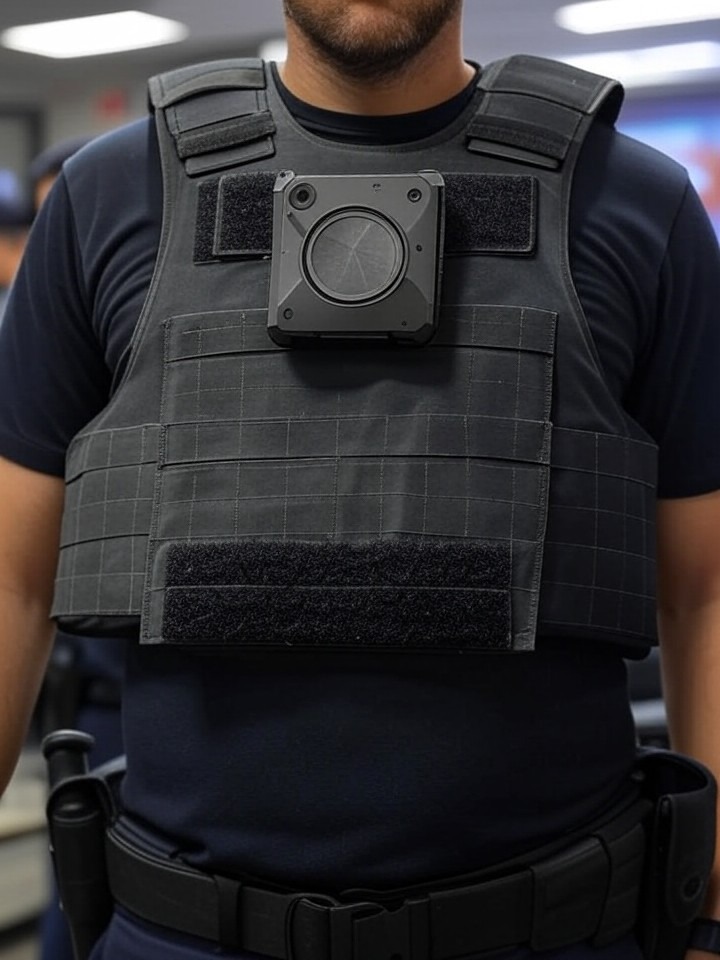
AI-generated illustration. Visual interpretation does not represent real individuals or scenes.
Federal Officials Mandate Body Cameras in Minneapolis Amid Tensions Over Fatal Shootings
2026-02-04
The BareStory
The Department of Homeland Security announced this week that federal agents in Minneapolis must immediately begin wearing body cameras, a policy change enacted amid intensifying scrutiny of "Operation Metro Surge." The large-scale immigration enforcement operation, which has resulted in over 3,000 arrests since December, has drawn sharp criticism from Minnesota officials following the fatal shootings of two U.S. citizens, Renee Good and Alex Pretti, by federal agents in January.
Tensions have escalated between local authorities and the federal administration regarding the operation's tactics. Brooklyn Park Police Chief Mark Bruley alleged that federal agents have stopped U.S. citizens without cause, including off-duty police staff, and described an incident where agents reportedly drew weapons on an officer accompanied by a child. Minnesota Corrections Commissioner Paul Schnell expressed concern that agents were operating at bus stops and apartment buildings without targeted priorities. Conversely, White House border official Tom Homan has stated that a reduction in federal forces is contingent upon increased state cooperation, specifically regarding access to state prisons.
The legal and administrative fallout from the shootings continues to unfold. On Monday, a federal judge dissolved a temporary order preserving evidence in the investigation into Pretti’s death. While Judge Eric C. Tostrud ruled that state investigators failed to prove evidence was likely to be destroyed, he noted "significant concerns" regarding the federal handling of the on-scene investigation. Additionally, the U.S. Attorney's office in Minnesota has experienced a series of resignations, which sources attributed to frustration within the department. While Homan announced an agreement to shift toward targeted enforcement, state officials report that details on a troop drawdown remain unclear.
Left Perspective
Concerns regarding aggressive interactions with U.S. citizens
Lack of clear priorities in enforcement locations
Questions regarding oversight and investigative transparency
Right Perspective
Operational results and the necessity of state cooperation
Adherence to legal standards and successful court rulings
Willingness to adapt protocols and enforcement strategies
Left Perspective
• Concerns regarding aggressive interactions with U.S. citizens
Local law enforcement officials have raised alarms about the conduct of federal agents involved in "Operation Metro Surge," citing specific instances where they allege agents overstepped. Brooklyn Park Police Chief Mark Bruley alleged that agents have stopped U.S. citizens, including off-duty police staff, without cause. He further described a tense encounter where agents reportedly drew weapons on an officer who was accompanied by a child.
• Lack of clear priorities in enforcement locations
State officials have questioned the strategic focus of the federal operation, suggesting that agents are operating without targeted priorities. Minnesota Corrections Commissioner Paul Schnell expressed concern regarding the presence of agents at general public locations such as bus stops and apartment buildings. These concerns are amplified by the fatal shootings of two U.S. citizens, Renee Good and Alex Pretti, by federal agents in January.
• Questions regarding oversight and investigative transparency
Despite the dissolution of a temporary evidence order, significant apprehension remains regarding how the operation is being managed legally and administratively. A federal judge noted "significant concerns" regarding how federal authorities handled the on-scene investigation into Pretti's death. Furthermore, sources attributed a recent series of resignations within the U.S. Attorney’s office in Minnesota to growing frustration within the department.
Right Perspective
• Operational results and the necessity of state cooperation
Proponents emphasize the scale and impact of "Operation Metro Surge," noting that it has resulted in over 3,000 arrests since December. White House border official Tom Homan has positioned the operation's future footprint as dependent on local assistance, stating that a reduction in federal forces is contingent upon increased state cooperation, specifically regarding federal access to state prisons.
• Adherence to legal standards and successful court rulings
Supporters point to recent legal outcomes as evidence that the operation is withstanding judicial scrutiny. A federal judge recently dissolved a temporary order that had been preserving evidence in the investigation into Alex Pretti’s death. In his ruling, Judge Eric C. Tostrud determined that state investigators had failed to prove that evidence was likely to be destroyed by federal agents.
• Willingness to adapt protocols and enforcement strategies
The administration has signaled a readiness to adjust tactics in response to the situation on the ground. The Department of Homeland Security has mandated that agents immediately begin wearing body cameras to address scrutiny. Additionally, Homan announced that an agreement has been reached to shift the operation toward targeted enforcement, indicating responsiveness to the evolving operational environment.
How it may affect me
As a U.S. reader:
• Residents in the Minneapolis area may encounter federal agents at general public locations like bus stops and apartment buildings, with reports indicating that U.S. citizens have been subject to stops without cause.
• Interactions with federal agents involved in this operation will now be video recorded following an immediate mandate for body cameras, changing how future disputes over conduct or use of force are documented.
• The visible presence of federal forces in local communities may fluctuate based on political negotiations, as officials have conditioned a reduction in agents on the state granting access to prisons.
• Public trust in the legal handling of federal operations may be impacted by ongoing instability, including judicial concerns regarding on-scene evidence preservation and resignations within the local U.S. Attorney's office.
• Enforcement tactics may shift from broad patrols to more specific operations following an agreement to move toward targeted enforcement, though details on the reduction of troops remain unclear.