
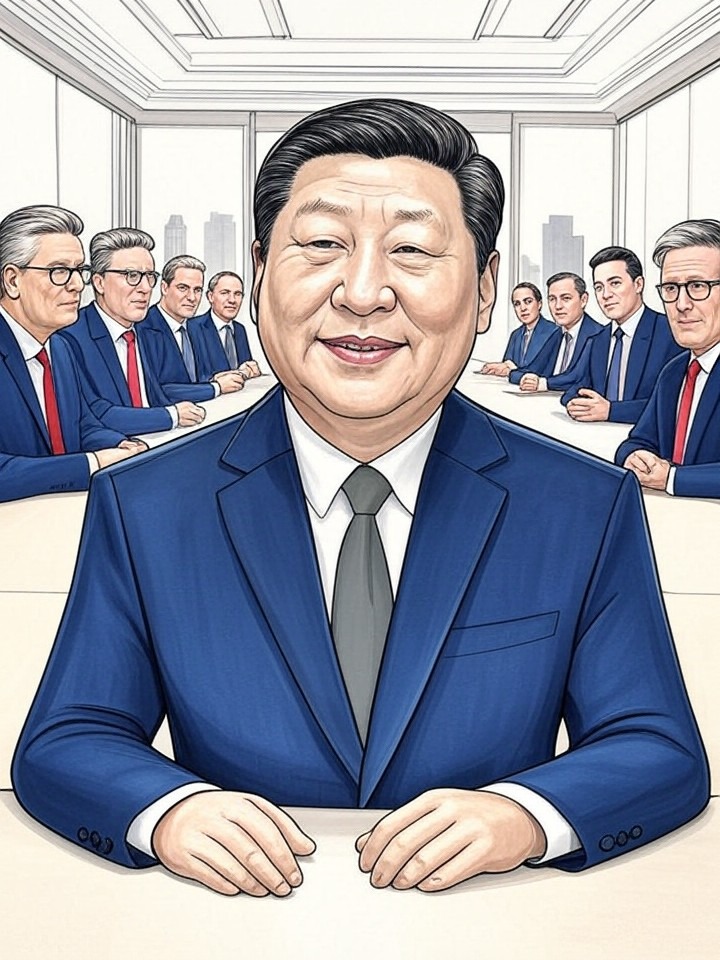
• Securing significant commercial agreements Delegations leveraged these state visits to finalize major economic deals, such as Canada agreeing to lower tariffs on Chinese electric vehicles in exchange for reduced duties on Canadian canola seeds. Additionally, the British Prime Minister’s trip included representatives from nearly 60 companies, resulting in AstraZeneca announcing plans to invest $15 billion in China by 2030.
• Recalibrating strategy amid uncertainty Analysts describe these diplomatic moves as a "hedging strategy" or "recalibration" for nations facing policy uncertainty from Washington. By diversifying economic ties and supply chains, these leaders aim to build resilience in response to the "America First" policies currently being enforced by the United States.
• Renewing high-level diplomatic contact For the United Kingdom and Canada, these trips represented the first high-level meetings with Chinese leadership in at least eight years. This trend of renewed engagement extended to other nations as well, with leaders from Ireland and Finland traveling to China and Uruguay's president scheduled for a future visit.
How it may affect me
As a U.S. reader:
You may experience higher prices on imports if the administration follows through on threats to impose retaliatory tariffs against Canada regarding its new trade agreement with China.
Traditional diplomatic relationships may face friction as close allies like the U.K. and Canada pursue economic diversification strategies to counter policy uncertainty from Washington.
The U.S. economy remains significantly larger than China's and continues to serve as a primary partner for allies, limiting the immediate economic impact of their renewed engagement with Beijing.