
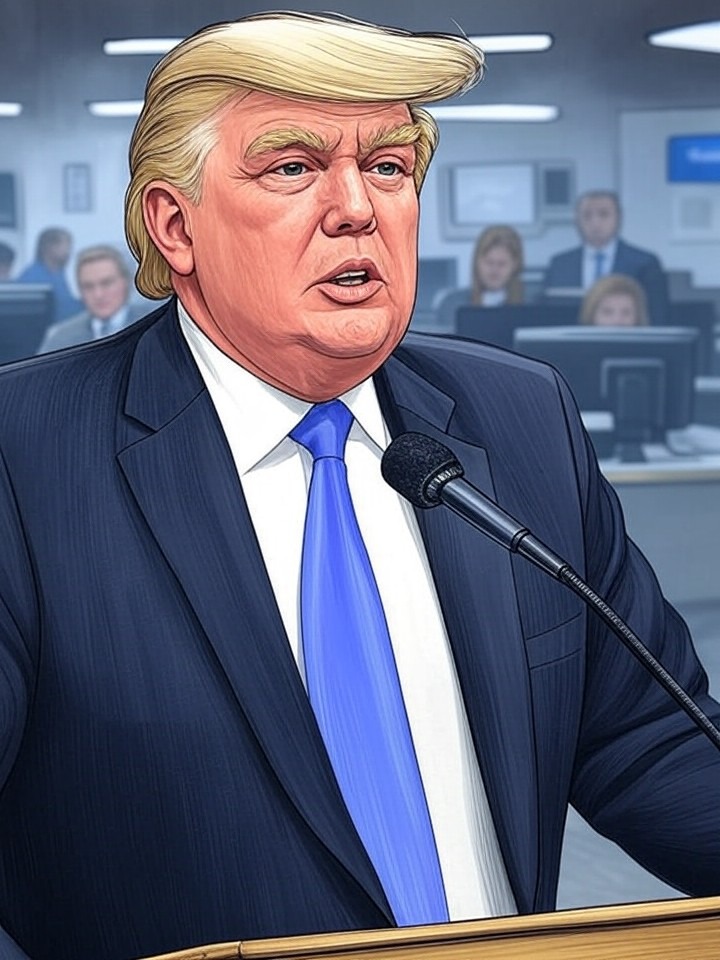
• Response to legislative delays President Trump cited the South Korean legislature's failure to approve a previously reached trade agreement as the primary reason for the tariff increase. The President noted that while he and South Korean President Lee Jae-myung finalized the deal in July 2025 and reaffirmed it in October, the legislature has not yet ratified the terms.
• Enforcement of investment commitments The administration highlighted that the existing pact involved a commitment from South Korea to invest $350 billion in U.S. sectors, including semiconductors, shipbuilding, and biotechnology. These significant investments were agreed upon in exchange for the United States reducing tariffs at that time.
• Implementation of higher duties Consequently, the President announced an increase in tariffs on South Korean imports from 15% to 25%. These higher duties will specifically target automobiles, lumber, and pharmaceutical goods as a direct countermeasure to the stalled ratification process.
How it may affect me
As a U.S. reader:
• Consumers could see price increases for South Korean imports, including automobiles, lumber, and pharmaceuticals, due to the tariff hike from 15% to 25%.
• The dispute creates uncertainty surrounding $350 billion in pledged investments for U.S. semiconductor, shipbuilding, and biotechnology sectors intended to boost domestic industries.
• Ongoing trade policy enforcement remains uncertain pending a U.S. Supreme Court ruling on the president's authority to levy such tariffs without congressional approval.
• Diplomatic efforts could alter these measures soon, as South Korean officials plan to visit Washington and aim to pass related legislation by the end of February.