
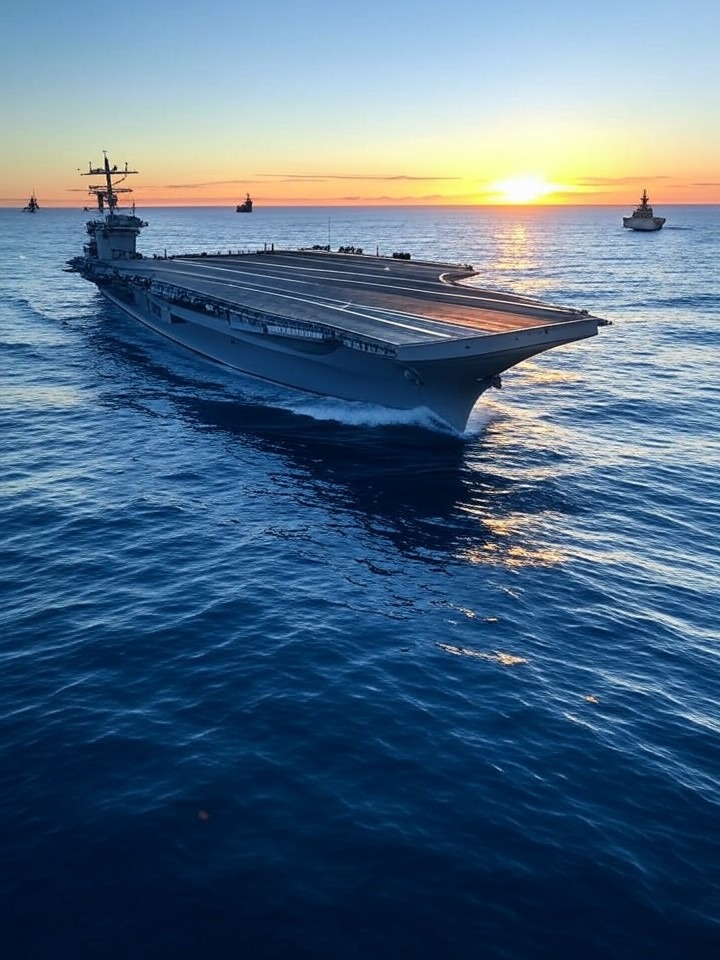
• The deployment is framed as a precautionary measure amidst regional instability. The administration describes the movement of the carrier strike group to the Central Command region as a reinforcement of military posture due to ongoing protests in Iran. President Trump characterized the "massive fleet" as a resource positioned "just in case" action is required, though officials noted the ships have not yet reached their final destination.
• Officials aim to deter violence against Iranian demonstrators. Alongside the naval group, the U.S. has deployed F-15 fighter jets and cargo aircraft with heavy equipment to the region. The President has explicitly warned Iranian leaders against committing violence toward individuals participating in the protests that began in late December.
• The administration expresses a preference for avoiding active engagement. Despite the significant accumulation of firepower, including the USS Abraham Lincoln and three guided missile destroyers, the President stated that he hopes the fleet will not have to be utilized. The strike group is currently positioned in the Indian Ocean as part of this contingency strategy.
How it may affect me
As a U.S. reader:
• U.S. service members deployed with the strike group face heightened danger as Iranian commanders warn their forces are ready to engage and have their fingers on the trigger.
• National military assets are increasingly vulnerable to asymmetric warfare, as experts warn that low-cost drone swarms could identify and overwhelm the defense systems of large surface vessels.
• Significant military resources, including a carrier strike group and fighter jets, are being committed to the Middle East to deter violence against protesters amid regional instability.
• The risk of unintended military escalation has risen, as the President positions a massive fleet for potential action while Iranian officials caution against any strategic miscalculations.