
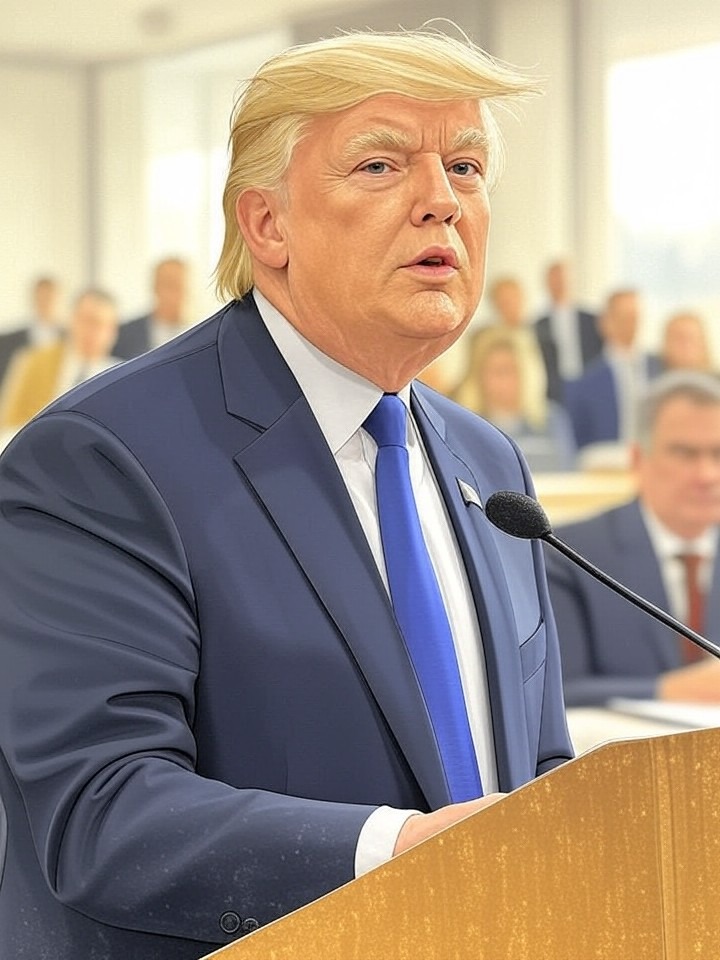
• Successful de-escalation of trade tensions President Trump announced that he would not impose tariffs on several European countries after reaching a "framework" with NATO Secretary General Mark Rutte. This decision effectively calls off the levies against Denmark and other nations that were initially scheduled to take effect in February.
• Strategic benefits regarding resources and security The outlined "concept of a deal" is set to provide the United States and European allies with access to mineral rights on the island. Additionally, the President noted that the complex arrangement involves collaboration on a "Golden Dome" project while explicitly ruling out the use of military force.
• Positive response from financial markets Following the announcement, global financial markets rallied to recover from a steep sell-off that occurred earlier in the week. Investors identified a recurring pattern labeled the "TACO trade," where threatened levies are followed by de-escalation, prompting a rebound in equities.
How it may affect me
As a U.S. reader:
• The cancellation of planned levies prevents potential price hikes on European imports and suspends $108 billion in retaliatory tariffs against U.S. goods.
• Financial markets have recovered from recent sell-offs, potentially boosting investment portfolios, though analysts warn that vague deal details suggest continued volatility and caution.
• A new framework with NATO could provide the United States with future access to mineral rights in Greenland and collaboration on a shared defensive project.
• While immediate trade tensions have eased, the lack of specific agreement terms means diplomatic relations remain in a state of assessment rather than finalized resolution.