
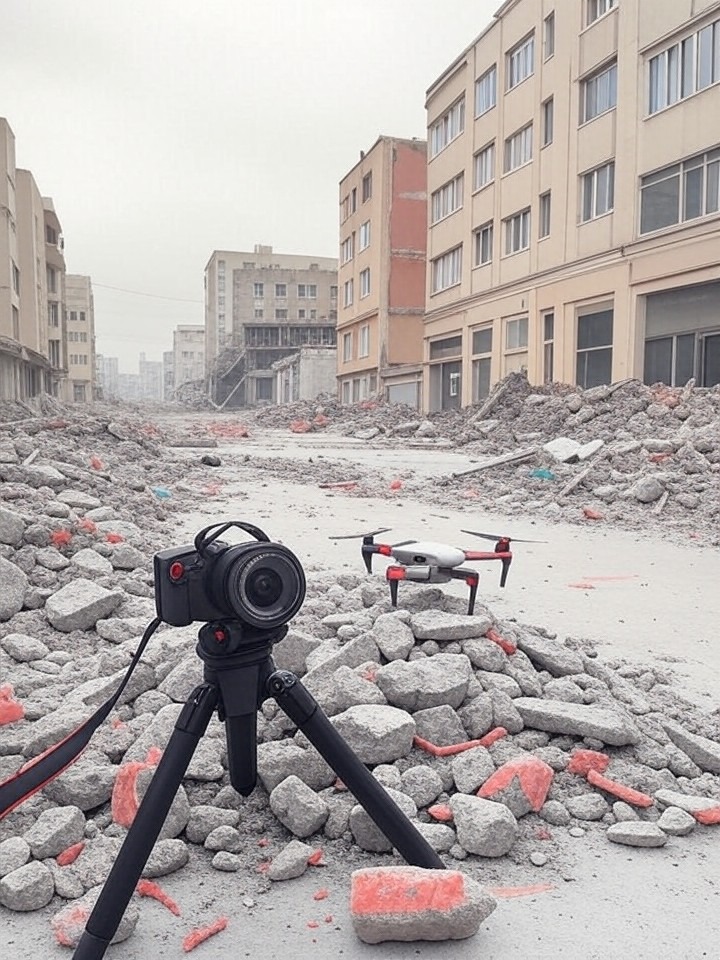
• The victims were reportedly documenting humanitarian aid efforts when struck. An eyewitness stated that the three journalists—Abed Shaat, Mohammed Salah Qashta, and Anas Ghneim—were using a drone to film the distribution of aid by the Egyptian Relief Committee. Shaat was described as a freelance cameraman who had recently begun documenting relief operations following the October ceasefire.
• The vehicle involved was on a humanitarian mission and clearly identified. A spokesperson for the aid group confirmed that one of its vehicles was hit while accompanying the journalists. The spokesperson noted that the vehicle displayed the committee’s logo and alleged that it was criminally targeted during the mission.
• Officials condemn the incident as part of a systematic policy against the press. The Palestinian Journalists' Syndicate accused Israel of intentionally targeting journalists in a systematic manner. Additionally, the territory’s health ministry marked the day of the strike as one of the deadliest since the ceasefire began, citing reports of other fatalities in separate attacks.
How it may affect me
As a U.S. reader:
You may face challenges verifying on-the-ground information as the deaths of journalists documenting relief efforts could limit independent media coverage of the ongoing situation.
The durability of the regional ceasefire established in October may be uncertain given reports characterizing this incident as part of one of the deadliest days since the truce began.
Humanitarian aid operations may face disruptions or revised security protocols following allegations that a marked relief vehicle was struck while accompanying reporters on a mission.